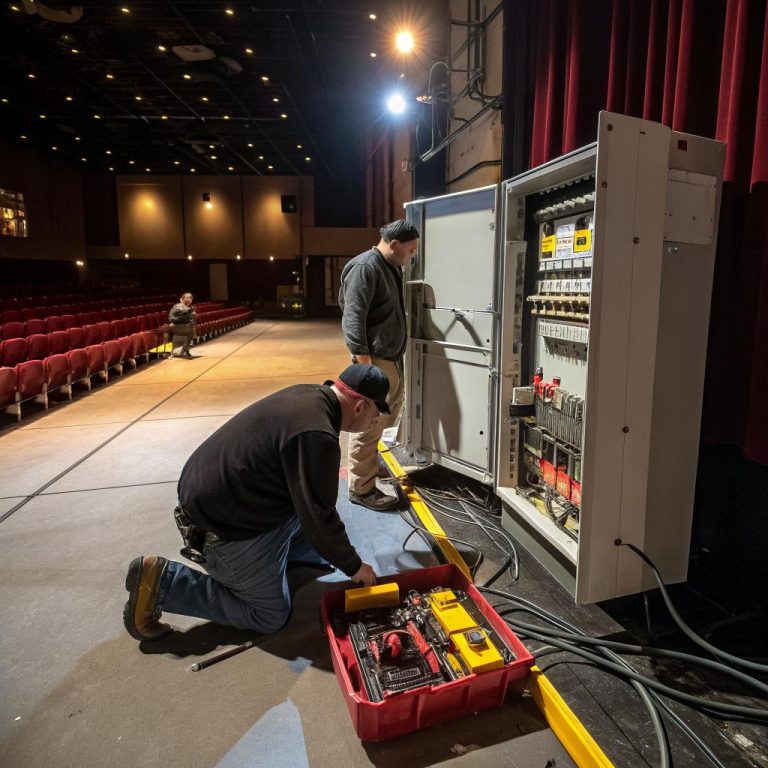
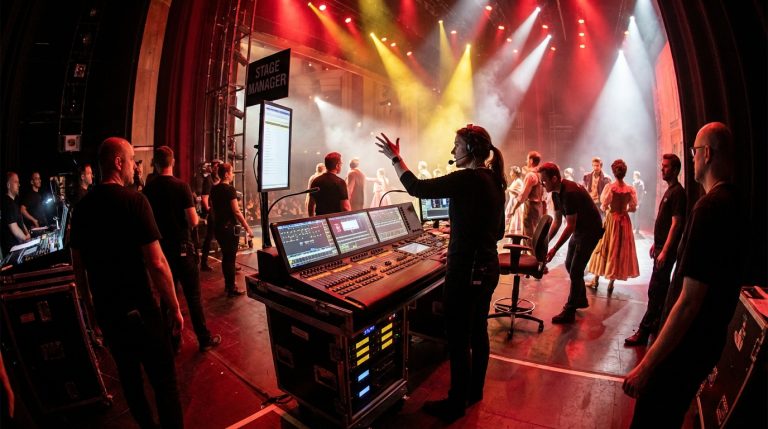
The house is empty now. The ghost light hums in the center of the stage, throwing a thin pool of yellow across tape marks and scuffed paint. The air still holds the faint smell of sweat, hairspray, fresh-cut plywood. The show is over, the set is waiting to be struck, and for a brief moment it feels like the room is holding its breath.
That is the moment a post-mortem really begins. Not when you gather with notebooks and coffee, but here, in the quiet, when you feel the weight of what worked, what cracked, and what collapsed under pressure.
The short version: a post-mortem meeting is the final, honest conversation a production owes itself. It is where you calmly take the show apart, not to assign blame, but to understand the mechanics of what went wrong and what went beautifully right. If you treat it like a ritual instead of a punishment, it will sharpen your design, steady your process, and protect future productions from repeating the same mistakes. Skip it, and your next show will carry the same hidden fractures, only deeper and more expensive to repair.
What a Post-Mortem Really Is (And What It Is Not)
A post-mortem is not a venting session. It is not a courtroom. It is not group therapy.
It is a studio critique for an entire show.
In set design and immersive theater, the “piece” is massive. It spans budgets, late-night builds, projections, costume fittings, broken dimmers, emergency paint touch-ups, and panicked prop swaps. A post-mortem is the one structured moment where everyone steps back from the canvas and looks at the whole thing at once.
Treat the post-mortem like you would treat a lighting focus: slow, precise, and with the courage to admit when something is simply in the wrong place.
To keep that spirit alive, you need a clear container. A shared understanding of what you are doing in that room.
| Post-mortem is | Post-mortem is not |
|---|---|
| A structured review of process, choices, and outcomes | A place to attack personalities or gossip about behavior |
| A way to gather facts and patterns for future shows | A place to re-fight old arguments from tech week |
| A respectful critique, like in an art or design studio | A complaint box where nothing changes |
| A record of what to repeat and what to drop | One more meeting that ends in vague “we should do better” |
If you walk into a post-mortem without that clarity, it will drift. It will turn into memory theater instead of useful analysis.
Who Belongs in the Room (And Who Does Not)
A production is a constellation of egos, budgets, tools, and schedules. Not everyone needs a seat at the same table for this conversation.
For theater, immersive work, or experiential design, you want three main voices:
- The artistic core: director, designers (set, lighting, sound, costume, media), and sometimes key performers.
- The production spine: stage manager, production manager, technical director, lead carpenters, lead prop and wardrobe.
- The producing brain: producer, company manager, sometimes marketing and front-of-house if audience logistics shaped the experience.
That may already be too many bodies for one room. Large teams can crush nuance. If your show is big, hold separate focused sessions: one for design and direction, one for production and logistics, one for audience experience and operations.
Invite people who can change the process next time. Spectators do not belong in a post-mortem. Decision-makers do.
Be careful of including funders or board members in the rawest version of the post-mortem. Their presence can freeze honesty. Instead, hold your internal, unpolished conversation first. Then share a curated summary with external partners.
Timing: How Soon After Closing Night?
You need distance, but not amnesia.
Too soon, and emotions are jagged. Too late, and the details blur.
I recommend two stages:
1. The quick capture (within 24-48 hours)
When the final curtain falls, when the last audience leaves, everyone is exhausted. But their memory is precise. Small glitches, near-misses, and miraculous saves are still sharp.
Invite people to quickly write down:
- Three things that worked beautifully.
- Three things that went wrong or nearly went wrong.
- Two things they wish had been different about the process.
Do this as a written prompt, not a meeting. Short, fast, unpolished. Collect it and set it aside.
2. The main post-mortem (within 1-3 weeks)
Wait long enough for people to rest and regain perspective, but not so long that the show feels like ancient history. One to three weeks after closing tends to be a good window.
By then, the burns have cooled. People can talk about the late-night crisis with more clarity and less adrenaline. You can also gather data: ticket sales patterns, audience feedback, technical reports, safety logs, and financial results.
Do not wait until the next production has started. Once you are inside a new show, your brain begins rewriting the previous one as a blur of “fine, we survived.”
How to Structure the Conversation
A post-mortem without structure is a two-hour spiral. You need a spine. Not a script, but a clear arc.
Think of it as moving from the most visible surface to the deepest foundations: from what the audience saw, to what the team felt, to how the process either carried or failed the work.
You can frame the conversation in four passes.
Pass 1: What the audience actually experienced
Start from the outside in.
Ask: what did a typical audience member go through, from front door to final bow? Do not guess. Use data where you can.
You might look at:
| Area | Questions to ask |
|---|---|
| Entry and pre-show | Were people confused at the door? Was check-in slow? Did pre-show sound, set dressing, and lighting prepare them for the world of the piece? |
| View lines and staging | Were there seats that consistently had blocked views? Were key moments visually legible from all major angles? |
| Immersive flow | In an immersive work, were pathways clear? Did audiences bottleneck? Did they understand when they were invited to move or interact? |
| Technical interruptions | Did cues misfire, mics drop, or projections crash in ways the audience could see? How often, and why? |
| Exits and aftercare | Was the exit graceful or chaotic? Did audience members know how to leave feedback, share photos, or return? |
Hold yourselves to the perspective of someone who has never seen the rehearsal schedule, the budget, or the emergency run sheet. They do not know what “almost went wrong.” They only met what actually happened in front of them.
When you talk about “audience experience,” ban the sentence “but they did not notice.” Assume they notice more than you think, and feel even the things they cannot name.
Pass 2: What the team lived through
Now move inside the machine.
How did the process feel from the point of view of designers, builders, stage managers, and performers? Not emotionally in the abstract, but concretely, in terms of hours, communication, and resources.
Ask questions like:
– Were deadlines realistic, or did every change arrive in a panic?
– Were design decisions locked early enough for the shop to build safely?
– Did the tech schedule allow true cueing, or only constant emergency patching?
– Were safety concerns addressed seriously, or brushed aside?
– Were there patterns of late information that pushed problems downstream?
This is where you listen. You may hear that the set load-in schedule left no time for the lighting team to properly focus. Or that costume fittings were rushed because rehearsal calls shifted every day. Or that an immersive route kept changing, forcing constant re-routing of cable paths and safety checks.
You are not trying to assign guilt. You are looking for sequences. Chains of cause and effect.
Pass 3: Where the process design failed the art
Every production has a process design, whether conscious or not. It is the invisible staging of how information, decisions, and materials move.
In a post-mortem, your job is to examine that invisible skeleton.
Questions to explore:
– Which decisions happened too late?
– Where did people quietly break rules to keep the thing afloat?
– Were approvals centralized in one overburdened person?
– Did designers receive the constraints early enough: venue load limits, fire codes, minimum clearances, noise spill, power capacity?
– Did meetings produce clear, written decisions, or just “vibes” that mutated once people walked out of the room?
If you are working in immersive or site-specific contexts, this part is especially delicate. Your process must absorb venue quirks, guest unpredictability, and tech that often runs at the edge of what a space can handle.
When your process is fragile, the most expressive ideas are the first to vanish. Weak process eats brave design.
Pass 4: What you will do differently next time
This is the part most teams rush. They identify problems, nod solemnly, and then walk away with nothing but a vague sense of “we should plan better.”
That is useless.
You need concrete, reachable change. Not a thousand new protocols, just a few decisions that will genuinely shift how you work.
For example:
– Lock final scenic footprint two weeks earlier next time, even if details stay flexible.
– Create a shared design packet with ground plans, sections, and clearances that everyone reviews before build.
– Add one extra day of tech focused only on transitions and scene changes.
– Establish a “no new cues” rule after a set freeze point, except for safety.
Write these as commitments, not wishes.
Common Things That Go Wrong (And How To Talk About Them)
If you work in theater or immersive sets long enough, you start to see the same ghosts. They just wear new costumes.
Here are some of the patterns that show up again and again.
1. Underestimating build and install time
In a rehearsal room, a scene change is a finger snap. On paper, a platform is a rectangle and four legs. On site, things get slower, heavier, and more fragile.
You think: “The build will take three days.” It takes six. Then lighting loses focus time. Sound loses tuning time. The audience never sees the transitional lighting looks you sketched because there was no time left to plot them.
When you talk about this in a post-mortem, avoid blaming the shop for being “slow” or the designer for being “too ambitious.” Look at the math.
– Were drawings delivered with enough detail?
– Did the shop receive full measurements of the venue?
– Were there shared expectations about finish quality?
– Did your install plan account for real-world constraints like shared loading docks, elevator waits, and noise restrictions?
In immersive projects in old warehouses or non-theater spaces, underestimating install time is almost guaranteed if you work from optimism instead of measurement.
Optimism is not a schedule. If your timeline is “if everything goes perfectly,” it is already broken.
2. Safety treated as an aesthetic obstacle
Ramps steeper than they should be. Hidden steps in the dark. Overhead pieces with shaky rigging. Fog so thick it hides hazards. Heavy doors in tight corridors. Sharp corners at eye level.
If any incident or near-miss happened during your run, the post-mortem must take it seriously.
Not with shame, but with precision.
Ask:
– Were safety checks formalized or casual?
– Did anyone feel pressured to approve something that did not feel safe?
– Were understudies, crew, and front-of-house given clear safety briefings?
– Did immersive routing or audience behavior undermine safety plans?
Sometimes, the most beautiful idea in a set is the least safe. A slick reflective floor that does terrible things to traction. A low ceiling that creates intimacy but invites head injuries.
Respect the idea. Then respect physics more.
3. Tech that looked great in rendering, but broke on contact with reality
Projectors that cannot compete with ambient light. Interactive sensors that misfire when forty people move at once. LED strips that flicker under dimmers not rated for them. Bluetooth-dependent triggers in a concrete basement.
In the concept phase, everything glows. In the room, signal paths fail, devices overheat, and Wi-Fi drops.
Do not frame this as “we should stop trying cool things.” Frame it as “we did not test early enough” or “we ignored what the equipment was actually built to do.”
You might decide that next time:
– Any core story beat must work in a low-tech backup mode.
– Everyone agrees on a tech freeze date, after which only under-the-hood fixes are allowed.
– Experiments live in sectioned-off parts of the show, not at the absolute center of the narrative.
4. Scope creep killing clarity
Immersive and large-scale sets attract ideas the way a bare wall attracts tape.
Somewhere around week three, the show that started as a focused piece has grown side quests. Extra rooms. Additional props. Easter eggs. Alternate endings. Secret corridors.
By tech, your team is buried.
Post-mortems often reveal that:
– No one felt empowered to say “no” once something was sketched.
– The director or lead designer kept making micro-changes that had macro consequences.
– Supporting departments kept saying “yes” out of fear of seeming difficult.
In the meeting, you need to name the moment where the show became too wide for its own good. Was it when every character gained a personalized installation room? When you agreed to build an entirely new bar environment for pre-show? When you tried to add three more tracks for audience choice, with the same number of staff?
Every new feature in a show has a hidden cost in labor, cueing, and maintenance. If no one calculates that cost, the show pays it in chaos.
5. Communication that lives inside heads instead of on paper
Design is full of gesture: “you know, like this,” “we will figure it out on site,” “we will feel the moment.” That is part of the craft. But a production cannot run on telepathy.
If your post-mortem uncovers repeated confusion, missed information, or conflicting instructions, look at your documentation.
Ask:
– Were ground plans, sections, and sightline studies shared with all affected departments?
– Were cue sheets updated and redistributed when changes were made?
– Did notes live only in scattered text threads?
– Did decisions from production meetings reach crews in time?
You do not need a corporate manual. You need diagrams, checklists, and clear written choices. Things people can hold.
Making Space For Emotion Without Letting It Run the Room
Art hurts. A show is months of labor, sacrifice, and exposure. When something goes wrong, it can feel personal. When a design gets cut, it can feel like a rejection of your entire voice.
If you pretend a post-mortem is purely rational, you will end up with sniping and sarcasm creeping in sideways.
Be more honest than that.
At some point in the meeting, invite people to talk about:
– One moment where they felt proud of the team.
– One moment where they felt abandoned or unheard.
– One moment where they saw someone else carry more than their share.
This is not sentiment for its own sake. It is mapping morale. Low morale distorts judgment and decision-making. A designer who feels under attack will stop taking risks. A technical director who feels untrusted will start hiding problems instead of surfacing them.
The health of the process is not just timelines and budgets. It is trust. Without it, people will say “yes” in the room and “not possible” backstage.
Set ground rules: respect, no interruptions, and no diagnosing other people’s motives. Let people describe what they experienced, not what others “really meant.”
Then steer back to process. Ask: what structure would have prevented that moment? A clearer brief? A different approval chain? A check-in halfway through the build?
Emotion points to structural gaps. Listen to where it hurts, then correct the underlying bone.
Immersive & Interactive: Extra Complexity, Extra Care
Post-mortems for traditional proscenium shows are one thing. For immersive work, you need a different lens.
The audience is not seated. They are moving. Touching. Testing boundaries. They are as much material as wood and light.
This changes what “went wrong” means.
Audience behavior as a design problem
If audiences got lost, crowded one performer, ignored an entire wing of your installation, or kept trying to open clearly closed doors, treat that not as “bad audience,” but as a design outcome.
Ask:
– What invitation did the environment give them?
– Where did signage, light, or sound pull them?
– Did performers have clear tools to gently redirect flow?
– Did the room hierarchy say “come here” in one place and “stay away” in another?
If a secret room was never discovered without staff hinting, the secret was not clever. It was invisible. That is not mystery, it is miscommunication.
Safety and consent in immersive environments
If your piece involved close proximity, touch, or strong psychological content, your post-mortem must look directly at boundaries.
– Were performers trained to read and respond to discomfort?
– Did front-of-house and stage management have protocols for ejection or support when someone crossed a line?
– Did audience members receive clear guidance on what was allowed?
– Were there any incidents that required debrief or aftercare for staff?
Pushing intensity without strong consent structures is not bold. It is careless. The post-mortem is where you decide whether your hunger for impact exceeded your duty of care.
How To Record the Post-Mortem So It Actually Changes Future Shows
Many teams talk well in a room and then lose everything to memory. You need an artifact.
Not a transcript, but a clear record.
At minimum, your post-mortem output should include:
| Section | Content |
|---|---|
| Project overview | Dates, venue, scale, key creative and production leads. |
| Successes worth repeating | Specific processes, schedule choices, tools, or design strategies that worked very well. |
| Problems and root causes | Patterns, not one-off accidents. What failed, and what set of choices produced that failure. |
| Process changes | Three to ten concrete decisions about how you will work differently next time. |
| Open questions | Areas that need more experimentation or testing in future projects. |
Keep this document short enough that someone will actually read it at the start of the next production. Link it to files that give detail if needed: ground plans, cue sheets, incident logs, budget summaries.
A post-mortem that lives only in someone’s memory is wasted. The next show deserves your notes.
At the beginning of your next project, bring that document out. Read the process changes aloud. Decide which still apply, and which need adapting. In that sense, every new show is also a continuation of the last one, technically and ethically.
When a Post-Mortem Reveals That the Problem Was the Concept
Sometimes the hardest truth is that nothing “went wrong” in the practical sense. Everyone worked hard. The set was solid. The cues ran. The budget stayed close to target. And yet the piece felt thin. The audience response was muted.
In that case, a post-mortem has to reach past logistics into the concept itself.
Ask brave questions:
– Was the core idea strong for the stage or space we chose, or did we force it into the wrong container?
– Did the production design clarify the story or bury it in visual noise?
– Did we fall in love with spectacle where intimacy was needed, or vice versa?
– Did the immersive mechanics actually serve the narrative, or were they decorative?
These are painful questions. They can threaten ego. But they are where artistic growth lives.
Post-mortems that only ever blame technical glitches are comforting, but shallow. Sometimes the piece was misaligned with its environment, or with the audience we invited. Sometimes the best lesson is: next time, say no to a project whose concept does not truly need this format.
How To Keep Post-Mortems From Being Performative
There is a risk that post-mortems become a ritual of appearance. People show up, say thoughtful things, and then everyone quietly goes back to the old habits.
To resist that, you need friction. A small, useful resistance.
Try this: at the end of the meeting, choose three changes. Only three. Not twenty.
For each change, write:
– Who will own this change on the next project.
– How you will know it is actually happening.
– What you are willing to drop to make room for it.
If you decide “we will lock scenic footprint earlier,” you may also need to decide “we will accept fewer late directorial rewrites of staging.” That has political cost. You must acknowledge it.
Every new discipline you add to your process has a price. Pay it consciously, or the show will pay it in stress and compromise instead.
The measure of a good post-mortem is not how smart you sounded in the room. It is whether, six months later during another frantic tech, you can feel the work you did then protecting the work you are doing now.
The ghost light is still burning on that empty stage. Somewhere, the next show is already sketching itself in the back of your mind: a hallway, a projected window, a room that smells faintly of rain.
If you want that next world to stand steadier, to hold the audience more safely and more fully, you do that work here. In the clear, patient, unsentimental light of a post-mortem, where you let the last show teach you how to build the next one better.