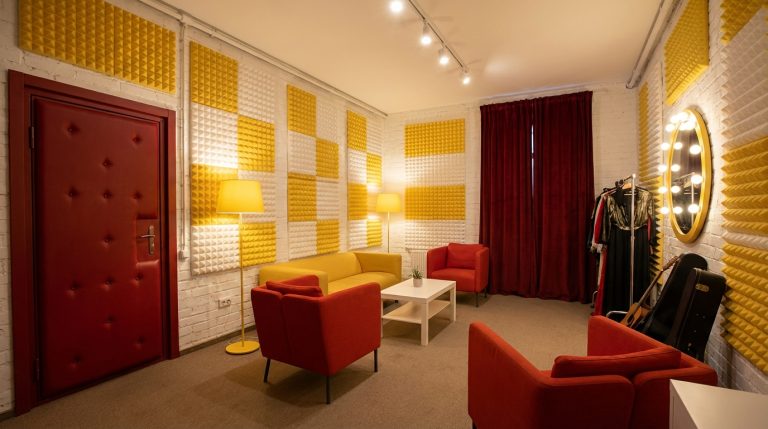
The first thing to know is that GH Construction Group is not just swapping out cabinets or repainting walls. The real aim is to shape homes that feel more like immersive sets than static rooms. Spaces where lighting, texture, layout, and small practical details guide how you move, feel, and even interact with other people in the house.
So the short version is this: they treat a home like a living stage. Instead of building generic rooms, they build scenes. They think about sightlines from the entry, how a hallway reveals a kitchen, how a bathroom can feel like a quiet backstage area between acts of daily life. It is still construction, of course, with permits and framing and dust. But under that, there is a clear idea: your home can feel as intentional as a piece of immersive theater, while still surviving grocery bags, kids, and pets.
I think that is what makes their work interesting for anyone who cares about set design and immersive experiences. You get to see how those same ideas play out in a place where you sleep, cook, and argue about where to store the blender.
Homes as Everyday Sets, Not Showpieces
If you come from theater, film, or immersive art, you already know this: space tells a story before a single word is spoken.
Most homes ignore that. They follow a builder plan, put a TV on the longest wall, and call it done. The story is an afterthought.
GH Construction Group flips that. When they look at a house, they start to read it like a script.
They ask: “What is supposed to happen in this room, and how should the room support that?”
For example, a kitchen is not just a place with cabinets, a sink, and an island. For them, it might be:
– A stage where people gather and watch someone cook
– A path where kids rush through to the yard
– A quiet corner where someone drinks coffee before everyone wakes up
That leads to choices that feel less like standard remodeling and more like spatial directing:
- They plan where people will stand, lean, and talk, not just where appliances go.
- They think about how light hits a surface at different hours of the day.
- They adjust doorways, openings, and sightlines like you would block actors on a set.
You might notice something else if you pay attention to their projects. The spaces do not feel like stage sets that you cannot touch. They feel worn-in, or at least ready to be worn-in. This balance between theater and practicality is where a lot of their interesting work happens.
From Flat Floor Plans to Layered Experiences
A lot of residential drawings are flat. A rectangle labeled “Living Room.” Another one for “Kitchen.” Some lines for doors. You know the type.
People in immersive theater see these kinds of plans and instantly start imagining more depth: where sound travels, where a character might turn a corner, where props might sit. GH Construction Group works in that same layered way.
Thinking in Layers
They tend to work in layers of experience, not just materials.
| Layer | What most remodels focus on | What immersive design adds |
|---|---|---|
| Visual | Colors, finishes, fixtures | Sightlines, framing of views, focal points |
| Spatial | Room size, furniture layout | Movement, pacing, “beats” in how you travel |
| Emotional | “Comfortable” or “modern” as vague goals | Specific moods for each area, like “calm,” “charged,” or “intimate” |
| Sensory | Lighting levels, maybe some dimmers | Texture, echo or quiet, warmth of light, sound absorbtion |
If you have built a set, you already do this. You know that a narrow hallway feels different from an open loft. GH Construction Group simply applies that same mindset to permanent construction.
They treat every transition as a cue: a shift from bright to dim, from hard floor to soft rug, from public to private.
You can feel it in details like:
– Lower ceiling lines near an entry to make the next space feel more open
– A framed view from the sink out to a specific tree or landmark
– A change in floor material that signals “now we are in the gathering zone”
Blocking Daily Life
In theater, blocking is about where actors move. In a home, there are no actors, yet everyone still moves in patterns.
GH Construction Group pays close attention to those patterns:
– Where do people enter with bags in their hands
– Where do they put keys, shoes, coats
– Where do they naturally pause to talk
I visited a project once where the entry had a tiny bench built into a niche beside the front door. Nothing fancy. But it was placed in a way that people arriving almost had to sit for a second while they took off their shoes. It felt like a beat in a script.
That bench turned the entry into a small scene: arrival, pause, reset, then entry into the main space.
This is where construction overlaps with directing. You are not forcing people to act a certain way, but you are giving them a cue. A suggested beat. A rhythm.
Lighting: The Quiet Director Of Every Room
People in theater understand that lighting is its own storyteller. In homes, lighting often gets decided at the last minute. A grid of recessed cans, maybe a pendant or two. Done.
GH Construction Group does not treat it like an afterthought.
Layered Lighting Like Stagecraft
In many of their projects, the lighting feels almost staged. Not in a theatrical show sense, but in a quiet, controlled way.
They mix:
- Ambient lighting for overall brightness
- Task lighting over counters, sinks, desks
- Accent lighting for art, textures, and architectural details
- Low-level lighting for night paths and calm moods
If you have ever walked through a fully lit stage and then seen it under show lighting, you know the difference. In a home, the jump is subtler, but it matters just as much.
For people who care about immersive environments, there is something interesting here. A hallway with a warm wash along one wall feels like a set piece, not a random corridor. A bathroom with one soft, indirect source can feel like a backstage dressing room before the curtain rises.
The Role of Shadow
Shadow is often ignored in residential design. People focus on brightness. But if everything is bright, nothing is special.
GH Construction Group is careful with shadow. Not in a moody, dramatic way all the time, but enough that certain objects or surfaces stand out.
You might see:
– A reading chair pulled into a cone of light with darker space around it
– A kitchen backsplash that catches a grazing light, showing off texture
– A stair that fades slightly into shadow near the top, hinting at privacy
Those things mean more when you think like a set designer. It is not only about seeing where you are going. It is also about hinting at where you might go next.
Rooms As Acts, Not Isolated Boxes
Many older homes read like a series of unconnected scenes. No transitions, no sense of a larger arc.
Immersive theater crawls inside that problem and solves it. The path between rooms is often where the best tension and discovery lives. GH Construction Group pulls a similar trick in homes by paying close attention to sequences.
Designing Sequences, Not Just Rooms
Think about the path:
Entry → Hall → Kitchen → Living Area
In a standard remodel, each of those is its own decision:
– What tile for entry
– What paint for hall
– What cabinets in kitchen
– What sofa in living area
In an immersive mindset, the question changes to:
– How should this entire journey feel
Maybe the entry is tight and controlled. The hallway opens slightly. Then the kitchen and living area feel like a reveal.
The feeling of “reveal” is something GH Construction Group uses a lot: turning a corner and seeing a new volume, a view line, or a splash of color you could not see from the front door.
You probably know that trick from scenic design. The first view is never everything. You hold back something for later.
Public vs Private Zones
Homes are not all one mood. You have loud spaces and quiet spaces. You have open scenes and private ones. GH Construction Group tends to separate those with shifts in:
– Ceiling height
– Floor material
– Lighting tone
– Sound level
They might keep public rooms more open and bright. Private spaces become more enclosed and textured.
If you think of it like a show:
– Act 1: Public, high energy, shared spaces
– Act 2: Quieter, more personal rooms
– Intermissions: Hallways, small landings, pocket spaces where people regroup
That might sound a little abstract, but it helps when you are planning real construction. It lets them decide where to spend budget, where to open walls, and where to keep things tight.
Bathrooms And Kitchens As Immersive Sets
For people in set design, bathrooms and kitchens can be tricky. They are full of technical needs: plumbing, ventilation, storage. On stage, you often fake those. In a house, you cannot.
GH Construction Group treats those rooms like high-stakes sets. They must work, look good, and feel like an experience, not just a utility box.
The Bathroom As A Self-Contained Scene
A lot of their bathroom work reads like a contained world.
Common moves you see:
- Careful use of mirrors to expand a tight space but avoid visual chaos
- Light that flatters skin, but still shows detail at the sink and shower
- Choice of tile and fixtures that suggest a clear mood rather than generic “nice bathroom”
What connects this to immersive theater is the level of control. The room is small, so every decision has impact. The sound of water, the echo of tile, the way the floor feels under bare feet, all of that shapes the experience.
If you think about backstage dressing rooms, you probably know this feeling already. GH Construction Group is just building a permanent, daily version of it.
The Kitchen As the Main Stage
In many homes, the main stage is the kitchen. People gather there whether you plan for it or not.
So the question becomes: how do you design that stage so it can hold different scenes?
– Morning rush with kids and coffee
– Evening cooking with friends watching
– Late-night snack under half the lights
GH Construction Group tends to design kitchens with layered lighting, flexible islands, and clear zones. Not to show off, but to support multiple ways of using the space.
From a set design point of view, the kitchen becomes a flexible set: it can hold comedy, drama, quiet monologues, and chaotic group scenes without fighting them.
Texture, Sound, And The Less Obvious Senses
It is easy to see color. It is less easy to talk about how a room sounds or feels underfoot. But people in immersive theater know those details matter a lot.
GH Construction Group pays attention to those, even if not every client explicitly asks for it.
Sound As Invisible Architecture
Some rooms should echo a bit. Others should hush you. They use:
– Soft materials on walls or floors in bedrooms and media rooms
– Harder surfaces in kitchens where cleaning matters more
– Strategic gaps and doors to stop sound from traveling everywhere
If you have worked on a show, you know that a single curtain, or a carpet, can change the mood of a scene. The same happens in a hallway or a stairwell at home.
Touch And Movement
Texture and movement also guide how a space feels.
For example:
– Rougher materials near entries and mudrooms to cue “transitional” areas
– Warmer, softer materials in lounges and bedrooms to invite slowing down
– Handrails and edges that feel solid, not sharp or flimsy
These are not flashy ideas, but they hold the whole thing together. An immersive experience can fall apart if the doorknob feels wrong. A home is the same. You touch it all day.
What People In Set Design Can Borrow From GH Construction Group
You might be reading this as someone who works on stages or installations, not houses. So why should you care about a construction company?
I think there are a few crossovers that run both ways.
How Builders Borrow From Theater
GH Construction Group borrows from theatrical thinking in many quiet ways:
- They map circulation like audience flow, looking for bottlenecks and reveals.
- They use light to stage-manage attention inside a room.
- They think about zones the way directors think about playing areas.
- They layer sound, light, and texture so a room has depth, not just style.
You can almost see the moment where a floor plan stops being a flat diagram and starts being a sequence of beats.
What Theater People Can Borrow From Builders
The exchange goes the other way too. There are things from construction that can improve immersive sets:
– Understanding structural logic so you know what you can cut or move safely
– Learning basic building methods so you can fake them more convincingly
– Thinking about durability, not just the run of a show
– Seeing how people really live in a space for years, not just for a 90 minute experience
GH Construction Group operates at that intersection. Not every project is experimental or theatrical, of course. Some are practical, direct, and quiet. But inside that work, you can see patterns that might help you think about your own spaces, whether temporary or permanent.
Case Study Style Thinking, Without The Buzzwords
Rather than give a polished case study, it might be more honest to sketch how one project like this tends to unfold.
1. Starting With Behavior, Not Products
Conversations start less with “What tile do you want?” and more with questions like:
– Who uses this room most
– What time of day are you in here
– What do you usually do here besides the obvious function
So a living room might not be “for watching TV.” It might be:
– A place where someone reads late at night
– A space where kids lay on the floor with crafts
– A spot for small gatherings of friends
That list shapes everything. Where outlets go. How big the rug should be. Where lights can dim without killing all visibility.
2. Finding The Main Path
Then they walk the house, even if it is still just studs or a rough sketch. They trace the main path you will take most often.
Entry, kitchen, table, couch, maybe yard.
Every point on that path gets extra attention. Those are the moments that repeat every day. They are like recurring beats in a play.
Small moves matter here:
– Widening a doorway slightly so movement feels easier
– Shifting a fridge so it does not block a main traffic line
– Moving a bathroom door so it does not open into the main scene
None of that is glamorous. But it is very much like smoothing transitions in a performance.
3. Choosing Where To Be Bold, And Where To Stay Quiet
Not every surface can shout. GH Construction Group tries to decide which parts of a space should lead.
Maybe:
– The kitchen island is a strong visual anchor
– The backsplash is calm
– The floor is textured but neutral
Or:
– The shower is framed as a focal point
– The vanity plays a support role
– The mirror reflects a specific view instead of a blank wall
This is similar to how you pick a hero piece on a stage. Maybe it is a staircase, a window, or a piece of furniture. Everything else supports it. This avoids that “showroom” feel where everything is shouting at once.
Why Immersive Thinking Works In Ordinary Homes
You might wonder if all this is too much. Not every client wants their house to feel like a theater. That is fair.
But I think the thing that works here is that immersive thinking is about attention, not spectacle.
– It cares about how you move without staring at a floor plan all day.
– It cares about how light shifts over breakfast and dinner.
– It cares about what you see from the sofa when you are tired and not really looking at the decor.
GH Construction Group seems to accept that most people will never use words like “blocking” or “act structure” when talking about their home. They do not need to. The point is to feel the space working quietly in their favor.
You know that feeling after a good show, where the space lingers in your memory alongside the actors. A staircase, a doorway, a strange little corner stays with you. Homes can do that too, just in a lower key.
Q & A: Bringing Immersive Ideas Into Your Own Space
Q: Do I need a big budget to have an immersive-feeling home?
Not really. Some of the most powerful changes cost little. Reposition a doorway. Add a focused reading light. Use one textured wall to draw attention. The trick is to think in terms of scenes and sequences, not just purchases.
Q: What is one small habit from GH Construction Group that I can copy right away?
Walk your space like an audience member, not an owner. Start at the entry and move through the house. Notice where you slow down, where you bump into things, where your eye wants to go. If something feels off, that is a design cue.
Q: How can theater people work better with builders on projects like this?
Bring drawings that show movement, not just forms. Sketch paths, sightlines, and emotional beats. Builders like GH Construction Group can translate that into walls, lights, and surfaces, but they need to see how people will actually use the space.
Q: What is the main difference between a standard remodel and this more immersive approach?
A standard remodel might ask “What do you want this to look like?” An immersive approach asks “What do you want to feel and do here, and how should the space guide that?” The materials come later. The experience comes first.
Q: Is there a risk of making a home feel too staged or artificial?
Yes, if you chase aesthetics without grounding them in daily life. The projects that work best keep one foot in theater and one in reality. GH Construction Group seems to land there pretty often: practical storage, honest materials, and then just enough intention to make every day feel a bit more like a thoughtfully designed scene.