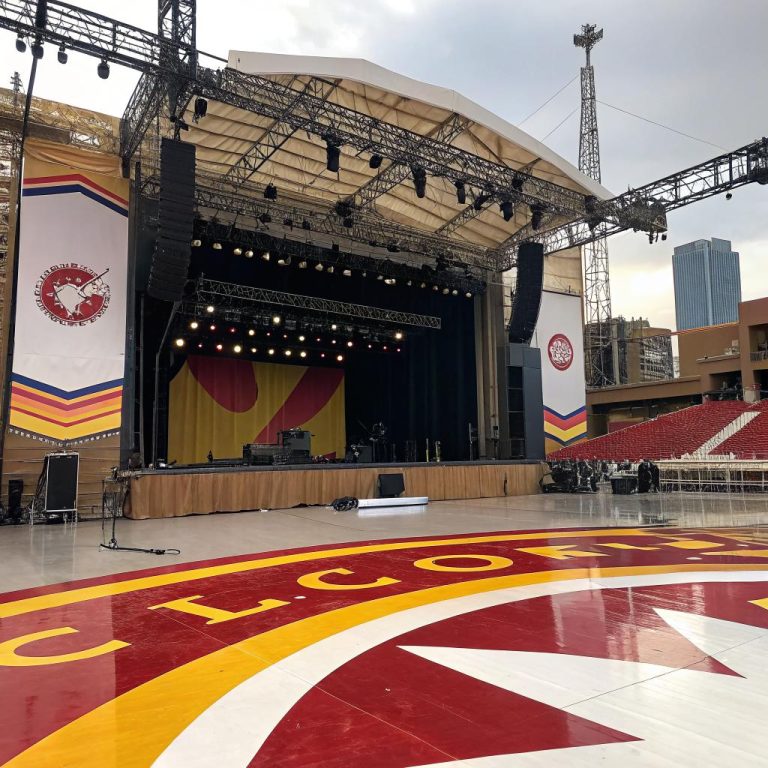
The curtain hangs heavy and silent, breathing with the room. Dust clings to the velvet like a gray memory. A soft pull at the hem leaves a faint line on your fingers. Somewhere in the rig, a light hums. Then the house goes dark, the curtain becomes a wall of shadow, and every eye in the room rests on that fabric. It is border, barrier, promise.
If the main curtain fails, the magic collapses. If its fire protection fails, the danger is real. Maintaining stage curtains is not glamorous, but it is as critical as the spotlight. In short: clean them gently, on a schedule, with methods that do not strip color or damage fibers; inspect them regularly for dust build-up, tears, and hardware stress; and treat them with the correct fire retardant system that matches the fabric and the fire code, re-tested and renewed at defined intervals. Treat cleaning and fire safety as one intertwined ritual, not two separate chores. That is how you keep the curtain beautiful and safe.
Why stage curtains quietly decide the mood and the risk
Stage curtains are strange creatures. They must be soft enough to fold into rich pleats, sturdy enough to survive constant handling, dark enough to swallow light, and still carry a layer of chemical protection that might save lives in a fire.
They are also enormous dust nets.
Every time an audience shuffles in, tiny particles float up from coats and seats. Every time a beam of light cuts across the proscenium, that dust is baked onto the fibers. Fog and haze from effects cling to the weave. Over months, the curtain gains weight, texture, and a slightly dulled color. On top of that, the original fire retardant treatment in the fabric can lose effectiveness from friction, cleaning, moisture, and time.
A clean curtain is not only prettier. It is less fuel in an emergency.
When you plan curtain care, you are really managing three things at once:
| Aspect | What matters | What can go wrong |
|---|---|---|
| Appearance | Color depth, drape, absence of stains and dust | Flat, tired look; visible marks; uneven fading |
| Structure | Seams, pleats, webbing, grommets, tracks, lines | Rips at stress points, sagging, uneven pull |
| Fire performance | Correct type of treatment, still effective and documented | Loss of rating, unsafe spread of flame, failed inspection |
Cleaning and fire retardant treatment affect all three. A harsh wash can brighten the fabric but destroy the fire rating. Over-application of a cheap fire retardant spray can stain and stiffen the curtain so much that it loses its elegant fall.
The best approach treats the curtain as both costume and safety device.
Know your fabric before you touch a single fiber
Imagine trying to restore a painting without knowing whether it is oil or watercolor. Stage curtains are similar. The maintenance plan depends heavily on the fabric type and on how the flame resistance was achieved.
Common stage curtain fabrics and what they “like”
Most stage curtains fall into a few broad families:
- Cotton velour and cotton masking fabrics
- Wool serge
- Polyester or modacrylic velour (inherently flame resistant)
- Blends with synthetic backings or linings
Each behaves differently with water, detergents, and fire retardant chemicals.
| Fabric type | Typical fire treatment | Sensitivity during cleaning |
|---|---|---|
| Cotton velour | Topical FR treatment added after weaving | Prone to shrinkage and color loss if over-wet or overheated |
| Wool serge | Often inherently slow-burning, sometimes extra FR finish | Can felt and distort; dislikes aggressive mechanical action |
| Polyester FR velour | Inherently flame resistant fibers (FR in the polymer) | Holds color well, but sensitive to high-heat drying and some solvents |
| Blends / lined | Mixed; may have topical FR on one or both layers | Different layers can react differently; risk of puckering and separation |
Before you choose a cleaning method or fire retardant product, you need to know:
– Fiber content
– Whether the fabric is inherently flame resistant or chemically treated
– Manufacturer’s cleaning and re-treatment recommendations
– Local fire code requirements for that type of venue
If you do not know what the curtain is made of, find out before you clean or treat it.
Often this information lives on purchase documents, labels sewn into a seam, or in old emails from fabric suppliers and drapery makers. If those are lost, a textile or fire testing lab can sometimes identify the fiber and flame resistance type from samples.
Routine cleaning: the quiet maintenance that buys you years
Regular, gentle cleaning is like stretching for a dancer. It does not draw applause, but it prevents breakdown. For stage curtains, the goal is to remove surface dust and soil, slow down discoloration, and keep fire retardant performance more stable over time.
Dry cleaning in situ: grooming the curtain without removing it
The least disruptive method is dry surface cleaning while the curtain hangs. This should be a scheduled practice, not a once-a-decade rescue mission.
Key techniques:
– Vacuuming with soft brush heads and adjustable suction
– Light brushing with clean, soft-bristled brushes
– Spot cleaning small marks with fabric-safe cleaners
Notice that these are treatments to the surface, not deep soaks.
Think of dry cleaning in situ as dusting a grand piano, not washing a floor.
Good practice:
– Lower the curtain fully so you can reach from floor to a comfortable height.
– Use a vacuum with HEPA filtration so you do not redistribute fine dust back onto the fabric and into lungs.
– Move slowly, in vertical strokes, following the nap of velour or the weave of flat fabrics.
– Use dedicated attachments that never touch the floor, to avoid dragging grit across the fabric.
– Pay attention to bottoms and edges where dust and debris collect.
Dry cleaning stretches the interval before heavy interventions are needed and keeps the curtain visually crisp.
Deep cleaning: when routine care is not enough
At some point, dust has worked into the pile, stains have settled in, and the curtain looks tired even after a careful vacuum. Now you face the more complex choices: on-site wet cleaning, off-site professional cleaning, or partial replacement.
The main deep methods:
| Method | Where | Risks |
|---|---|---|
| Professional dry cleaning (solvent) | Off-site | Solvent can strip topical FR chemicals; risk of shrinkage or pile distortion |
| Controlled wet cleaning | Off-site, specialist facility | High risk of shrinkage on cotton; color bleeding; FR loss |
| On-site low-moisture cleaning | In place | Over-wetting can leave rings; uneven appearance; chemical residue |
This is where bad decisions often happen. A general-purpose cleaner offers “curtain cleaning,” uses strong solvents, and returns a smaller, warped, faded main drape that no longer meets fire code. Cheaper in the short term, expensive in reality.
Any deep cleaning that reaches into the fibers will probably affect the fire retardant treatment. Plan for re-treatment or re-certification at the same time.
The safest path is to:
1. Consult the fabric maker or drapery manufacturer for approved methods.
2. Use cleaners with specific experience in stage curtains and theater fabrics.
3. Arrange testing of a small, hidden section first to check for shrinkage, color loss, and fire performance.
Spot cleaning stains without creating new scars
A spilled drink, makeup marks, handprints from a rushed set change: these are local problems that invite quick fixes. The temptation is strong to scrub hard with whatever cleaner is at hand.
That is usually a mistake.
For stains:
– Blot, do not rub, especially on velour, to avoid crushing the pile.
– Use a very mild detergent solution or product approved for that fabric type.
– Apply with a white, lint-free cloth so you do not transfer dyes.
– Work from the outside of the stain inward.
– Dry the area gently, with fans at a distance, never high heat.
Remember that many cleaning agents carry water and solvents into the fiber, which can wash away fire retardant chemicals in that local area. After significant spot cleaning, that section might need fire retardant re-treatment.
The invisible shield: understanding fire retardant treatments
Fire retardant on stage curtains is not decorative. It is not optional. It is part of the fabric’s behavior under stress.
Imagine a spark hitting the main drape. Without treatment, cotton velour can ignite easily and feed a fast-moving fire. With proper treatment, the fiber can char, self-extinguish, or at least slow the flame long enough for people to react.
Fire retardant is not a magic coating that makes fabric “fireproof.” It only changes how it burns.
Inherent vs topical flame resistance
Two main approaches exist:
– Inherently flame resistant (IFR) or permanently flame resistant (PFR): the chemical fire resistance is part of the fiber itself. It is blended into the polymer when the yarn is extruded. This is common with polyester FR velours and some specialized fibers.
– Topically treated (FR): the fabric is made from standard fibers (like cotton) and then dipped, sprayed, or padded with fire retardant chemicals after weaving.
The difference matters:
| Type | Behavior over time | Effect of cleaning |
|---|---|---|
| Inherent FR | FR properties stay in the fiber for the life of the fabric | Normal cleaning should not remove FR, but dirt and coatings can still affect flame spread |
| Topical FR | FR gradually diminishes with abrasion, moisture, and aging | Washing and solvent cleaning can strip or weaken FR layer |
If your curtain is inherently FR, you mainly need to keep it clean and avoid coatings or paints that might create a flammable surface layer. If it is topically treated, periodic fire retardant renewal or replacement of the curtain is part of its lifespan.
Regulations, codes, and testing
The exact fire standards will vary by country and region, but the pattern is similar: public assembly spaces must prove that draperies and stage fabrics meet defined flame spread tests. For example, many regions refer to standards such as:
– Small-scale vertical flame tests on fabric samples
– Full-scale tests for curtain and drapery assemblies
– Code clauses that specify re-test intervals
Compliance is not only about the original purchase. Many inspectors require:
– Certificates from a recognized testing lab or fire retardant applicator
– Dates of last treatment
– Proof that cleaning did not invalidate the rating
If you cannot show when the curtain was last treated or tested, you should assume that you need new verification.
That does not mean every curtain requires re-treatment every year. It does mean that guesswork is not a safe policy. Dust, humidity swings, fog fluids, and repeated cleaning all affect performance.
Applying or renewing fire retardant treatment
This is the part that often feels technical and dull, but for an artist or designer, it can be seen differently. You are giving the curtain a hidden choreography in the presence of flame. Either it flashes up violently, or it hesitates, curls, and dies back.
Fire retardant chemicals are that choreography.
Choosing the correct fire retardant product
Fire retardant chemicals are not interchangeable. Each is formulated for certain fiber types and uses. The wrong product can:
– Fail to provide protection
– Stiffen or discolor fabric
– Interact poorly with dyes
– Produce corrosive residues on hardware
Good practice when selecting a product:
– Match the product explicitly to the fiber type (cotton, wool, polyester).
– Check that the product has relevant test reports for the same or similar fabrics.
– Confirm that it is suitable for theater or stage use, not just general household textiles.
– Review safety data sheets for handling, ventilation, and long-term effects.
Many reputable vendors specialize in flame retardants for stage and event fabrics. These are safer choices than generic hardware store sprays that promise miracles.
On-site spray application vs factory treatment
Ideally, curtains leave the manufacturer already treated and tested. Factory treatment is more controlled: dips, padders, and drying tunnels can apply an even, measured add-on of chemicals.
On site, you are often working with:
– Spray application using pump sprayers or airless systems
– Brushes or rollers for detailed areas
– Gravity, drips, human fatigue, and the limits of scaffolding
This does not mean on-site treatments are useless. They are often necessary for existing curtains or for re-treatment. But they require discipline.
Application basics:
– Protect floors, seating, and surrounding surfaces with sheeting.
– Work in manageable sections, from top to bottom, carefully controlling overlap.
– Maintain a steady distance and slow movement for even coverage.
– Follow the coverage rate recommended by the product (liters per square meter or similar).
– Allow full drying time in good ventilation before raising or folding the curtain.
Uneven application can create vertical bands of different fire behavior, where some strips flare and others resist.
Small trial areas are vital. Pick a hidden portion, apply as intended, let it dry, and examine color, hand-feel, and drape. If it passes visual tests, send that treated sample (and an untreated one) for fire testing if code or risk level requires it.
How cleaning and re-treatment interact
Every substantial cleaning should trigger a question: did this process disturb the fire retardant system?
For topically treated curtains:
– Wet cleaning likely washed out some of the chemical.
– Solvent cleaning might strip parts of it, depending on chemistry.
– Heavy mechanical action can abrade the surface where much of the treatment sits.
You then have three broad options:
1. Re-treat the entire curtain after cleaning, with compatible fire retardant chemicals.
2. Replace the curtain if it is near the end of its life or structurally degraded.
3. Have samples tested to confirm whether it still passes flame standards without re-treatment.
Doing nothing and assuming that “it is probably fine” is the weakest option.
For inherently FR fabrics, the focus is slightly different:
– Confirm that the curtain has not been painted, coated, or caked in residues that change the surface burning behavior.
– Clean off heavy deposits that might feed flames.
– Keep documentation that proves the inherent FR nature of the fabric.
Remember that dust itself is fuel. Even an inherently FR curtain can carry enough accumulated particles on its surface to feed a brief, energetic flame, even if the fabric beneath behaves well.
Inspection routines: listening to the curtain over time
The best way to keep stage curtains healthy is to look at them properly and regularly. This is less about paperwork and more about a careful eye and a quiet half hour on stage.
What to look for during inspections
A simple visual and tactile inspection can reveal a lot:
– Dust build-up on the top folds, valance, and back side.
– Fading or uneven color from light exposure.
– Wear at bottom edges where shoes, scenery, or cleaning tools hit.
– Tears or stretching at grommets, webbing, and tie points.
– Any sign of mildew or strange odor from trapped moisture.
– Stiff or crusty areas that might indicate cleaning residue or heavy fire retardant.
Run your hand along the hem. If it leaves a visible track, the curtain is holding more dust than you think.
Include the rigging in your inspection:
– Are track carriers running freely, or is the fabric being dragged?
– Are lines and pulleys aligned, so weight sits where designers intended?
– Are counterweights balanced, protecting the curtain from sudden jerks?
A curtain that moves smoothly suffers less mechanical stress, which lengthens both aesthetic and structural life.
Recommended intervals
Exact schedules will depend on how intensively the stage is used, the level of airborne pollution, and the venue size, but a reasonable baseline might be:
| Task | Light use venues | Heavy use venues |
|---|---|---|
| Quick visual walk-through | Monthly | Weekly |
| Vacuuming / brushing in situ | Every 6 months | Every 2 to 3 months |
| Full structural inspection with access to tops and backs | Annually | Twice a year |
| Fire test or certificate review | Per code; often every 3 to 5 years | Per code; consider shorter intervals |
Document what you see: date, findings, and any actions taken. This helps when inspectors ask for history and when you need to justify replacements or major work.
Balancing beauty and safety in design choices
Care begins long before the curtain is hung. It begins with the choices during design and procurement. Many problems appear because style decisions ignore maintenance and fire behavior.
Color, pile, and finish: the aesthetic that ages well
Rich dark velours absorb light and create a deep, calm void. They also hide dust better than pale or highly saturated light colors. Matte finishes show fewer streaks from cleaning than very glossy fabrics.
When you choose:
– Darker shades will usually age more gracefully under repeated cleaning.
– Coarser, heavier piles hide wear better but can hold more dust.
– Lighter, flat-weave fabrics show marks sooner but may be easier to clean.
Ask yourself how this fabric will look not only fresh from the crate, but after ten years of lights, dust, and hands.
Where budgets allow, inherently FR fabrics reduce long-term complexity. They leave you mostly concerned with cleaning and physical wear, not with repeated chemical treatment.
Detailing that supports maintenance
Small design decisions can make the curtain easier to care for:
– Reinforced hems with replaceable weights or chains.
– Extra backing or webbing around grommets and tie lines.
– Panels sized to fit into cleaning machines if off-site washing becomes necessary.
– Labeling of panels for easier removal and rehanging.
– Accessible tracks and rigging to facilitate in situ cleaning and inspection.
These are not glamorous line items. They do, however, keep the curtain both beautiful and safer across many seasons.
Working with specialists without giving up artistic control
Curtain care lives in a crowded space between design, facilities management, and safety regulation. It is easy for the artist to step back and let others decide. That is not always wise.
Fire engineers, cleaners, and rigging professionals bring valuable knowledge. They also sometimes see the curtain only as a surface to be passed or a problem to be solved. You see it as a character in the room.
The ideal collaboration looks like this:
| Role | Focus | Your contribution as designer or artist |
|---|---|---|
| Fire safety specialist | Code, testing, acceptable treatments | Clarify where visual qualities cannot be compromised |
| Cleaning contractor | Practical methods, logistics | Set limits on pile distortion, color change, acceptable risk |
| Rigging / technical director | Access, lifting, scheduling | Advocate for gentle handling and proper storage if removed |
Do not surrender the curtain’s character in the name of convenience. Insist that its visual and tactile qualities remain part of every maintenance decision.
You can, and should, question quick fixes that threaten long-term life. A cheap, aggressive cleaning that leaves the curtain bone-dry, faded, and stripped of fire protection is not a win.
Practical red flags and better alternatives
Certain offers or habits are clear warning signs.
Watch for:
– “We can just steam it in place with high-pressure steam.”
High heat and uncontrolled moisture can shrink and distort cotton and wool, and may drive residues deeper rather than removing them.
– “Regular household fire retardant spray will do; no one checks.”
Household products often lack the fire testing and documentation required for public venues. They can also stain and stiffen.
– “No need to test after cleaning. The treatment is permanent.”
Many treatments are not permanent, especially on natural fibers.
When you hear these, pause. Ask for test reports, references, and clear evidence.
Better habits:
– Combine any major cleaning with a plan for fire testing or re-treatment.
– Keep offcuts or spare fabric panels for periodic lab tests, especially after new cleaning methods or fire retardant products.
– Budget for curtain replacement on a realistic horizon, rather than waiting for crisis failure.
Storage, off-season care, and the pause between productions
Not all stages are busy all year. Some curtains are raised for months, others are taken down and stored. That period can either preserve or harm them.
If the curtain stays up
When the space rests:
– Close the curtain fully to reduce light exposure to backdrops or sets, but understand that the front of the main drape will face any ambient light; consider partial protection or covers if strong sunlight falls on it.
– Avoid storing scenery or equipment leaning on the fabric. Pressure points create permanent creases or wear patches.
– Use this quiet period for thorough vacuuming and careful inspection.
If the curtain comes down
Taking curtains down is risky. They can be dragged, folded carelessly, or pushed into damp corners.
Good practice:
– Lower in a controlled manner, keeping fabric off dirty floors with clean tarps.
– Fold in large, gentle folds, aligned with the natural pleats, to avoid sharp creases.
– Store in breathable covers, not plastic that traps moisture.
– Choose storage areas that are dry, with stable temperature and decent air movement.
Moisture in storage encourages mildew, which stains, smells, and can interfere with fire performance. Dryness and moderate conditions are your allies.
When to say goodbye: replacement instead of endless rescue
Every curtain has a lifespan. At some point, patching, cleaning, and fire retardant re-treatments become a strain that yields diminishing returns.
Signs that it is time to replace:
– The fabric has thinned so much that light bleeds through where it should not.
– Seams and reinforcements are failing repeatedly.
– Color has faded beyond what any lighting can flatter.
– Fire performance cannot be restored reliably even with high chemical add-on.
– Cleaning brings only minor improvement and raises risk of damage.
A curtain that looks tired and burns poorly is not a veteran. It is a hazard.
New curtains are an investment, but they reset the cycle. With inherent FR fabrics and thoughtful detailing, they can live longer, stay safer, and invite more respectful maintenance from the start.
When you design the replacement, embed the lessons of the old curtain:
– Choose fabrics that marry visual intent with realistic care needs.
– Specify cleaning and fire treatment requirements in procurement, not as an afterthought.
– Record everything: composition, treatment type, test results, care instructions. Future you, or your successor, will be grateful.
The curtain is the first and last thing the audience sees in many productions. It frames memory. It also holds, within its fibers, a quiet agreement with physics and with law: if flame comes, it will behave in a controlled way. Caring for it through smart cleaning and responsible fire retardant treatment is not background work. It is part of the craft of making spaces where people can sit close together in the dark and trust that the beauty in front of them will not turn against them.