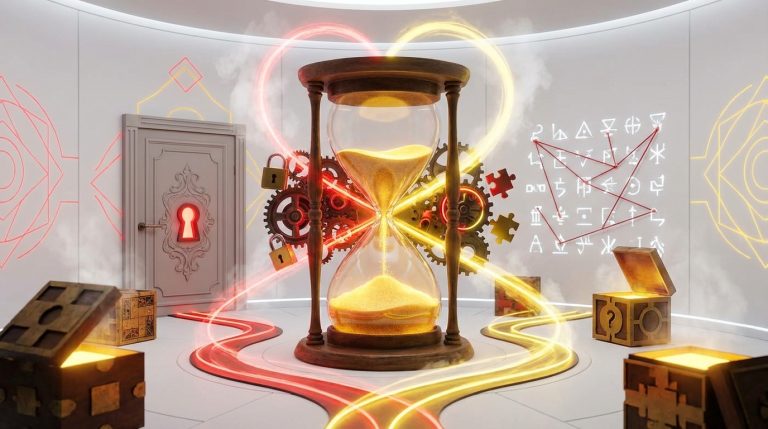
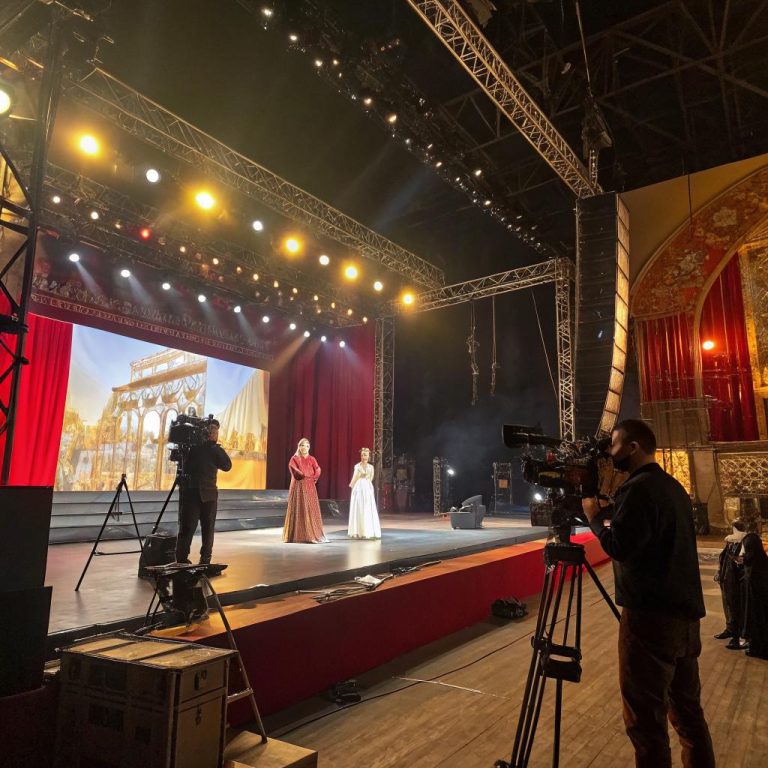
The wooden box is scuffed at the edges, warm from too many hands. Brass inlays catch a low amber light. You slide one panel, hear a faint click, feel a hidden drawer nudge your palm like a held breath finally released. No loading bar. No progress notification. Just you, wood, weight, and the quiet thrill of something real moving under your fingertips.
Physical puzzles still beat digital screens in 2026 because they give our bodies a job, our senses a feast, and our minds a slower, deeper burn. They anchor attention in actual space, create stronger memories, and invite shared play that feels human, not transactional. For designers, performers, and anyone crafting experiences, physical puzzles are not nostalgia pieces; they are the sharpest tools we have for immersive engagement, emotional presence, and long-term impact.
Why touch still matters more than tap
Screens are fast. Bright. Convenient. They also flatten a whole world of sensation into a smooth rectangle and a light vibration.
Physical puzzles pull us backward and forward at the same time: backward into childhood curiosity, forward into new forms of theater, live gaming, and experiential art. They speak the language of weight, resistance, sound, and time.
- “What happens if I pull this?” is a different question from “What happens if I tap this?”
- A misaligned gear feels different from a wrong password, and the brain records that difference.
- Shared objects in a room ask for shared negotiation; shared screens tend to divide, not unite.
Digital screens offer information. Physical puzzles offer encounter.
For anyone designing escape rooms, immersive theater, exhibition spaces, or interactive art, that difference is not poetic decoration. It shapes behavior, pacing, safety, and even revenue. The medium you choose changes how people move, speak, and remember.
The body as the first interface
Before we had “interfaces,” we had bodies. Grip strength. Peripheral vision. Proprioception: where your elbows are, where the floor starts, how far you can lean before you fall.
A well-crafted physical puzzle speaks directly to that older software.
Think about:
| Sensation | Physical puzzle | Digital screen |
|---|---|---|
| Resistance | A wheel that turns, then jams, telling you there is a lock or misalignment. | A slider stops at the end of a track with the same glassy feel as everything else. |
| Temperature | Cold metal latch vs warm wood panel; different materials hint at different functions. | Uniform temperature; any “difference” is visual only. |
| Sound | Scrape, click, creak; accidental sounds that carry across the room. | Curated sound effects, often ignored as “just the app”. |
| Space | You step, reach, crouch, shift weight; your whole body enters the puzzle. | You remain mostly static; fingertips do almost all the work. |
When a puzzle lives in three dimensions, your audience does not just solve it; they inhabit it.
For set designers and immersive directors, this means your “UI” is not a menu or a button, but a ladder, a hidden compartment in a wall, the angle of a spotlight over a carved code. You are choreographing bodies, not thumbs.
Attention, memory, and the slow burn of the real
Screens are designed for speed. Tap, swipe, reward. Notifications interrupt. Animations snap. Everything nudges the mind toward fragmentation.
Physical puzzles demand slower thinking without needing to say “slow down.”
Why the brain keeps real objects longer
When a player remembers an excellent room or show, they rarely talk about a digital lock. They talk about the heavy book that turned out to be a safe. The sound of sand dropping behind a wall. The smell of machine oil on a rusty crank.
Sensory richness matters. Our memory encodes stronger when more senses are engaged. A code entered on a tablet is shallow: visual only, maybe a tiny haptic tick. A code that lives as carved symbols in a textured surface, lit at a slant, half-hidden in shadow, is anchored in sight, touch, movement, and context.
Physical puzzles are not only harder to ignore; they are harder to forget.
Designers sometimes defend screens with “people expect them now.” That is a shallow target. People also expect pop-up cookie banners and still hate them. Expectation is not affection.
Use screens sparingly, where they are strongest: for complex logic, branching narratives, or time-based feedback that would be impossible or unsafe mechanically. But the spine of the puzzle experience, if you want long-term recall and genuine presence, should live in wood, glass, metal, and light.
Cognitive load and emotional pacing
There is a useful tension between thinking and feeling in puzzle design. Too much logic, and you get exam hall energy. Too much spectacle, and you get passive consumption.
Screens have a habit of collapsing that tension. A tablet in a room screams: “Do the puzzle here.” People crowd around it, stare, and stop noticing the space. The world shrinks to a rectangle.
Physical puzzles scatter cognition across the room:
– A lever on one wall.
– A set of symbols embedded in the floor.
– A window that only matters once the lights change.
Players spread out, argue, test, fail, regroup. This is not just social; it is cognitive relief. The brain moves between tasks, modalities, and levels of difficulty.
A good physical puzzle behaves like a breathing pattern for the room: tension, release, discovery, pause.
Screens can serve that rhythm, but they rarely set it. Left unchecked, they compress everything into problem sets and answers, skipping over mood, anticipation, and the sensory texture that immersive work desperately needs.
Social chemistry: objects as collaborators
If you watch a group tackle a screen-based puzzle, the pattern is dullly consistent. One person holds or stands closest. Others hover behind or beside, trying to see. Comments trail off. The person in control becomes the “driver”; everyone else becomes audience.
That is not collaboration. That is a small meeting.
Physical puzzles rearrange that hierarchy. They do not centralize power in a screen; they distribute agency through the room.
How physical puzzles invite collaboration
Imagine a large mechanical door that only opens when three handles are pulled at the same time, each at a slightly different angle. No single person can “own” that moment. They have to communicate. Count. Feel each other’s timing.
Or a puzzle where one player has to shout what they see from an elevated balcony while another traces that pattern on the floor. The puzzle uses sightlines and distance to engineer cooperation.
Physical puzzles can make collaboration a physical necessity, not a polite suggestion.
Screens can support shared tasks, but their format resists sharing. Even multi-touch tablets place everyone on the same side, flattening perspective. Group work turns into “take turns using the device” rather than “we hold different parts of the machine.”
For immersive theater and escape games, this difference shapes the room’s emotional climate. Shared effort around an object creates micro-dramas: “You hold that lever; I will watch the door”; “You read; I will turn.” These are the little stories audiences carry away.
Immersive design: the set is the puzzle
From a design perspective, the strongest argument for physical puzzles is simple: they integrate with the set. They stop being “content” and become architecture.
Screen-based puzzles sit on top of the world you build. They add an extra layer that often feels imported, no matter how elegant the UI. A tablet nailed to a medieval tavern wall still looks like a tablet. Projection helps, but it still leads back to a flat surface.
World consistency and material honesty
Immersive experiences live or die on whether the world feels self-consistent. Physical puzzles allow you to work with material logic:
– In a ship-themed room, ropes actually pull things.
– In a laboratory, real glass vials tilt and drip.
– In a crypt, stone slabs grind aside with visible effort.
Each interaction confirms the rules of that world. Wood behaves like wood. Metal behaves like metal. That predictability is not boring; it is the canvas you paint surprise onto.
When everything that looks interactive actually is, you train the audience to trust the set.
Screens often break that trust. People tap them and ask, silently or out loud: “Am I inside the world right now or inside a menu?” That question drags them out of story and into interface.
There are clever exceptions: hidden screens behind faux mirrors, micro-displays buried in props, responsive projection that clings to physical forms instead of blank walls. But these work best when they extend, not replace, tactile mechanics.
Designing physical puzzles that belong in 2026, not 1926
Physical does not mean old-fashioned. It does not mean cogs for their own sake, or fake steampunk decor. In 2026, the most potent physical puzzles blend material intelligence with quiet embedded tech.
Embedded tech, invisible screens
Instead of asking “screen or no screen,” ask “where does logic live, and where does contact live?”
A few guiding patterns:
| Design choice | Good use | Weak use |
|---|---|---|
| Hidden microcontrollers | Arduino or similar boards track magnet positions inside wooden panels; the player never sees electronics. | A visible circuit board with blinking LEDs that do not match the world tone. |
| Light feedback | Small, warm LEDs glow behind frosted glass when a mechanism aligns, like embers. | Harsh RGB strips pulsing in “gaming” colors in a 19th century study. |
| Sound feedback | Subtle solenoid clacks and servo hums masked by environmental sound design. | Loud beeps that feel like a checkout scanner in a fantasy temple. |
| Wear and maintenance | Appropriate patina, tested motion paths, parts placed for easy swap. | Fragile mechanical ornaments that seize up after a weekend of use. |
Physical puzzles can be quietly digital inside, as long as the player touches wood, stone, fabric, and metal instead of plastic screens.
In other words, keep the logic in silicon if you must, but keep the experience in matter.
The health of attention: screens fatigue, objects nurture
Audiences arrive already tired. Not just physically, but visually. Hours of laptops, phones, signage, advertising. The glow never stops. When they pay for an immersive ticket or walk into an interactive exhibition, they are often craving absence of screens more than presence of “content.”
Physical puzzles respond to that craving almost by accident. To interact with them, you have to focus on something that does not ping you. There are no notifications inside a secret compartment.
Eye, hand, breath
There is a gentle recalibration that happens when someone spends an hour handling real mechanisms:
– The eye adjusts to lower brightness and richer shadows.
– The hand rediscovers pressure, not just position.
– Breathing matches physical effort: push, exhale; release, inhale.
None of this is mystical. It is simple sensory balance. Screens stimulate primarily with light and speed. Physical puzzles spread demand across muscles and joints. The result often feels like relief, even when the game is stressful.
When the set gives the hands real work, the mind feels less hunted.
For creators, this has a direct impact on repeat business and word of mouth. Experiences that leave people less exhausted, even if mentally challenged, are the ones they recommend.
Accessibility: where physical puzzles must get better
So far, this might sound like an argument that physical is a clear winner in every category. That is not accurate. Physical puzzles can exclude people far more easily than screens if the design ignores disability, reach, or sensory difference.
A mounted tablet can add screen readers, adjustable font sizes, alternative color schemes. A heavy crank on a wall at a fixed height does not adjust itself.
If you love physical puzzles, you also inherit the responsibility to make them welcoming.
Rethinking interaction for different bodies
Good physical design asks who is physically present, not who is hypothetically ideal.
Some practical shifts:
– Height variability: Do not place critical interactions only above average shoulder height. Use angled planes, floor-level clues, and mid-height mechanisms.
– Redundant cues: Combine visual symbols with tactile differences and clear shapes, so players with low vision are not locked out.
– Strength options: Use counterweights, gearing, and assistive springs so that effort feels dramatic without requiring high force.
– Clear paths: Puzzles that require crawling, tight squeezing, or climbing should not be mandatory for core progress, or they should have alternate routes.
If a puzzle requires a “perfect” body, it is not clever; it is lazy.
Digital screens have strong accessibility tooling by default. For physical puzzles in 2026, designers need to catch up, not ignore this gap. Hybrid designs help: sensors behind accessible props, buttons with clear tactile labeling, audio feedback you can trigger from multiple positions.
Cost, durability, and the temptation of the tablet
There is a reason so many escape rooms and museum installations reach for tablets and touchscreens. They are easier to prototype, update, and replace. They crash, yes, but fixing software bugs and expanding content feels less daunting than re-building a faulty mechanical door.
From a budget and maintenance perspective, screens look safer.
When screens look cheaper, but are not
The problem is that the “cheapness” is often short-term. Players adapt quickly. A room or installation that leans heavily on generic touch UI ages fast and feels similar to competitors, which leads to faster churn and discounting.
Physical puzzles, when built with care, wear in, not out. The scuff on the handle, the shine on the frequently touched stone, the small rattles and scrapes become part of the atmosphere. Failure modes are visible and fixable: a loose hinge, a stripped screw.
A broken physical puzzle can be repaired with tools. A broken digital mood is harder to fix.
In terms of brand value, the distinctiveness of custom physical mechanisms often outweighs the higher upfront cost. There are many screens in the world, but that peculiar wooden safe that unlocks with a pressure pattern on its carved leaves exists only with you.
From a 2026 perspective, where audiences have seen many, many digital overlays, uniqueness is not a luxury. It is survival.
Hybrid experiences that still favor the real
The choice is not binary. The most graceful experiences now use screens like lighting gels: to color and support, not dominate.
Here are some patterns that respect physical primacy:
- Projection onto physical surfaces, where the wall or prop remains the star, and the image simply shifts its mood or reveals hidden layers.
- Small, embedded displays that feel like part of a machine’s “nervous system,” relaying status rather than asking for input.
- Wearables that buzz or glow only once in a while, nudging players toward a physical element rather than consuming attention.
In all of these, player agency still lives in turning, lifting, aligning, and placing. The screen is a messenger, not a gatekeeper.
Why pure digital puzzle rooms rarely feel immersive
There are online puzzle hunts and fully VR rooms that manage emotional depth. But in physical venues, spaces built mostly around screens tend to flatten into “game cafes with decor.”
Without genuine links between bodies and matter, the room is background. The “real” game happens on the screens, so the set becomes expensive wallpaper.
For creators working in set design and immersive theater, that is a waste of your most powerful asset: actual space.
If people can have the same experience at home with a laptop, your physical venue is not earning its rent.
Physical puzzles insist that being there matters. Your particular walls, your particular props, your particular weights and sounds. That is the real advantage.
The emotional arc: from curiosity to intimacy
A tablet can surprise, but it rarely feels intimate. You tap, it reacts. This is a transaction.
A physical object can feel almost companion-like. A chest with a too-stiff hinge. A key that never quite fits until the room teaches you something about angles. A book that waits quietly for the right touch.
Over time, players build a small relationship with these objects. They remember “that impossible drawer” or “the mirror that talked back.” They may not recall the exact logic tree behind the puzzle, but they remember the character of the thing.
Physical puzzles can hold personality, not only function.
In immersive theater, objects often serve as characters without lines. A cursed mask. A flickering lamp. A locked music box that only opens when a player hums the melody. Screens can simulate characters, but they rarely earn that quiet attachment.
That is why, in 2026, even as technology races ahead, many of the most respected immersive creators are investing in carpenters, metalworkers, fabric artists, and prop builders. The set is no longer a backcloth; it is an active cast member.
Why “screen-first” is a weak starting point
If you begin design with “Where can I put a screen?”, you have already narrowed your imagination. You will end up thinking in menus, sequences, and prompts.
Start with:
– How do I want people to move?
– What do I want them to touch?
– Where does the room breathe, and where does it constrict?
– What should feel heavy? What should feel delicate?
Only after those questions should you ask where screens might quietly assist.
Good immersive design treats screens like spices, not the main course.
This is not an anti-technology position. It is an aesthetic and experiential one. When you care about how things feel, not only what they do, physical puzzles will almost always stand ahead of flat glass.
Because the memory of a solved riddle on a tablet fades. But the memory of your hands shaking from turning a stubborn wheel while a door unlocks in a shower of dust can stay for years.