The paint smells faintly of linseed and damp plaster. A ladder leans against a raw brick wall. Somewhere outside, a bread line is shuffling forward in the cold, but inside this half-lit school hallway a young artist balances on the top rung, brush in hand, laying down a field of ultramarine sky for children who have not yet learned the word “crisis.”
The Great Depression did not just crush economies; it forced governments and artists to share the same room, to ask an uneasy question together: “What are walls for?” Very quickly, walls became more than surfaces. They became public promises. Murals in post offices, sculptures in parks, theater on street corners, itinerant art classes in church basements. In the worst years of hunger and unemployment, public art projects turned empty time and bare space into collective memory.
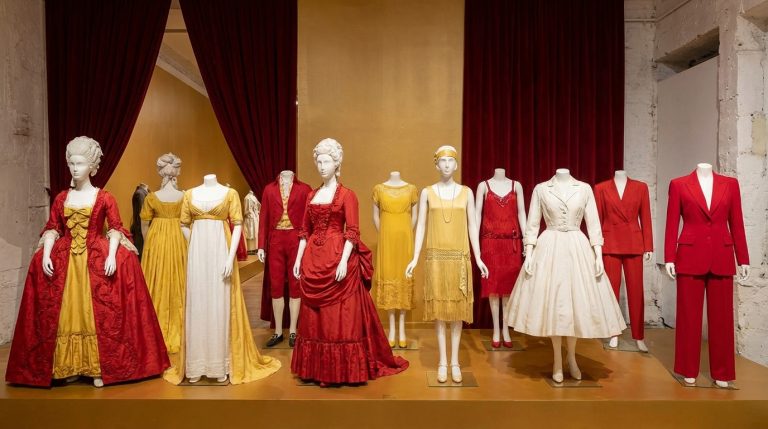
At its heart, the Great Depression’s impact on public art was twofold: it gave thousands of artists work when there was none, and it pulled art out of private salons and into public buildings, streets, and schools. Art became part of daily life. The state paid for it, but the public owned it emotionally. Murals told stories of workers and harvests. Sculptures honored common labor instead of distant kings. Theater stepped into relief lines and union halls. This period set a long-lasting precedent: art could be a public service, not a luxury. For anyone working in set design, immersive theater, or experiential spaces today, many of our instincts about narrative environments were seeded in these projects from the 1930s.
The Depression years turned the city itself into a stage set, with the federal government acting as both producer and patron, and ordinary citizens as the audience walking through the scene every day.
From Market Collapse to Murals on the Wall
When banks failed and factories went quiet, artists lost patrons almost overnight. Collectors stopped buying. Galleries closed or ran skeletal programs. A painter or sculptor found that their work had become as nonessential as expensive jewelry.
President Franklin D. Roosevelt’s New Deal programs changed that dynamic. Through agencies such as the Public Works of Art Project (PWAP), the Treasury Section of Painting and Sculpture, and later the Works Progress Administration’s Federal Art Project (FAP), the government did something radical by today’s standards: it treated artists like workers who needed jobs, not curiosities who needed charity.
These programs did more than hand out stipends. They commissioned specific work. Mural cycles for post offices. Relief sculptures for courthouses. Stage sets for federal theater projects. Design for posters, exhibitions, and community art centers. The state became the biggest “client” many artists would ever have, and the “site” was the shared architecture of American life.
- Work relief: Artists, designers, and craftspeople were paid weekly wages to produce public art.
- Civic visibility: Art projects centered on schools, post offices, city halls, libraries, and parks, involving the entire community.
- New subject matter: Ordinary workers, industry, agriculture, and regional scenes replaced aristocratic portraits and mythic allegories.
The economic collapse hollowed out private patronage, and into that void stepped public commissioning on a scale the United States had never tried. The result was not only a safety net for artists. It was a new visual and spatial language for public life.
The Depression made the wall itself a public medium: not just a structural surface, but a narrative plane where the country could rehearse who it thought it was.
Murals: Narratives Poured into Wet Plaster
Post Offices as Storyboards of a Nation
Imagine walking into a small-town post office in 1937. The tile floor is cool underfoot. Dust hangs in shafts of light that cut through high clerestory windows. On the far wall, running above the service windows, a mural stretches from one end of the room to the other. Fields of wheat, a river, a factory, a line of workers carrying tools. People who look like the ones in line beside you, rendered ten feet tall.
These murals came from programs like the Treasury Section of Painting and Sculpture, which held competitions for works to fill new federal buildings. The aim was not pure decoration; it was instruction, reassurance, and sometimes quiet propaganda. Art became a civic mirror.
The content of these murals tilted toward:
| Theme | Typical Imagery | Effect on Public Space |
|---|---|---|
| Labor | Farmers, construction workers, miners, machinists | Turned work into something monumental, worthy of public honor |
| Regional identity | Local rivers, crops, industries, folk customs | Made federal buildings feel rooted in local experience |
| Progress | Bridges, trains, modern machinery, electrification | Suggested a future beyond the Depression, visual optimism |
| Community | Families, schools, town gatherings | Reinforced the idea of a shared civic project |
For anyone designing immersive environments, these murals read almost like early “environmental storytelling.” The architecture and the painting were choreographed together. Stairwells, lobbies, and vaulted ceilings became part of a visual sequence. As citizens moved to mail a letter or pay a fee, they walked through a narrative of who they were supposed to be: hardworking, communal, resilient.
The Great Depression fused narrative with architecture, so that a lobby became not just a place to wait, but a scene to inhabit.
Stylistic Shifts: From Abstraction to Accessible Imagery
Before the crash, the art world had flirted with European modernism: abstraction, fragmentation, bold experiments with form. In hard times, that language looked detached from daily struggles. The federal art programs leaned toward representational work that an exhausted steelworker could understand at a glance.
This did not mean bland illustration. Many artists used the accessible style as a veneer for sharp social commentary: heroic workers towering over fragile bankers, or agricultural murals that quietly hinted at racial inequality. But the choice to favor clear, narrative imagery had lasting impact. It legitimized muralism, social realism, and figurative public art in a way that museums alone never did.
In set design and immersive theater, this preference for readable imagery still lingers. When you design a subway station performance or a site-specific show in a warehouse, you are often aiming for the same clarity: a visual story that a passerby can grasp in a few seconds, even if deeper layers unfold with time.
Sculpture: Monuments for Ordinary Hands
From Generals to Workers
Public sculpture before the Depression often honored conquerors: generals on horseback, grand allegories of Liberty or Victory. During the Depression, with relief programs funding sculptors, the focus shifted toward the anonymous worker. A steelworker hefting a beam. A mother holding a child in front of a factory gate. A line of figures combining agricultural and industrial tools.
Stone and bronze, materials that once celebrated elite history, now recorded everyday labor. Parks, plazas, and building entrances gained sculptural reliefs that integrated with doors, railings, and stairs. The threshold into a courthouse might be flanked by carved figures of farmers and carpenters, signaling that the building belonged to them as much as to judges.
The Great Depression asked a simple question of sculpture: who deserves a monument? The answer, for a brief period, was “everyone whose hands are calloused.”
Integration with Architecture and Space
Architects and sculptors worked closely on many New Deal buildings. Bas-reliefs wrapped around doors. Friezes capped entrances. Carvings followed the geometry of windows and beams. Form and function were not separate.
For artists in spatial fields today, this period models a kind of collaboration that often feels rare: the building is not a neutral box that art decorates afterward. Instead, the art is conceived as part of circulation, light, and massing. A staircase that curves around a sculptural panel turns the simple act of climbing into a slow reveal, almost like a camera dolly shot.
Set designers can read these sites as early “walkthrough installations,” where your movement scripts the visual experience. Tilted reliefs, sightlines from the street, the silhouette of a statue against the sky at sunset: all of this was the language of staging, applied to civic life.
The Federal Theater and Living Stages in Public Life
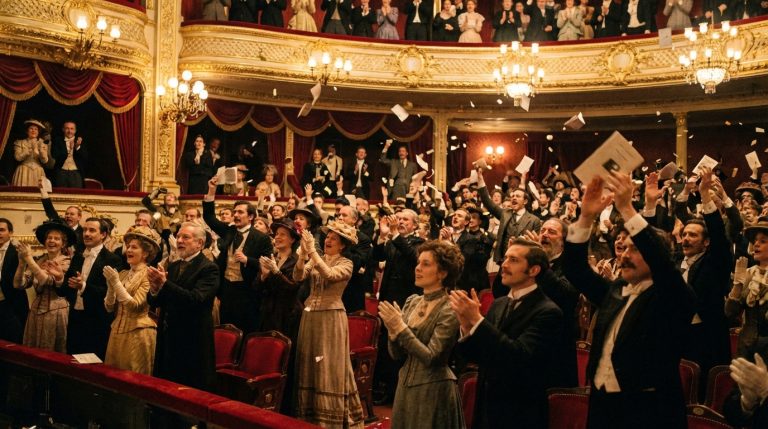
If the murals were static storyboards, the Federal Theater Project (FTP) under the WPA was live scenography pulsing in real time.
Theater as Public Service
The FTP hired actors, directors, playwrights, designers, stagehands. It reclaimed dark theaters and created new venues: makeshift stages in school gyms, park pavilions turned into open-air theaters, union halls reimagined as performance spaces.
The impact on public art projects was immediate:
– Theater entered spaces that were not traditionally “theatrical”: street corners, relief offices, community centers.
– Audiences who might never buy a ticket saw plays about housing, labor, and racial injustice.
– Designers experimented with mobile sets, flexible staging, and environmental use of space to reach more people.
This was perhaps the closest the United States has come to treating theater as infrastructure, like street lighting or public transit. It was expected to serve.
Living Newspapers and Proto-Immersive Storytelling
One of the FTP’s most interesting forms was the “Living Newspaper” series. These productions dramatized current events: agricultural policy, public housing, labor disputes. Facts and statistics appeared on projection screens. Actors moved through modular sets that shifted in full view. Scenes exploded across multiple playing areas, sometimes surrounding the audience.
The aesthetic was raw, present, almost journalistic. Sets tended to be stripped-down, graphic, and flexible. A single staircase, a few platforms, a bank of lights, printed banners: enough to sketch a factory, a tenement, a courtroom. The effect was less like sitting in a plush theater and more like walking through a civic argument.
For contemporary immersive creators, the connections are clear:
| Federal Theater Practice | Modern Immersive Parallel |
|---|---|
| Multiple stages and moving focus | Multi-room, roaming audience experiences |
| Direct address and narration of facts | Guides or “docents” who speak to the audience as themselves |
| Simple, symbolic sets that quickly transform | Modular scenic units and projection-mapped environments |
| Content rooted in current social issues | Immersive work that tackles climate, inequality, or urban change |
The Living Newspapers treated the stage like a public square: a place to argue with light, scenery, and bodies in motion.
The Federal Theater’s end under political pressure is a warning sign that public art tied to blunt critique often meets fierce resistance. But for a brief time, the United States had a theater network that treated stories as essential civic tools.
Graphic Design, Posters, and Everyday Visual Rhythm
Not all Great Depression art towered above people. Much of it lived at eye level on lampposts, bus shelters, and community notice boards.
Posters for Parks, Exhibitions, and Public Health
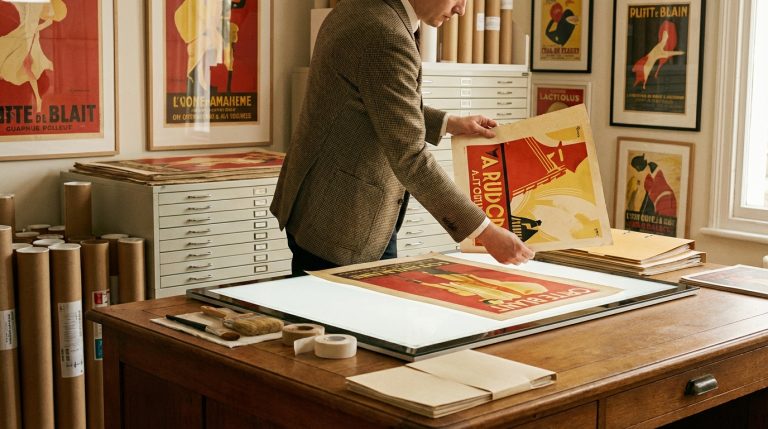
The WPA Poster Division produced thousands of screen-printed posters advertising concerts, art shows, health campaigns, and educational programs. The visual language is striking: flat color planes, bold typography, simplified shapes. These works were explicitly designed to be read at a glance from a passing trolley.
The impact on public space was quiet but pervasive. Empty walls and fences gained rhythm. Street corners acquired pulses of color. For people in bleak conditions, these posters were small visual acts of care. They signaled that something is happening, somewhere, for you.
For set and experience designers, these works read like texture samples for a citywide stage. Color-blocked posters echo stage flats. Repeating typography becomes part of a neighborhood’s “branding” before that word existed in its current sense. The repetition of motifs across many blocks gave a subtle sense of connection: you might see the same park poster three times in a week in different places. The city began to feel like a coordinated environment.
Exhibition Design and Temporary Environments
The Depression era also saw federally funded exhibitions about agriculture, health, labor, and science. These were not austere rows of charts. Designers used large diagrams, models, dioramas, and staged tableaux to make information spatial.
Darkened rooms with illuminated models of dams. Walk-through sections of model houses showing better sanitation. Relief maps with tiny lights that could be switched on and off. This was scenography in the service of education, funded as relief work.
The line between “museum exhibit” and “immersive installation” softens when you see how 1930s designers used light, scale, and tactility to pull people bodily into an idea.
These projects leaned on craft: carpentry, painting, typography, simple mechanical effects. There was no digital technology. Yet the principles are the same ones that drive many contemporary immersive practices: information turned into space, argument turned into journey.
Community Art Centers and Local Creative Infrastructures
The Neighborhood as Studio
WPA-funded community art centers popped up across the country, especially in smaller cities and working-class neighborhoods. These centers hosted art classes, exhibitions of local work, community theater rehearsals, and sometimes even craft workshops.
The impact on public art was indirect but powerful:
– They trained a generation of people to think with their hands, not just consume finished work.
– They gave local artists visibility, walls to show on, and modest support.
– They acted as social hubs where murals, plays, and exhibitions were planned collectively.
An art center could be housed in a repurposed storefront or a church hall. Floors were scarred with paint. Tables held clay, lino blocks, scraps of cloth. For many children and adults, this was their first contact with any kind of structured art education.
From a spatial perspective, these centers were flexible black boxes before black box stages became a formal typology. Chairs could be stacked away, tables moved, walls reconfigured. One weekly poetry circle might share the same square of floor with a puppet theater performance two nights later.
For contemporary immersive artists and set designers, the lesson here is about modesty and generosity. You do not need a monumental building to shape public memory. You need a room where people can rearrange the furniture, some light, and a reason to gather.
Collaborative Making and Shared Authorship
Many Depression-era mural projects involved community consultation. Residents debated themes, suggested local scenes, even posed for reference. This was not pure democracy; artists still held interpretive power, and political boundaries were very real. But the process widened.
You can see this as a precursor to participatory art and co-created immersive spaces, where audiences can leave traces, answer prompts, or even build parts of the environment over time. The Depression cracked the pristine aura of the solitary genius working in isolation. Work relief turned artists into colleagues and neighbors.
Public art during the Depression treated “audience” less as a passive crowd and more as a community living inside the artwork’s consequences.
Tension, Critique, and Censorship
The story is not smooth progress. Publicly funded art in the Great Depression sat at the intersection of economic emergency and political fear.
Artists wanted to address poverty, racism, fascism abroad, and class conflict. Government funders worried about agitation. Murals that depicted strikes or included radical symbols faced censorship or removal. Federal Theater productions that tackled race and labor with too much frankness drew congressional backlash. The FTP was ultimately shut down, partly from accusations of political subversion.
For anyone working in public or semi-public art today, this tension is familiar: who pays for the work, and what stories do they refuse to see?
The Depression era did not solve that problem. It highlighted it. A mural in a post office that showed Black and white workers side by side could produce fierce local debate. A theater piece that depicted corrupt landlords could alarm those in power. Public art in this period was not neutral decoration. It was visible argument.
This friction shaped design choices. Some artists buried critique in allegory or subtle symbolism. Others leaned into confrontation and saw their work removed or painted over. The very real risk of erasure is part of why many surviving pieces feel both bold and coded.
For immersive creators, there is a direct line here: the more your work enters civic space and touches live political nerves, the more you must think strategically about durability, legibility, and risk.
Long-Term Ripples for Public Art and Spatial Storytelling
New Expectations for Government and Art
Before the Depression, the idea that government should pay artists to make work for public benefit was marginal. After the New Deal, it became thinkable, even expected in some circles. Later initiatives, from the National Endowment for the Arts to local percent-for-art ordinances, borrow justification from that earlier moment.
Physically, the country was left with a network of murals, sculptures, public buildings, and theaters that still define the visual identity of many towns. Walk into a mid-century post office in a small American city, and you can still feel the residue of that emergency-era aesthetic: carefully proportioned lobbies, high windows, narrative murals, carved stone.
The Great Depression carved the idea into stone and plaster that art is not a garnish on public life, but part of the architecture of public experience.
Precedents for Immersive and Site-Specific Work
For artists focused on set design and immersive theater, several legacies of the Depression period stand out:
| Depression-era Practice | Contemporary Echo | Lesson |
|---|---|---|
| Murals integrated with civic architecture | Site-specific projections, wall-based narrative environments | Let the existing architecture carry part of your story. |
| Federal Theater in nontraditional venues | Immersive performances in warehouses, streets, historic buildings | Redefine what counts as a stage; design for found spaces. |
| Exhibition design as walk-through education | Experiential museums, narrative installations | Shape learning as a spatial journey, not just text on walls. |
| Community art centers | Makerspaces, community-built installations | Invite making, not just viewing; the space itself can be a workshop. |
The Depression compressed these experiments into a narrow time frame. The urgency of unemployment and social unrest made it easier to try unusual forms: a play about housing policy performed in a tenement courtyard, a mural in a high school gym that doubled as both decoration and political education, a traveling exhibition built to fold into a truck.
For contemporary practitioners, the period offers both inspiration and a sober challenge. The scale of public support then is rare now. Many of us work piecing together grants, private funds, and ticket sales. It is tempting to romanticize the New Deal years, but that can be dangerous. Control came with the money. Surveillance came with the paycheck.
The stronger lesson is about courage in how we treat space. Artists and administrators in the Depression did not accept empty or purely functional rooms. They filled them with imagery, narrative, and performance that invited people to see their own lives reflected at monumental scale.
An Artist’s Eye on Public Memory
The Great Depression took place in cold apartments, on factory floors gone silent, in bread lines and parched fields. But when we remember it visually, we often remember painted walls, carved stone, lit stages, and bold posters pinned over cracked plaster.
For set designers, immersive theater makers, and artists of environment, this period is not distant history. It is a reference library in real space: post offices where composition and narrative wrap around the room, parks where a worker’s body is cast in bronze, archival photos of stages transformed overnight to speak about urgent policy.
If you stand beneath a New Deal mural and listen, you can almost hear the scratch of brushes and arguments in the air. How much truth can we fit into this wall? How much complexity will the funder accept? How much color can we afford? The artists of that time were not decorating. They were staging a public conversation on plaster and stone for people who had lost nearly everything except the instinct to look, to listen, and to gather.