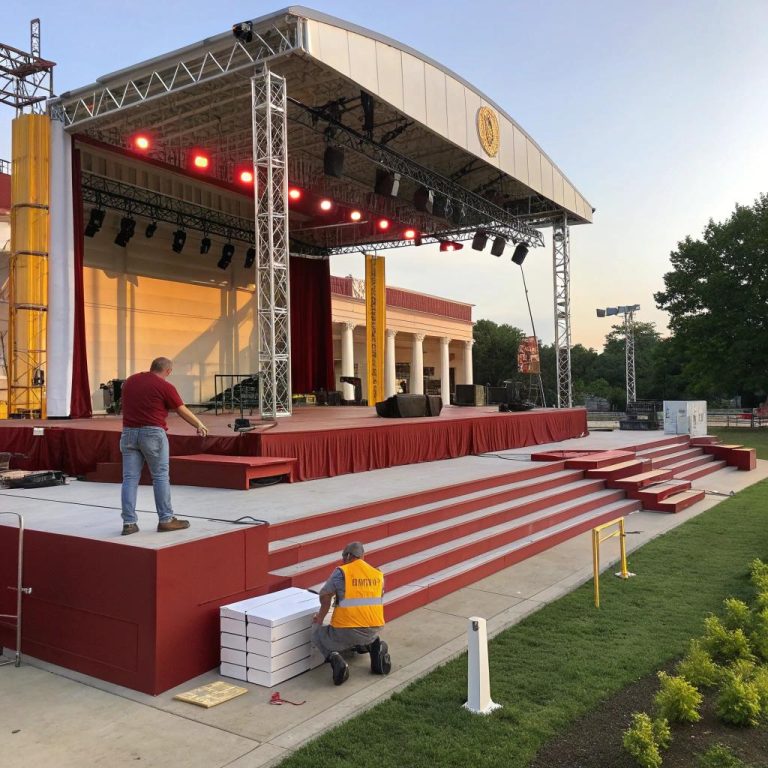
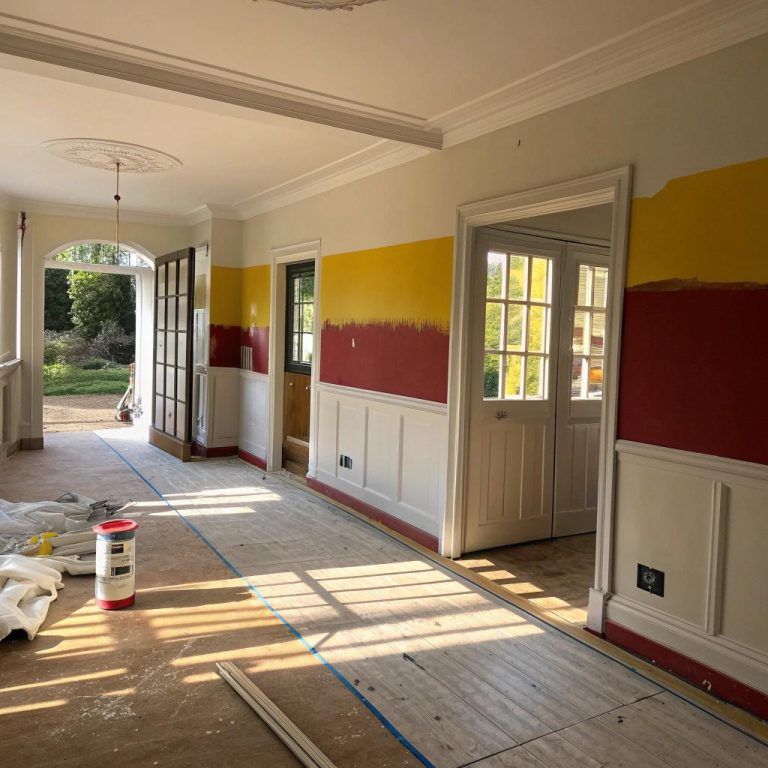
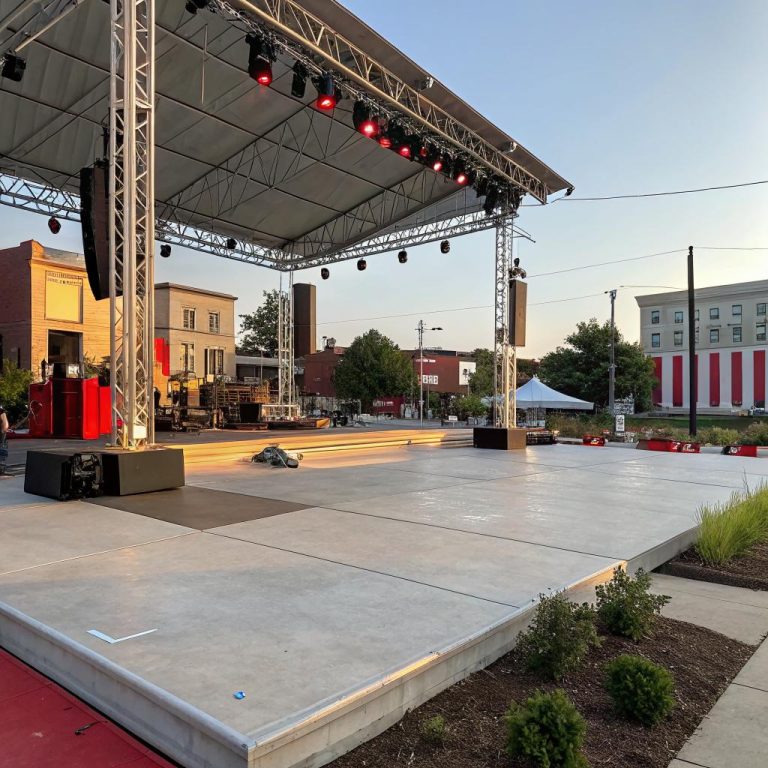
A sheet of plywood leans against the wall, its surface scratched with stories from shows past. Faint outlines of painted bricks, a ghost of a window frame, tape marks from a hurried overnight changeover. Still solid. Still strong. Still waiting for its next role.
Sustainable set design is not about making do with leftovers. It is about treating every plank, pipe, curtain, and screw as part of an ongoing repertoire. The short version: reuse becomes your design language. You build shows with materials that have a past and a future, you store and track them like a library, and you design each production so it can be unbuilt and reborn. That is how you save money, reduce waste, and still create spaces that feel rich, intentional, and alive.
Why reusing materials is not “compromise design”
Reusing materials has a reputation problem. Many designers hear “sustainable” and think “visually dull” or “limited choice.” That only happens when reuse is an afterthought.
When reuse is the starting point, the whole process shifts. You are not simply shopping from a catalogue; you are curating from an archive. That gives your work texture, history, and character that brand-new MDF never offers.
Sustainable sets are not defined by what they lack, but by how carefully each element earns its place on stage.
Here is what thoughtful reuse actually changes in practice:
- You design with a known vocabulary of materials, rather than endless theoretical options.
- Your budget goes further, so you can spend on key pieces that really matter: custom fabrication, specialty finishes, or a single striking object.
- Your crew spends less time hauling fresh lumber and more time refining details and safety.
- Your company sends fewer van-loads to the dump, and more to storage racks.
Reuse is not a constraint that kills creativity. It is a structure that sharpens it. You have to think harder. You make bolder, cleaner choices. Your design eye becomes more disciplined.
The three stages of sustainable set design
Sustainable practice is not one choice; it is a chain of choices that begins at the first sketch and ends long after closing night.
1. Design for disassembly
Imagine your set as a temporary guest in the theater, not a permanent resident. It will arrive, delight, then leave. The question is: what happens when it leaves?
If a piece cannot be taken apart without destroying it, it is not really yours to reuse later.
“Design for disassembly” means:
| Element | Unsustainable approach | Reusable approach |
|---|---|---|
| Platforms | Glued joints, odd custom sizes, nailed skins | Standard modules (e.g. 4×8, 4×4), screwed skins, clear labeling |
| Flats & walls | Permanent scenic paint, staples buried everywhere | Standard flat construction, removable facings, limited adhesives |
| Connections | Construction adhesive, concealed brackets | Bolts, screws, brackets that are accessible and visible |
| Finishes | Heavy textured products that chip and cannot be removed | Thin skins (hardboard, foam, fabric) attached over reusable structure |
The aim is simple: your set should come apart like a well-made garment. Seams where you can see them. Fasteners you can reach. Materials that separate cleanly.
This will affect:
– Your drafting: clear joinery, repeated dimensions, consistent hardware choices.
– Your budget: more screws and bolts, fewer tubes of adhesive.
– Your time: slightly longer build, much faster strike and sorting.
The gain is that every show feeds the next. Your stock grows quietly with each production.
2. Choose materials with a second life in mind
When you pick a material, you are not only choosing how it looks under stage light. You are choosing what happens when the show ends.
Ask one question before ordering anything: “What will this be when this show is gone?”
Here is how to think about that in common categories:
| Category | Better for reuse | Avoid when possible |
|---|---|---|
| Structure | Plywood, standard lumber sizes, steel pipes, aluminum truss | Weird custom shapes that only fit one show, glued assemblies |
| Surfaces | Standard flats, removable wall panels, drop cloth canvas | Fiberglass sculpted elements that shatter, heavy plaster |
| Decor | Real furniture, modular shelving, crates, interchangeable signage | Foam “near-furniture” that crushes, large single-use vinyl |
| Flooring | Reusable marley, painted hardboard sheets, carpet tiles | Wall-to-wall glued carpet, poured coatings that must be smashed |
| Fastening | Screws, bolts, cleats | Heavy adhesives, hidden staples that tear surfaces |
There is also the question of environmental impact. Reuse is already a strong environmental choice, because you are extending the life of what exists. When you combine reuse with careful sourcing, the effect is stronger:
Second-hand materials from local suppliers beat newly shipped “eco” products that travel across countries wrapped in plastic.
Salvage yards, reclaimed timber suppliers, demolition sites with permission from contractors, school or corporate clear-outs: all of these feed a sustainable material library with character and history.
3. Build systems for storage, tracking, and access
Sustainable set design fails when the storage area becomes a graveyard of unidentifiable junk. Stacks of unlabeled flats, swollen platforms, broken chairs from a show three years ago. No one reuses what they cannot find or trust.
To reuse, you need systems. Not glamorous, but powerful.
A neatly labeled rack does more for sustainability than any single sheet of “green” plywood.
Table of simple systems that make a huge difference:
| Area | Good practice | Result |
|---|---|---|
| Labeling | Spray stencil or paint pen with category and size on each item | Fast identification, less rummaging and damage |
| Inventory | Basic spreadsheet or shared sheet with counts and photos | Designers can plan using real available stock |
| Storage layout | Separate zones: platforms, flats, metals, soft goods, props | Less chaos, safer lifting, easier access |
| Condition checks | Quick notes on items needing repair or repainting | Fewer surprises during load-in |
This is not busywork. This is design infrastructure. It shapes what you can conceive in the next project.
Designing creatively with reused materials
Reused material does not mean a stage that looks like a thrift shop exploded. Good sustainable design has a clear aesthetic, even when the ingredients vary.
Let the “archive” be your moodboard
Instead of starting with abstract references and then forcing your stock to match, walk the storage first. Touch surfaces. Photograph textures. Notice repetition.
You might discover:
– A series of old flat frames in identical sizes.
– An excess of black velour legs.
– A pile of timber cut down from a previous multi-level set.
– Metal conduit pieces, all the same diameter.
These are not obstacles. They are your palette.
Ask: “If this show grew out of what we already own, what would it look like?”
For example:
– You find twenty 4×8 platform frames. That nudges you toward a grid-based layout with modular levels.
– You find many lengths of scaffolding. That suggests an exposed structural vocabulary: catwalks, ladders, layered perspectives.
– You find mismatched doors and windows from three past shows. That can become an abstract wall of memory, rather than a literal architectural facade.
Designing this way is closer to collage than to blank-canvas painting. You are assembling, editing, refining.
Use repetition and rhythm to tame variety
Reused elements often come in mixed finishes and ages. The key to visual calm is repetition.
You can:
– Choose one dominant material or color to carry across everything structural.
– Repeat one proportion: tall verticals, narrow horizontals, evenly spaced grids.
– Decide on a single accent color and apply it consistently to reused decor.
When pattern and proportion are consistent, audiences read the world as intentional, not random.
For instance, you might:
– Embrace bare plywood and soft grey metals as your grounding tones.
– Use one saturated color on key pieces (a railing, a doorway, a central staircase).
– Sand and seal all visible reused timber so the grain feels unified, even if the exact species differ.
The aim is to let texture and age show through, without letting chaos take over.
Hide, reveal, and layer history
One of the gifts of reused materials is their past life. Screw holes. Layers of paint. Edges rubbed smooth by many hands. You can choose whether to conceal that history or let it remain visible.
Options:
– Sand and repaint completely for a clean, sharp look where the reuse is invisible to the audience.
– Partially sand, leaving traces of older paint at edges, giving a subtle patina.
– Highlight the old surfaces with light and staging, letting the wear and tear feed the narrative.
Sometimes the most sustainable move is not to restore perfection, but to reframe imperfection as texture.
For immersive work, this is powerful. A wall with faint markings from past sets feels like a building with a long story. A railing with polished handholds feels lived-in before the first audience enters.
Technical strategies for reusing scenic materials
Sustainability depends on care and craft. Rough handling and quick fixes shorten material lives. Careful construction extends them.
Hardware choices that extend life
Every time you reach for a fastener, you are voting for or against reuse.
– Use screws instead of nails for platforms and flats. They remove cleanly, do less damage, and support repeated assembly.
– Use bolts with washers for high-stress joints. They handle repeated tightening without crushing wood.
– Use removable corner braces and cleats instead of permanent glued blocks.
If it feels “quick” during build, it may be costly during strike and storage.
Try to standardize hardware:
| Connection type | Preferred hardware | Reason |
|---|---|---|
| Flat-to-flat | Loose-pin hinges or coffin locks | Fast assembly, repeated use, compact storage |
| Platform-to-platform | Carriage bolts with washers and nuts | Strong joints, easy removal |
| Wall-to-deck | French cleats, angle brackets with screws | Secure, adjustable, removable |
Over time, the consistency pays off: crews know the system, tools are standardized, and assemblies become almost modular.
Surface treatments that survive more than one show
Paint and texture can either rescue a tired flat or destroy its reuse potential.
To keep surfaces reusable:
– Use primer consistently. It evens out previous coats and protects the substrate.
– Favor thin layers of paint instead of thick, heavy, textured coatings that crack and flake.
– Consider scenic muslin or hardboard skins that can be removed later, leaving the frame intact.
– Avoid products that off-gas heavily or are difficult to overpaint.
The surface should tell the story, not trap the material in one role forever.
If a show requires heavy texturing, think in layers. Build that effect on panels or add-on pieces that can be removed intact and stored for later re-use in another form.
Protecting materials during the run
Durability is sustainability. Materials that survive one run in good shape can serve two, three, five more productions.
Practical habits:
– Add sacrificial layers where the action is intense: extra deck panels under furniture, replaceable treads on stairs, corner guards on high-traffic edges.
– Specify protective sealers on floors and handrails that will take abuse.
– Train crews to move scenery carefully, instead of dragging edges across concrete.
These choices are small, but they decide whether your stock looks viable next season or broken.
Reusing props, furniture, and decor
Set sustainability is not only about platforms and flats. Props and furniture hold a lot of hidden waste and potential.
Curate, do not hoard
A props cage can turn into chaos faster than any lumber rack. Boxes of broken lamps, plastic items missing parts, endless near-identical vases that no one likes.
Sustainable reuse needs a curator, not a collector.
Decide on standards:
– Keep items that are sturdy, adaptable, and safe.
– Let go of fragile, poorly made objects that will break under normal use.
– Choose neutral base items that can be transformed: plain wooden chairs, simple tables, clean-lined lamps.
Maintain a habit:
– After each production, sort: keep, repair, donate, recycle, discard.
– Label storage boxes with large, clear text and photos if possible.
– Photograph distinctive items and keep a simple digital catalog.
Designing with “prop stock” as inspiration
Approach props the same way as structure. Look at what you own before designing the specific dressing.
For example:
You find:
– A collection of old office chairs and filing cabinets.
– Vintage radios and typewriters.
– Stacked wooden crates and trunks.
Instead of ignoring them and ordering trendy new decor, ask how your next show might integrate them. Perhaps an abstract office world, a memory archive, or a layered backstage aesthetic where real objects do double duty as both practical tools and story elements.
Reuse here is not only environmental. It also connects a companys shows over time in subtle ways. A chair that appeared in one story appears again in another, for sharp-eyed regulars to notice.
Working with limited budgets and storage
Not every company has a warehouse or year-round staff. Sustainable design still matters in small, scrappy contexts, perhaps even more, because resources are tight.
If storage is small
When space is limited, ruthless selection is key.
Prioritise keeping:
– Standard-size platforms and flats that can work for almost any show.
– High-quality furniture that is versatile in style.
– Soft goods like blacks, neutral drapes, and simple curtains.
– Specialty items that define your company aesthetic: a particular railing design, a set of frames, recurring doors.
Let go of:
– Oddly shaped pieces that cannot be nested or stacked efficiently.
– Heavy items that require complex rigging you rarely use.
– Single-use large sculptural elements that do not disassemble.
A small, well-chosen stock is more powerful than a large collection of awkward or unusable pieces.
If the budget is tight
Sustainable design can be a financial ally:
– Use your existing stock as the base, and spend your budget on a few signature additions that transform the familiar into something fresh.
– Plan your season as a whole, not show by show. One set might pass key elements to the next.
– Build in neutral finishes that adapt. For instance, a grid of platforms that can be reconfigured with different railings and facings across productions.
You may need to resist the urge to completely reinvent each time. That urge can be expensive and wasteful. Focus your reinvention on what the audience truly reads as “new”: light, color, staging, and focal pieces.
Health, safety, and ethics of reuse
Reusing materials carries responsibilities. Old materials are not always benign.
Know when not to reuse
Watch for:
– Timber that is rotten, warped, or infested.
– Paint surfaces that may contain lead (often in very old flats or trims).
– Fabrics that smell strongly of mold or are fire-damaged.
– Electrical elements that are outdated or untested.
If salvaged material risks audience or crew safety, its life on stage should end.
Sustainable design respects humans first. Send unsafe items to proper recycling or disposal streams, not into performance.
Maintain fire safety
Reused drapes and soft goods need up-to-date fire treatment. So do scenic elements that are close to practical lighting or heat sources.
Plan for:
– Regular fire-testing or recertification of hanging fabrics.
– Clear records of which items are treated and when.
– Thoughtful placement of reused materials near electrics.
Safety can coexist with reuse if you keep records and test rather than guess.
Collaborative culture around reuse
One designer alone cannot carry sustainable practice. The whole production culture must shift its habits.
Directors and designers
Designers sometimes fear that reuse will water down the directors vision. That fear is valid when sustainability is an afterthought tacked on late. The solution is to involve reuse from the beginning.
Speak openly:
– Share images of past stock as part of the early visual conversation.
– Pose creative challenges: “We have these 20 platforms; how can we turn them into something the audience has never seen?”
– Be clear where you refuse compromise: sightlines, safety, narrative clarity.
When everyone agrees that the stage must feel intentional, reuse becomes a creative tool, not a limit.
You might need to say “no” to some requests that would demand brand-new builds for very little artistic gain. That is part of your job as a responsible designer.
Technical teams and stage management
Technical directors, production managers, and stage managers live close to the logistics. They understand time, storage reality, and crew labour.
Invite their input:
– Ask which scenic types survive best over seasons.
– Learn which fastener systems are trusted and which create headaches.
– Discuss strike plans early so the set can be broken down efficiently and sorted.
Sustainable design is smoother when the people who will build and strike the set help shape how it is conceived.
Audience communication
You do not need to wave a flag about every reused plank. Still, thoughtful communication can build appreciation.
Options:
– Short notes in the program about how many items were reused, or how certain scenic pieces have served across shows.
– Lobby displays with photos of the same flat in different productions, showing its changing identity.
– Behind-the-scenes talks that discuss the material life of a show.
When audiences see that artistry and responsibility can live in the same gesture, expectations for theater as a craft rise.
Case-driven approaches: designing with the future in mind
To make all of this concrete, imagine three types of productions and how reuse can shape them.
A minimal play with strong architecture
A chamber piece in a black box. Few actors. Strong language. The temptation is to build highly specific walls.
Instead, you:
– Use your stock of standard flats to create a simple, repeating grid.
– Paint them in a single tone that works with costume and light.
– Cut only a few precise openings for doorways and windows, framed with reused trims.
– Keep furniture minimal and drawn from stock, altered with covers or simple carpentry.
After the run, everything returns to anonymous flats and frames. The cuts can be refilled with panels. The only “lost” materials are a few, carefully chosen moments.
An immersive promenade piece
Audience moving through multiple spaces, each with its own flavor. This can be a giant sinkhole for materials if handled loosely.
You start by grouping your stock:
– All existing doors, windows, and frames create a “transition” corridor of thresholds from different periods.
– Platforms and stairs form a central multi-level core.
– Found furniture clusters into “zones”: office, home, archive, ritual.
You design routes, light, and sound to shift how these reused items feel. A chairlit like an interrogation seat in one scene becomes a comfortable reading spot in another.
When it ends, all the structural pieces and most furniture go back to storage still functional.
A highly stylized musical
Bright, bold, with dancing and spectacle. Often, this kind of show invites huge, wasteful constructions.
You resist building giant permanent pieces that only work once. Instead:
– Use your platform stock to create various levels, then wrap them in distinct skins for each scene: magnetically attached panels, clipped decor, or hanging elements from grid and booms.
– Use flats as projection surfaces, so content shifts rather than structure.
– Invest in a few new, modular elements that future shows can re-theme: a staircase with interchangeable balustrades, rolling wagons with removable facades.
The show looks fresh and large-scale, but the skeleton underneath is your familiar stock, ready for its next identity.
Sustainable set design through reuse is not an accessory idea for the margins of your work. It is a different way of thinking about time, material, and memory.
Every screw you undo cleanly is a choice for the future. Every flat you label and store is a promise to the next show. Every board that survives five productions carries the quiet satisfaction that beauty did not come at the price of casual waste.
The stage changes every night. Your materials do not have to be thrown away with it.