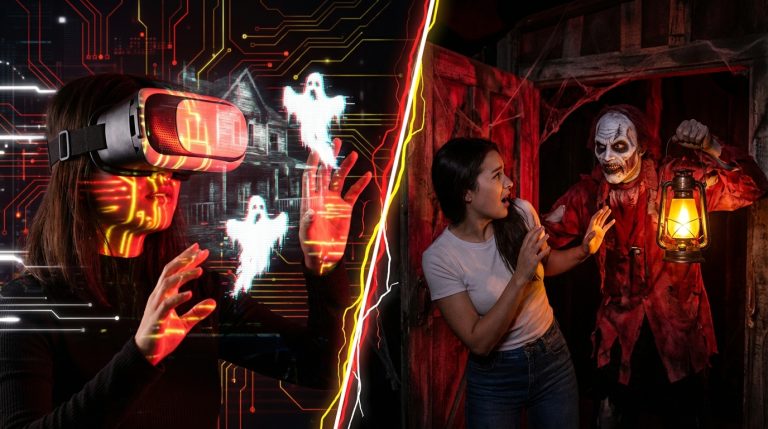
The air goes darker than it should, too fast to be natural. A glow picks out a brick wall that is not really a wall, a streetlamp that hums just slightly off, a door that feels like it might open into another city. Somewhere above, dimmers glide from one cue to the next. The actors move through it as if the light were weather. The audience believes it, or at least wants to. That is the space where a company like Oliver Electric quietly holds the whole thing together.
If you want the short answer to how Oliver Electric powers immersive theater magic, it is this: they treat the building like a character and the electrical system like its nervous system. They design and build custom circuits that can handle heavy theatrical loads, they separate clean power for audio and control, they protect delicate gear from surges, and they think about rehearsal schedules, late-night tech tweaks, and fire code as much as they think about lumens and wattage. They are electrician, collaborator, and sometimes problem solver of last resort, all in one. Without that level of care, the “magic” flickers, buzzes, or worse, trips a breaker in the middle of a scene.
How electrical work shapes immersive theater from day one
If you usually think about electricians as people who just “make stuff turn on,” immersive theater might feel like a different planet. The truth is closer and more practical.
Immersive work has some patterns:
- Close audience proximity to gear
- Hidden infrastructure inside walls, sets, and props
- Fast changeovers between cues and scenes
- Nontraditional spaces that were not built for shows
All of these rest on power. Not only how much, but from where, along what path, and with what level of risk.
When a company like Oliver Electric walks into a raw warehouse or a black box in Phoenix, they are not just counting outlets. They are asking questions that sound a lot like the ones a set designer or lighting designer asks.
Where do people move? Which walls shift? What needs to feel invisible?
“Immersive design lives or dies on what the audience never sees. Cables, junction boxes, panels, and power hubs are part of that hidden landscape.”
If the electrical plan starts early, it shapes the space in a good way. If it comes late, it usually shapes the space in a way that hurts composition, safety, or both.
Electricians as early collaborators, not last-minute firefighters
In many theater projects, the call to an electrician comes after plans are locked. That habit works badly once you move into immersive territory.
For example:
- A hallway scene that needs flickering practicals above the audience
- A secret room revealed by sliding a bookshelf
- A staircase that actors climb while carrying battery-powered lanterns
All of these have electrical needs that affect framing and build:
– Where do the feed lines run so they do not cross a path of travel?
– How do you keep moving scenery from grabbing cables?
– How many dimmable circuits does that small “hallway” actually need once you add emergency egress lighting?
This is where an electrician who thinks theatrically can say, “If you shift that opening 18 inches, I can give you two more controlled zones and hide the junction.” It sounds small. It is not.
Oliver Electric, judging by how they present themselves and the sort of work they target in Phoenix, seems to understand that kind of timing. Not every electrician does. Some will say, “You asked for plugs, here are plugs.” For an immersive show, that attitude almost always ends in taped cables, ugly compromises, and tired crew.
What immersive sets really need from an electrical partner
If you strip away the theatrical language, immersive shows lean on a few clear electrical priorities. These are pretty grounded, not mystical at all.
1. Enough power, in the right places
Most immersive builds push buildings a bit. You have:
– LED fixtures that are cheap to run but numerous
– Practical lamps wired into furniture and walls
– Sound systems with multiple zones
– Control systems, sensors, and maybe media servers
One of the worst habits I see is designers estimating power “by feel”. You know the conversation: “LEDs draw nothing, we will be fine.” Then tech week hits, someone adds four fog machines and a few heaters, and the math stops working.
An electrician who knows theater will:
- Calculate real load per circuit, not just per room
- Balance phases so you do not cook one leg of a panel
- Tell you upfront when your dream needs a subpanel, not just power strips
“Good power planning is not glamorous. You only notice it when it goes wrong and a scene dies under flickering lamps.”
Does this slow down the art? Sometimes it feels that way. But when you are not resetting breakers between runs, you remember why the math mattered.
2. Clean power for sound and control
Nothing kills immersion faster than a ground hum in a quiet scene. Or flickering pixels on a projector because the dimmer rack shares a dirty leg with a media server.
Oliver Electric, or any electrician doing serious show work, will often separate:
| System | Power approach | Why it matters |
|---|---|---|
| Audio | Dedicated, isolated circuits; attention to grounding | Reduces hum, buzz, and random pops |
| Lighting dimmers | Grouped on their own breakers and panel spaces | Avoids interference with sensitive electronics |
| Control & networking | UPS units, surge suppression, clear path back to panel | Prevents reboots during power dips or spikes |
This is not “audiophile” fussiness. It is basic survival in a space full of DMX lines, power cables, and sometimes marginal building wiring.
3. Distribution that respects the set
From a design side, you want:
– Clean walls with no exposed conduit where a guest stands inches away
– Props that glow or move without obvious cables
– Ceilings that look like a story, not an electrical aisle
From a technical side, you want:
– Access to connections for maintenance and fast swaps
– Safe routing that meets code
– The option to add or remove loads during previews
Marrying those two sets of needs is where a company like Oliver Electric earns trust. There are many choices: surface raceway that disappears in shadow lines, low-profile floor boxes under rugs, false beams that hide cable trays.
“The best electrical path is usually the one that no one remembers building, because it simply fits the set and the story.”
Sometimes that means pushing back on a designer who wants a brick wall with no access at all. Sometimes it means pushing back on a standard approach and suggesting something less tidy on paper but better in the room.
From Phoenix buildings to immersive worlds
If you are working in a city like Phoenix, you find a lot of spaces that are not theaters: strip mall units, warehouses, old offices, even houses. Each space has its own electrical history. Some are fine. Some are a mess.
Reading the building before sketching the world
A smart step before major design work is a walk-through with your electrician. Not a quick glance, but a “flashlight and panel key” visit.
Things to look at together:
- Age and condition of the main panel and subpanels
- Existing lighting circuits you might repurpose or need to replace
- Paths for adding conduit without tearing down structural elements
- Ventilation for any new dimmer or equipment rooms
I used to think this part was dull. Then I watched a show lose an entire side of the building because a decades-old panel failed during tech, and there was no budget or time for a replacement.
If Oliver Electric or a similar contractor is involved early, they can tell you which walls are fantasy and which are “you are not touching that without a permit.” That has a direct effect on where your audience walks and what they see.
Old buildings, new requirements
Many immersive projects love older buildings. They have character. They also have:
– Cloth-insulated wiring
– Odd grounding schemes
– Panels that no one has updated since the 70s
Sometimes designers romanticize this a bit. Exposed conduit and antique junction boxes look great in a haunted hotel concept, until you realize some of those lines still carry actual load.
A practical electrical partner will help you sort:
| Element | Can be scenic only? | Needs real electrical upgrade? |
|---|---|---|
| Vintage fixtures | Yes, if rewired for low-voltage or LED and isolated | Yes, if used at full mains and audience can touch |
| Old conduit | Yes, as dead scenery | Yes, if still active and not up to code |
| Mechanical switches | Yes, as interactive “dummy” props | Yes, if they control live power in guest areas |
You might lose a bit of authenticity when you swap out some antique sockets. You gain something more useful: the confidence that no guest is about to get a shock during a key moment.
Supporting lighting designers and set designers without smothering them
If you are a designer, you have probably met two types of electricians.
One says “No” a lot and seems to enjoy it.
The other says “Yes” to everything until there is smoke.
The kind of partner that immersive work needs lives somewhere between those two. Companies like Oliver Electric tend to become favorites because they speak both languages: they can talk in amps and code, but they also care about sightlines and shadows.
Translating drawings into real circuits
Lighting and set drawings often show intent more than literal wiring. For instance:
– A hallway with fixtures every 3 feet
– A grid of practical bulbs over a bar area
– A mirror that seems to glow from within
The electrician has to translate that intent into runs, junctions, and breakout points.
Good collaboration looks like this:
- Electrician marks likely junction locations on plans and checks with designer about sightlines
- Designer adjusts placement to hide plates behind scenic elements
- Both agree on “sacrifice zones” where visible hardware is acceptable
The less romantic, but maybe more honest, side is this: someone needs to count every single fixture, outlet, and device. In my experience, electricians who respect design will still insist on this boring part. And they are right.
Dimmer strategy and control zones
Immersive work often needs more nuanced control than a simple front-of-house rig.
You might have:
– Rooms that change color temperature with the story
– Practical lamps that flicker as characters pass
– Blackouts in one section while another stays live
All of this needs circuits grouped into sensible, flexible zones.
Questions that are worth sitting down with Oliver Electric or a similar electrician to answer:
- Which circuits must always stay live for safety and egress?
- Which can share a dimmer channel without creating design problems?
- Where do you need spare circuits for late additions?
I have seen designers skip this and end up with every lamp in a room on one channel. They start tech imagining small shifts in levels. They end tech stuck with “on” or “off.”
Safety that does not ruin the mood
Immersive shows live somewhere between theater, escape rooms, and haunted houses. Guests touch things. They lean on walls. They wander.
That means electrical safety has to cover more ground than the typical “keep crew away from hot gear.”
Protecting the audience while keeping them inside the story
There is an obvious side: grounded outlets, GFIs in damp areas, proper covers, strain relief on wiring.
Then there is the subtler side: making all of that disappear.
Some tools and tricks that help:
- Use low-voltage LED strips and modules in high-contact props
- Run mains voltage overhead or behind robust barriers
- Place any accessible switches and outlets behind actor-controlled elements, not in guest free-roam zones
Oliver Electric or any competent contractor can install safety gear. The extra value comes when they help hide it, or remind you early that “yes, that beautiful metal bathtub in the corner actually needs special care.”
Emergency systems that work with, not against, the show
Emergency lighting and exit signs are a recurring fight between designers and building inspectors. Immersive shows often want darkness. Codes want visibility.
You can argue with your electrician about this, but I think that is a mistake. Better to loop them into the design problem.
Some practical approaches:
| Need | Electrical approach | Design angle |
|---|---|---|
| Exit signs | Hardwired with battery backup, on unswitched power | Frame them inside scenic pieces so they feel like part of the world |
| Emergency lighting | Dedicated circuits that activate on loss of mains | Hide fixtures in coves or architectural details to keep them out of direct view |
| Fire alarm interfaces | Relays that cut certain show power when alarms trigger | Plan scenes that can gracefully stop without jarring resets |
Again, this is less poetic than a lot of set design talk. It is also the only way these shows stay open over time.
Handling tech week, maintenance, and the long run
Magic on opening night does not help much if the show falls apart in week three. This is where electrical planning often shows its real quality.
Access, labeling, and “future you”
During tech, everyone says “We will remember which circuit feeds that hallway.” A month later, no one remembers.
Good practice that an outfit like Oliver Electric is likely to follow:
- Label every circuit in plain language, not just numbers
- Create a simple map of key junctions and control points
- Leave accessible panels or hatches where you are most likely to need changes
“Your future self, standing on a ladder at 1 a.m. with an actor waiting, will thank your past self for every clear label and access panel.”
I have seen intricate scenic walls built in front of panels because no one thought through maintenance. The day someone needs to reset a breaker in the middle of a sold-out night, all that detail becomes a problem.
Supporting late creative changes
Immersive shows evolve. You watch audiences, adjust flows, and then want to:
– Brighten a path
– Darken a corner
– Add a cue to a prop
If the original electrical plan has no slack, every change is a fight. If the electrician planned for a few spare circuits, extra conduit runs, and patch flexibility, changes feel normal.
There is a small tension here. Designers often push to spend every dollar on visible effects. Electricians push to spend on capacity you “do not need yet.”
They are not always right. But they are right often enough that it is worth taking them seriously.
What set designers and directors can ask for from their electrician
If you work in set design, art direction, or you produce immersive work, you might not know how to talk about electrical needs in a way that gets more than bare compliance.
Some questions and requests that tend to open good conversations:
Questions that lead to better designs
- “Where would you run power so that the audience never sees it? Can you walk me through that path?”
- “Which of my ideas here are likely to cause power or code problems later?”
- “If we had to add more fixtures in tech, where would you want me to plan for that now?”
- “Can you show me which circuits must stay on emergency power, so I can design around them?”
- “What would you do differently if this show had to run for a year instead of three weeks?”
These are not technical questions. You do not need to speak in volts and amps. You just need to show you are open to hearing constraints before you commit to impossible ideas.
Setting expectations about process
You are not hiring an electrician just to “put in some outlets.” For immersive work, you are asking them to be part of your process.
It helps to say that out loud:
– Ask for regular check-ins between their work and your scenic build
– Ask them to flag any decisions that could limit future changes
– Tell them which areas are most sacred visually, so they can work around them
At the same time, be ready to hear no. Or at least, “Not like that.”
If an electrician with theater experience tells you a concept is unsafe or will fail under real use, arguing from aesthetics alone is not a strong position. Push back when you have a reason, of course. But not just because you are tired of hearing limits.
A brief look at a hypothetical Phoenix immersive build
To tie this together, imagine a small immersive piece being built in a former retail unit in Phoenix. The creative team wants:
– A lobby that feels like a faded motel front desk
– Three small rooms guests can explore in any order
– A final corridor that shifts from warm to cold light as the story “tilts”
They call Oliver Electric in early, which is already a better start than most.
Step by step, how electrical shapes the show
1. Walk-through and load estimate
The electrician inspects the existing panel, notes it has capacity but old breakers, and recommends an upgrade and a small subpanel near the stage area. Not cheap, but cheaper than a mid-run failure.
2. Zoning the space
Together with the lighting designer, they sketch zones:
– Lobby on its own circuits, partly independent from show power
– Each room with dedicated lighting and control
– Corridor with layered circuits for color shifts and emergency egress
3. Routing and concealment
The set designer wants a clean “sky” in one room. The electrician suggests running most feeders along a side wall and into a false soffit, instead of across the grid. That changes a wall height slightly, but keeps the room clean.
4. Safety in high-contact props
One room has an old metal fridge that guests can open. Inside, a glowing compartment. The original idea uses mains LED bulbs. The electrician pushes for a low-voltage LED module with a transformer outside the prop. Slightly more parts, much less risk.
5. Tech tweaks
During tech, they realize a path is darker than expected because audiences hesitate. They need more light, but no free circuits remain in that wall. Because the electrician left a spare run overhead, they can drop a new fixture into place with minor effort.
6. Maintenance plan
Before opening, Oliver Electric leaves a simple binder: panel schedules, circuit maps, notes on any unusual devices. The stage manager shrugs at it. Six months later, when a lamp starts tripping something at odd times, that binder becomes the most useful object in the office.
None of this is wild. It is thoughtful, steady work. The magic people talk about afterward depends on it.
Questions you might still have
Is it really worth involving an electrician so early?
If you are doing a tiny, short-run piece with almost no gear, maybe not. Tape lights and extension cords can get you through, although I think people underestimate the risks.
Once you start:
– Running audiences through multiple rooms
– Hanging fixtures over heads
– Bringing in serious sound or control systems
then early involvement stops being a luxury. You spend that time and money now, or you spend more later on fixes, delays, or emergencies.
What if my budget is small and I cannot afford a company like Oliver Electric?
Then you prioritize. You might not need fancy fixtures, but you do need:
– Safe panels and breakers
– Correct grounding
– Proper emergency lighting and exit power
Cut scenic detail before you cut basic electrical safety. That is not a dramatic statement. It is just how you keep people unharmed and shows open.
You can also ask an experienced electrician for a consultation rather than full build services. One or two paid planning sessions can prevent a long list of bad choices.
How technical do I need to be as a set or experience designer?
Not very. You should know:
– Roughly how much load different types of fixtures draw
– The difference between dimmable and non-dimmable circuits
– The basics of what local code requires for exit paths
Beyond that, your job is more about asking clear questions and listening. If an electrician tries to shut you out with jargon, challenge that. If they welcome you into the process but warn you about limits, listen carefully.
And if you want an immersive show that feels alive every night instead of fragile and on edge, treat electrical work as part of the creative backbone, not an afterthought in the ceiling.