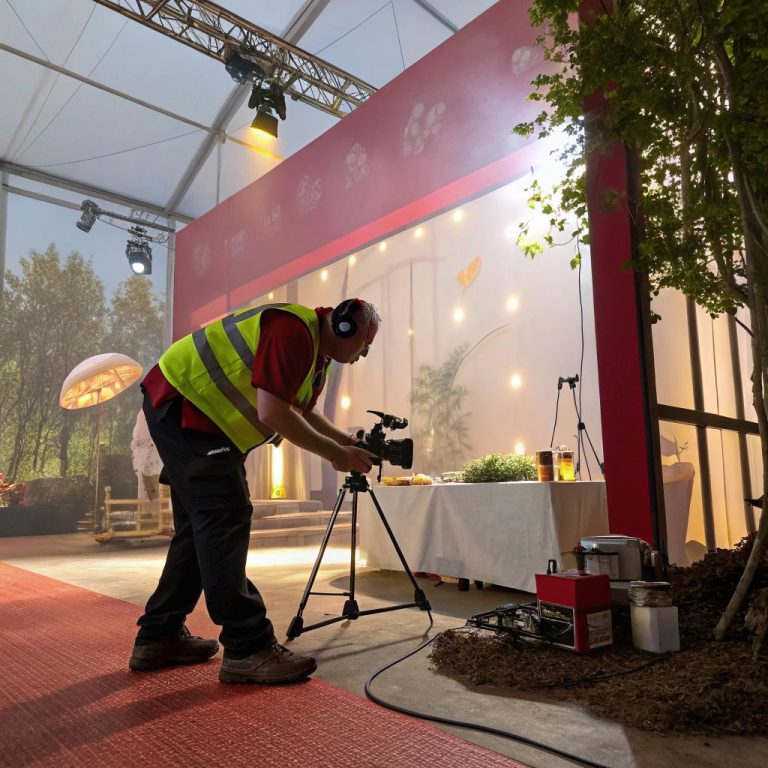
A black box theater. The house is dark. You do not see the cables taped along the floor, the dimmer racks humming quietly, or the breaker panel labeled in rushed marker backstage. You just see a streetlight glow through stage fog, a window flicker like an old TV, and a sudden crack of lightning that feels a bit too real. If all of that works, it is partly because an electrical crew thought through every amp and every safety limit before a single cue was programmed.
In simple terms, that is what Kluch Electrical LLC does for immersive stage worlds. They take all the fragile, artistic ideas that set designers and immersive theater makers dream up, and they wire them so that they actually turn on, stay on, dim when needed, survive tech week, and do not catch fire. They handle the hidden backbone of power, control, and safety that lets designers push into more complex light, sound, and interactive effects. Without that, most ambitious sets would stay on paper. With it, audiences can walk through a live story that feels strangely real.
Why serious immersive work needs a real electrical partner
I think a lot of people who love theater and immersive art secretly hope the magic is mostly gaffer tape and last minute genius. And sometimes it is. But once you start building worlds people can walk through, with moving walls, reactive lights, projectors, fog machines, and low voltage control systems, the risks grow fast.
When a show invites people into the set, electrical mistakes stop being just inconvenient and start to become dangerous.
So the role of a company like Kluch Electrical LLC becomes less about just “getting power to the stage” and more about turning a chaotic idea into something stable and repeatable.
A proper electrical partner does things like:
- Separate show power from house power so a fog machine does not trip the lights in the lobby.
- Size circuits correctly so dimmers, servers, and amps do not fight each other.
- Plan for heat, access, and maintenance, not only opening night.
A designer might obsess over how a neon sign looks from the audience. An electrician has to care about the same sign from the back, from the breaker, and from the perspective of the fire marshal.
The backstage puzzle: translating design into circuits
Most immersive projects start the same way: with a rough sketch of how a space should feel. Maybe you want a basement that hums like an old lab, or a forest that reacts when you walk through it. On paper, it is all color swatches and story beats.
Then someone has to ask: where does the power actually come from?
Reading the design like a blueprint for power
A company like Kluch Electrical LLC will usually sit down with:
- Lighting plots and fixture counts
- Sound system layouts and power requirements
- Control systems (show computers, networking gear, automation controllers)
- Special effects (moving walls, motors, fog, haze, fans, LED tape, etc.)
Each of these elements pulls current in its own way. LED fixtures are kind to power, until someone multiplies them across a ceiling. Old practicals with tungsten lamps are hungry and hot. Audio amps draw peaks that surprise people who only look at the label.
A realistic electrical plan starts with total load, then backs into the right number of circuits, the right distribution, and the right protective devices.
If you are a designer, you might not care about that math, but your show will care when three rooms full of scenic LEDs and a single smoke machine flatten a breaker right before the final scene.
Where theater habits clash with real world power
Many theater artists come from environments where:
- Venues already have dimmer racks and dedicated stage power.
- Cats and grids are set up with decades of experience built in.
- House electricians know the quirks and save you at focus.
Immersive projects often break free of that. Warehouses, basements, empty retail spaces, and odd corners of cities become show venues. Suddenly, you are working with mystery panels, old wiring, and outlet circuits that once powered office printers.
That is where a licensed crew earns their keep. They are not just installing more outlets. They are crawling through the history of the building, figuring out what is safe to load, what must be upgraded, and what simply has to be replaced.
I have seen projects where the creative side wanted to hang a glowing sculpture from an existing junction box in a ceiling, because it was already “there.” An electrician opened it and found brittle cloth-insulated wire from who-knows-when. The idea was fine; the anchor point was not.
What Kluch Electrical actually does on an immersive project
If you have never walked through an electrical build, it might feel abstract. So it helps to break it down into the phases you are likely to touch as a designer or director.
1. Early planning and load calculations
This is the least glamorous part, but it is where many problems can be avoided.
The earlier an electrical contractor sees your design, the more of your wish list can stay intact without last minute cuts.
During early planning, an electrical team will usually:
- Count total loads from lighting, audio, video, HVAC support, and scenery power.
- Check the building service: is there actually enough supply for the show and normal building needs.
- Plan which panels feed which rooms and which show systems.
- Flag risk areas, like too many heaters or too much old gear on one run.
You might hear them talk about “diversity factors” or “demand load.” It can sound fussy. It is not. It is how they protect your show from going dark when everything hits at once.
2. Distribution, panels, and control locations
Once they know the total load, they start deciding where to put things:
- Subpanels for show power in logical backstage locations
- Dedicated circuits for sensitive gear like audio and show control
- Utility circuits for worklights, shop tools, and cleaning crews
- Access paths for cable runs so future changes are not a nightmare
For immersive spaces with moving audiences, location is huge. You do not want a main panel behind a scenic wall that needs 15 screws removed, or a floor pocket in the exact spot where actors roll a heavy wagon.
A practical electrician will argue for service corridors, clearances, and ways for tech staff to reach breakers in the dark. It can feel like it is fighting the perfect floor plan, but it usually pays off the first time a circuit trips during rehearsal.
3. Practical fixtures, props, and “fake” electrics
Immersive work often blurs the line between prop and power. Practicals might be:
- Table lamps controlled from the booth
- Old radios that light up and play audio
- Appliances that look real but need to be safe and controllable
- DIY neon or LED “glass” signs in storefront windows
These are the pieces audiences are closest to. People touch them, lean on them, sometimes even move them. So the way they are wired matters a lot.
A company like Kluch Electrical LLC will usually:
- Rewire vintage fixtures with new sockets and cable rated for current code.
- Add hidden strain reliefs so cords do not pull out when bumped.
- Route power back to dimmers or relay packs instead of wall outlets.
- Separate decoration from actual live parts so nothing dangerous is within reach.
I remember seeing a show where a “broken” sconce would short out and throw sparks every time a character hit it. That effect was built with low voltage, proper isolation, and a lot of caution from the electrical side. From the audience view, it looked reckless. In reality, it was tightly controlled.
4. Safety layers that no one sees
Safety in an immersive environment needs more than standard code. You have:
- People in the dark
- Obstacles
- Fog and haze
- Sometimes alcohol
Electricians add layers to keep all of that from causing trouble.
Typical elements include:
- Ground fault protection near any water feature or “wet” scenic area
- Proper grounding on every metallic set piece that connects to power
- Clear labeling on circuits and shutoffs so staff can act quickly
- Power separation between public and staff-only spaces
Sometimes this means saying no to an idea. Or at least saying “we need to do that a different way.” That pushback can feel annoying in the moment, but there are real consequences if it is ignored.
How electrical choices shape story and mood
This part gets overlooked. People treat electrical work as a technical field, separate from the “creative” choices. I do not fully agree. Certain story beats only work if the power system is built with them in mind from the start.
Timing and blackouts
Think about:
- A blackout that must be instant across several rooms
- A flicker that spreads like a wave from one side of the building to the other
- A room that must fade to emergency lighting while the rest of the show stays dark
These are not only programming problems. They are also wiring and control problems. If the circuits are separated in unhelpful ways, or if half the practicals are hard plugged to random outlets, the cues will always feel messy.
Good early planning can group rooms on logical circuits and feed them through control hardware that responds together. That is electrical design serving narrative.
Interactive triggers and power
Interactive scenic pieces often rely on sensors, microcontrollers, and low voltage power supplies. A door might trigger a light change, a small motor, and a sound cue. Or a pressure pad might wake up projection content.
From an electrical perspective, this spreads the project into three rough categories:
| Type | Voltage | Electrical focus | Common risks |
|---|---|---|---|
| House/show power | 120V / 240V | Distribution, protection, code compliance | Shock, overload, fire |
| Low voltage power | 5V / 12V / 24V | Power supplies, wiring, grounding | Overheating, supply failure |
| Signal & control | Data only | Noise, routing, interference | Glitches, unreliable triggers |
The trick is that all three share space in the same walls and chases. An experienced electrical team will push for clear separation, proper cable choices, and service loops so that when an interactive device fails, you can fix it without tearing a wall open.
Whether you stage immersive theater, art installations, or hybrid experiences, this architecture of power and data shapes what your world can do in real time.
When the stage is not a stage: odd venues and real buildings
Immersive work often hijacks spaces that were never meant for live performance. Storefronts, warehouses, schools, even old houses. That makes everything more complicated and more interesting.
Old buildings and new expectations
Older structures might have:
- Limited service size that cannot support modern show loads
- Unlabeled or mis-labeled panels
- Mixed ages of wiring, some of which no longer meets current code
- Surprise circuits that feed both show areas and tenants or neighbors
You can still build beautiful, safe work in those spaces, but you cannot skip the survey. A company like Kluch Electrical LLC would usually:
- Test circuits and identify actual sources and loads.
- Separate show power from other building functions as much as possible.
- Recommend upgrades or, sometimes, argue for a generator or temporary service.
Sometimes the answer is that a certain effect is not realistic in a given building without serious electrical changes. It can be frustrating, especially when the idea looks simple on paper. A long string of incandescent bulbs seems harmless, until you add up the current and find out the panel feeding that wall is already near its limit.
Temporary vs permanent wiring
Immersive shows blur another line: are you installing a temporary event or building a semi-permanent attraction?
This question changes things such as:
| Aspect | Temporary focus | Longer run focus |
|---|---|---|
| Cabling | Flexibility, quick strike | Durability, concealed routing |
| Hardware | Tour-style distro, plug-in units | Panels, conduit, permanent boxes |
| Maintenance | Spare gear on hand | Access panels, documented drawings |
| Budget | Lower upfront, more hands-on care | Higher upfront, lower daily worry |
This is where I think some producers guess wrong. They treat a long-running immersive piece like a weekend show. They lean heavily on extension cords, power strips, and ad hoc fixes. It might work for opening, but problems tend to stack up.
An electrical contractor who cares about long-term stability will try to steer you toward real infrastructure when the run length justifies it. You might resist at first, but the payback in fewer tech emergencies and more predictable maintenance can be huge.
How to collaborate with an electrician as a designer
If you are reading this as a set designer, scenic artist, or director, you might not want to live in the world of gauges and breakers. You do not need to, but you can make collaboration smoother with a few habits.
Share the story and the beats, not only the drawings
Electricians are often brought in only to see technical drawings. They get plans, fixture schedules, and maybe a patch list. That is useful, but it does not tell them why things are the way they are.
I think it helps to share:
- What moments must never fail (key cues, climaxes, guest-critical effects).
- Which rooms are “hero” spaces and which are flexible.
- How staff will move through spaces during reset and emergencies.
When electricians understand story priority, they can quietly protect the scenes that matter most from an electrical perspective.
For example, they might put your climactic room on its own subpanel, or give it cleaner power and easier access, because they know you cannot afford to lose it.
Be honest about future changes
Creative teams change things. They add more lights, swap fixtures, add a new prop that somehow needs power. If an electrician hears “this will never change” and then sees the design double in complexity during previews, frustration is natural.
It is better to say:
- “We are still experimenting, so please leave room for growth.”
- “This wall might move or get cut, can we keep power flexible there.”
- “We might tour this concept later, can you think about portability.”
Good contractors will build margin where they can, but they need to know where to put it. A few extra circuits or spare conduit paths in the right place can make late creative changes far easier.
Respect the “no,” but test the “how”
Sometimes an idea gets a hard no for safety or code reasons, and that is fair. Grounded metal, clearances, and realistic load limits are not negotiable. You should not try to argue those away.
Other times, the problem is not “impossible,” it is just “not that way.” This is where a thoughtful back-and-forth helps:
- You want exposed glowing wires on a wall.
- The electrician says exposed conductors are unsafe.
- Together, you land on fiber optics, low voltage LEDs in clear channels, or simulated cables with real power hidden behind.
The first idea changes shape, but the story beat survives. That compromise is easier when both sides see each other as partners, not obstacles.
What audiences never see, but always feel
Good electrical work is invisible to audiences. No one walks out saying, “I loved that subpanel.” Still, they notice when things are off, even if they cannot name why.
Some signs of weak electrical planning:
- Lights that buzz or flicker in ways not connected to the story
- Dead corners of rooms because outlets were only in certain spots
- Cables taped everywhere, breaking the illusion
- Breakers tripping mid-show and staff scrambling with flashlights
On the other side, when power is well planned, the world feels stable. Effects repeat reliably from show to show. Actors trust their marks, because the light that is supposed to find them does. Stage managers stop worrying about “what might fail tonight” and focus on the performance.
A stable electrical backbone gives everyone else permission to push harder on story, performance, and design, because they are standing on firm ground.
In that sense, companies like Kluch Electrical LLC do not only power lights and sound. They power risk-taking. They let you build stranger, more intricate experiences, knowing the hidden systems are strong enough to carry them.
Questions creators often ask about electrical work
Can I wire scenic elements myself if I am careful
You can wire low voltage decorative elements if you know what you are doing and follow clear safety practices. For anything that ties into building power, involves line voltage, or touches metal structure, you are better off involving a licensed electrician. It is not just about personal skill. It is about code, insurance, and liability.
What should I bring to the first meeting with an electrical contractor
Bring:
- Your rough floor plan and any known scenic drawings.
- Fixture counts for lighting, even if provisional.
- Audio and video gear lists with power needs.
- A simple description of how you expect crowds to move.
- Your run length and whether you expect to change the show mid-run.
You do not need perfect drawings. You do need enough for them to estimate loads and complexity honestly.
Is all this overkill for small immersive pieces
Not every project needs heavy infrastructure. A one-room installation with a few LED fixtures and a small sound system is simple. But the moment you invite the public into a space with more complex power, especially in a building that is not a standard theater, you start carrying responsibility.
Even a short consultation with an electrician can catch issues you might not see. That does not mean everything has to become a massive line item. It just means you treat power as part of the design, not an afterthought.
Where does electrical planning sit in my timeline
Sooner than you think. You do not need a perfect script locked, but you should talk to an electrical professional as soon as:
- You have a potential building.
- You know roughly how many rooms or scenes you want.
- You can guess at the scale of lighting, audio, and interactive elements.
If you wait until construction is underway, many cost-saving or safety-improving options will be off the table. And then you might spend more on patch fixes that never feel quite right.