The red curtain hangs heavy in your memory. Gold leaf glints along the balcony rail. You can almost smell the dust in the beam of the projector, the sweet stale perfume of velvet seats warmed by bodies. Then the house lights snap on in your mind and you remember: this place no longer exists. Someone flattened it with a wrecking ball and parked cars where the orchestra once tuned.
The blunt truth: famous historic theaters are demolished when money, maintenance, and modern needs rise higher than memory. When roofs leak, fire codes tighten, developers circle, and a city values short-term revenue over long-term character, decorative plaster loses every time. The most beautiful rooms in the world die not from one villain, but from a slow, practical erosion of care. They cost too much to fix. They do not fit multiplex models. Their neighborhoods change faster than their funding. And if no one with power truly loves them, they go.
Why great theaters are so easy to kill
Walk into an old theater and you are walking into a problem, financially speaking. The proscenium may be spectacular, the chandelier may flood the dome with warm light, but behind the curtain sits a building that fights the present.
- They are expensive to maintain: roofs, plaster, rigging, HVAC, fire safety, accessibility, all on a large scale.
- They often occupy prime real estate that can earn more as offices, malls, or parking.
- Their single-screen or single-stage layouts do not match modern commercial models.
- They age into code violations faster than they attract reliable funding.
- Preservation laws are weak, slow, or full of loopholes, especially where land values are high.
For designers, directors, and anyone who cares about immersive experience, this is brutal. These buildings are not neutral containers. They are instruments. They color the sound, sculpt the light, and condition how an audience feels before anything begins.
When such a building goes, a whole grammar of spatial storytelling goes with it.
When a theater is demolished, the city loses a rehearsal room for its own imagination.
So why do these losses keep happening, even when the theater in question is famous, loved, or architecturally praised? To answer that, it helps to look at specific ghosts.
The original Pennsylvania Station & the saucer that replaced it
Yes, this is a train station. No, it did not host plays. But for theater people, the demolition of New York’s original Pennsylvania Station in 1963 is a key moral fable. It set the tone for how easily monumental space could be traded for commercial convenience.
Penn Station, designed by McKim, Mead & White and opened in 1910, was an indoor city of colonnades, iron trusses, and glass. People compared it to Roman baths. Daylight filtered down through soaring vaults. Even a commuter felt like a protagonist.
In the early 1960s the station was decaying. The railroads were losing money. Maintenance cost more than the owners cared to spend. Beneath the grand concourse sat the real asset: a huge Manhattan parcel.
The “solution”: sink the tracks underground, sell the air rights, and build an arena and office complex on top. Madison Square Garden and its ring of commercial buildings rose. The great hall went into the landfill.
For theater architecture, the message was clear:
If a city can erase a cathedral of movement like Penn Station, no theater, however beloved, is safe without strong laws and stronger advocates.
The backlash helped birth modern preservation efforts in New York, which later saved theaters such as the New Amsterdam. But it arrived too late for many others.
The Roxy Theatre, New York: the vanishing of “the Cathedral of the Motion Picture”
The Roxy Theatre opened in 1927 and wrapped cinema in the visual language of opera. It had a sweeping auditorium for nearly 6,000 people, a stage large enough for elaborate live prologues, and a lobby that felt like walking into a fantasy of European grandeur.
Designers loved it because the room was a complete world: rich textures, careful sightlines, and a proscenium that framed not only the screen but the entire pre-film ritual. Movements of audience, ushers, orchestra, and projection were choreographed by architecture.
Why it was demolished in 1960:
1. Economics of exhibition
By mid-century, the single-screen palace model was failing. Television siphoned audiences. Operating one enormous room with a live orchestra and staff no longer made sense in the commercial calculus. You could show the same films to more paying people across multiple smaller theaters, each cheaper to run.
2. Real estate pressure
The Roxy sat in a part of Manhattan where land values climbed. A theater that only produced revenue when shows ran would always lose to a tower that could generate rent 24 hours a day.
3. Lack of legal protection
At the time there was no preservation safety net equal to the power of its owners. Nostalgia was not a legal argument.
4. Ownership priorities
The owners did not see it as a civic treasure, but as an asset past its prime. Once that framing takes root, the building is already half condemned.
Beauty alone does not keep a theater alive; it has to keep earning, politically and financially, or it becomes “sentimental clutter” in the eyes of its owners.
Where the Roxy once stood, a bland office building took its place. Function won. Atmosphere lost.
For set and immersive designers, the Roxy’s auditorium remains an important study in how a room can guide focus and emotion. The lesson is cruel: the more tailored an experience is to one medium or business model, the more fragile it becomes when that model shifts.
The Paramount Theatre, New York: French Baroque, shortened into memory
Times Square once glowed not only with billboards but with interiors that tried to out-drama the street. The Paramount Theatre, opened in 1926, dressed itself in French Baroque opulence. It held over 3,600 people, with a sweeping balcony and a stage that supported both film and live acts.
By the 1960s the building was amputated. The auditorium was gutted and converted into office and retail space. The marquee came down. What remained were fragments and a plaque.
Reasons behind the demolition:
– The Paramount was built as a vertical stack: theater below, offices above. When film exhibition changed, the business value shifted upward.
– Maintenance of the large house for shrinking audiences made less sense than expanding rentable office floorplates.
– The owners chose steady commercial rent over the fluctuating returns of a single grand venue.
The Paramount offers a key warning: mixed-use configurations do not guarantee survival for the theater component. When ownership calculates returns, they will often favor spaces that can be easily reconfigured.
If a theater is only an accessory to a building’s financial logic, it can be unhooked the moment profit demands a cleaner spreadsheet.
For contemporary immersive work in commercial buildings, this tension is still present. If your venue is a guest inside an office tower, your set is only as secure as the landlord’s patience.
The Earle Theatre, Washington D.C.: where vaudeville went quiet
The Earle Theatre opened in 1924 as a lavish vaudeville and movie house. Its interior balanced ornate surfaces with excellent sightlines, and it became a hub for stage shows, films, and later big-band performances.
By mid-century, the familiar pattern emerged: declining attendance, high maintenance costs, and pressure from new real estate projects. In 1953 the theater closed. By 1959 it had been demolished to make way for an office building.
Key factors:
– Shifts in entertainment habits made large show palaces less sustainable.
– Urban renewal policies in American cities favored large, modern commercial blocks over heritage structures.
– The Earle did not gather enough organized public defense, especially compared with civic monuments or government buildings in the same city.
The Earle’s destruction shows another dimension: not all famous theaters are equally protected. Government and commercial interest often focus on monuments tied to political power, not to popular culture.
For stage designers studying Earle photographs, the room reveals a careful balance of intimacy and grandeur. For urban designers, its loss reveals how cultural memory is treated as optional when stacked against “progress.”
The Metropolitan Opera House, original New York home: too grand, too flawed
The original Metropolitan Opera House on Broadway and 39th opened in 1883. Its golden auditorium, intricate proscenium, and famous “diamond horseshoe” boxes made it a symbol of cultural status. For decades, it was the stage for some of the most elaborate operatic productions in the world.
By the mid-20th century, the house had severe problems. Sightlines from some boxes were poor, backstage areas were cramped, and technical systems lagged behind newer houses in Europe. Fire safety and building codes grew stricter. A more modern opera complex at Lincoln Center lured the institution away.
The opera company moved in the 1960s, and the old house was left behind. There were calls to save it, but not enough money or political will. It was demolished in 1967.
Why it died, even with such prestige:
1. Functional obsolescence
The building no longer matched the scale and technical ambition of productions. Large-scale scenic automation and modern lighting rigs did not fit easily into the old shell.
2. Safety and comfort issues
Audience expectations for comfort, climate control, and visibility changed. The hall was charming, but also awkward.
3. Institutional priorities
The opera management backed a new, integrated complex at Lincoln Center, with advanced technical facilities and modern acoustics. They chose to invest identity in the new building, not the old.
4. Weak preservation tools
While the Penn Station outcry had sparked action, those tools were not yet strong enough to save the original Met.
For designers of opera and immersive performance, this is an uncomfortable case. The building was beautiful, but its technical envelope restricted artistic growth.
A theater can be deeply loved yet still feel like a cage to the artists working inside it.
The lesson is subtle: preservation cannot ignore functionality. If a historic theater cannot adapt in a thoughtful way, artists themselves may support moving out, even when that means losing a legendary space.
The Gaiety Theatre, London: the missing link in the Strand
London’s West End is often presented as intact theatrical history, but it is full of ghosts. One of the most significant: the Gaiety Theatre on the Strand.
The Gaiety traces roots to the 1860s and became known for light opera, musical comedy, and lavish productions that shaped what modern musical theater became. Its interior blended charm with efficient sightlines, and it stood at a key junction of the West End theater cluster.
In the early 20th century, parts of the area were reconfigured. World War II damage, changing traffic patterns, and redevelopment pressures rendered the old building vulnerable. The theater closed and was demolished in 1956. Office blocks replaced it.
Why a culturally pivotal house vanished:
– Postwar reconstruction favored car traffic and commercial expansion over heritage, especially structures seen as “frivolous.”
– The theater required substantial repair and modernization that owners did not wish to fund.
– The Gaiety’s contributions to performance history were not enough to outweigh its perceived expendability as a building.
For immersive and site-specific practitioners, the erasure of the Gaiety leaves a gap in a potential network of historic venues. It also warns that “cultural importance” is not a shield unless it becomes part of official planning and legal frameworks.
The demolished neighborhood theaters: the quiet catastrophe
Famous palaces attract headlines when they fall, but there is a second, less glamorous story: the disappearance of the neighborhood house.
Think of the countless small and mid-size theaters that once dotted cities: ornate, slightly faded movie houses and live venues that anchored corners and high streets. Their names repeat from city to city: Orpheum, Rialto, Palace, Majestic, Odeon.
Why so many of these did not survive:
– Suburbanization drew audiences away from central districts, then multiplexes drew them into malls.
– Aging urban neighborhoods lost investment; theaters sat in the middle of economic decline.
– Building codes and fire safety requirements grew stricter, and owners often let the building drift into disrepair rather than invest.
– When land finally became attractive again, old theaters were easy targets for demolition and replacement by residential towers or chain stores.
From an experience-design perspective, this is the biggest loss. These were the rooms where everyday ritual met spectacle: Saturday matinees, local festivals, community performances. They were not icons, but they were intimate.
Demolishing a neighborhood theater erases a shared living room, not just a stage.
Designers today who seek “immersive authenticity” often have to rebuild what these modest theaters already offered: transition zones from street to lobby to auditorium, idiosyncratic seating patterns, imperfect but characterful acoustics, surfaces worn by touch.
When such buildings vanish, future projects rely more heavily on black boxes or temporary conversions. Those spaces are flexible, but they rarely carry the emotional patina of rooms that have held decades of stories.
What really sits behind “beyond repair”
If you read demolition justifications, certain phrases repeat: “beyond repair,” “no viable use,” “structurally unsound.” Sometimes they are accurate. Many times they are shorthand for a cluster of pressures that designers and preservationists should decode.
Here is what “beyond repair” often hides:
| Official phrase | Likely underlying reality |
|---|---|
| “Too costly to restore” | Restoration budget compared to a lucrative redevelopment plan does not satisfy investors. |
| “Functionally obsolete” | Single auditorium, limited commercial uses, little flexibility for multiple tenants. |
| “Unsafe and dilapidated” | Years of neglect, sometimes strategic, created a self-fulfilling argument for demolition. |
| “No market demand” | No serious attempt to explore alternative cultural uses, cross-subsidies, or hybrid models. |
| “Site required for urban renewal” | Preference for standard blocks over complex heritage geometries in planning and finance. |
For anyone who designs spatial experience, this translation is critical. It reveals that the primary issue is rarely pure practicality, but a clash between different visions of value.
An old theater is difficult. It is inflexible. It often needs custom solutions for access, rigging, and circulation. But it also offers irreplaceable atmospheric value, something that is usually ignored in cost spreadsheets.
Atmosphere does not have a standard line in a pro forma, so it is written off as sentimental, even though it shapes behavior and memory more than any finishes schedule.
When you hear that a historic theater is “past saving,” ask: for whom, and under what economic rules?
Design lessons from lost theaters
Grief only takes you so far. For artists and designers working now, the question is: what can be learned from these vanished rooms, besides nostalgia?
1. Design for adaptability without erasing character
Many demolished theaters died because their layouts locked them into one business model: single-stage, single-audience-configuration, limited alternative uses.
Future theater and immersive spaces need two qualities at once:
– Clear, memorable identity: a distinctive volume, a recognizable sequence of spaces, materiality that feels intentional.
– Smart adaptability: structural and technical planning that allows for reconfiguration of seating, stage area, and front-of-house uses without major demolition.
This balance is difficult. Pure flexibility drifts toward blandness. Pure character can trap function. The demolished palaces sit at the extreme of character, without enough flex.
2. Make the building easy to love and easy to justify
If you want a future council, board, or landlord to fight for a theater, you must give them two kinds of ammunition:
– Emotional: the building must become part of people’s identity. That comes from regular use, open doors, visible activity, and programming that lets many different groups claim memories inside.
– Practical: the building must host multiple revenue streams and civic uses, not just one art form.
Many famous theaters that survived did so because they doubled as conference venues, community centers, filming locations, or mixed-use cultural complexes. Those that relied on a single institutional or commercial patron were more fragile.
3. Bring backstage issues into preservation talks early
Preservation often focuses on the auditorium, the facade, and the marquee. For practitioners, backstage is just as critical.
A theater that preserves a glorious house but leaves cramped loading docks, unsafe rigging, or impossible sightlines will push working artists away. In time, that erodes the argument to keep it.
The demolished original Metropolitan Opera House is the cautionary example here. Better engagement with technical production needs might have produced a more persuasive adaptation scheme. Instead, the split between beauty and function fueled the case for replacement.
4. Do not trust fame to protect a building
You will hear people say: “They will never tear that one down, it is too famous.” History keeps proving this wrong.
– The Roxy was celebrated internationally. It fell.
– The original Met carried global prestige. It fell.
– Major houses in London, Paris, Berlin, and other cities have been gutted or removed despite high regard.
Fame creates public outcry, but without mechanisms such as landmark status, binding heritage planning, and funding strategies, it does not stop demolition. For designers and directors involved in beloved buildings, early advocacy matters far more than reactive outrage.
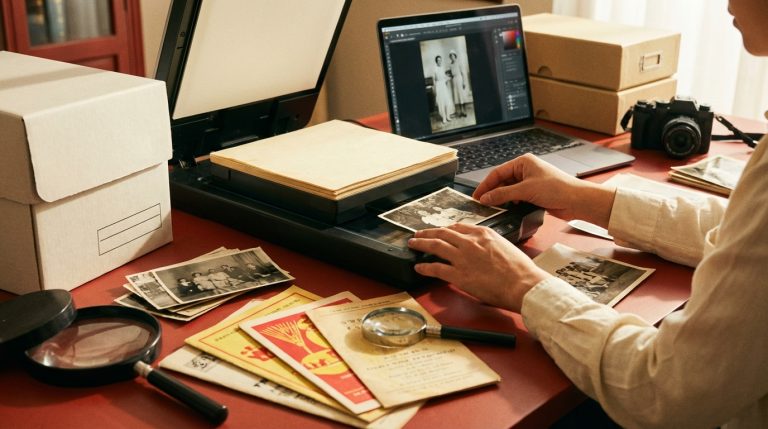
5. Document the space as part of your practice
Many demolished theaters survive only through striking photographs, drawings, and models. Those records become references for new work, but they also form part of the political case for future preservation.
When you work in a historic theater, treat spatial documentation as part of the creative process:
– Capture sightlines, textures, lighting qualities at different times of day.
– Record how audiences move through lobbies, queues, staircases.
– Note the acoustical character of the room under different audience densities.
If demolition looms, such documentation becomes crucial evidence of value. If the building survives, it becomes a tool for more sensitive adaptations.
Why bad replacements feel so flat
Demolition is sometimes unavoidable. Fire, structural failure, or repeated neglect can push a building past any reasonable repair. The deeper question for designers is: why do the replacements so often feel lifeless?
Stand where a grand theater once stood and look at what replaced it. A glass office slab. A big-box store. A standard apartment block. Functional, income-generating, forgettable.
The contrast lies in how the old theaters treated people as an audience even before the show, while the new structures treat them as units of throughput.
Old theaters:
– choreographed arrival with marquees, ticket lobbies, staircases that elevated anticipation.
– layered surfaces and light in a way that signaled a shift from ordinary life into heightened attention.
– addressed the collective, not only the individual. You felt part of a gathering.
Typical replacements:
– flatten arrival into a single gesture: a door, a revolving entry, a lobby that is simply a sorting area.
– use smooth, repetitive materials that aim for neutrality, not mood.
– treat people primarily as customers or workers, not as participants in a shared event.
Theaters are machines for building a “before” and an “after.” Most of their replacements erase that narrative timeline and call it rational.
For immersive designers, that narrative of arrival is core. Learning from demolished houses means trying to protect that temporal arc in new projects, even under commercial constraints.
When demolition becomes part of the story
One final, controversial thought: sometimes, the fact that a theater has been lost can generate new creative energy. The absence becomes a stage.
Site-specific works on former theater sites, installations that trace vanished auditoria onto parking lots with light, VR reconstructions based on old drawings: all of these practices acknowledge that history of erasure and fold it into experience.
This does not excuse the loss. It does hint at a different responsibility for contemporary artists:
– to remember what kinds of space were possible.
– to show audiences that their city once held rooms shaped for attention, ritual, and shared feeling.
– to question whether current building practices are worthy of the memories they replaced.
For set designers and immersive creators, the ghosts of the Roxy, the Gaiety, the Earle, the original Met, and countless nameless neighborhood houses are more than nostalgic curiosities. They are warnings about fragility, and they are reference texts for a richer spatial language than many current venues offer.
Some of the most influential theaters in history now exist only as photographs, drawings, and stories. Their demolition was not inevitable fate. It was a chain of choices, trade-offs, and values.
The next time you walk into an old theater, feel the weight of that. Read the cracks in the plaster and the modifications in the lobby not just as decay, but as margins on a contract that can still be renegotiated. The building is not immortal. Neither is the culture that chooses what to keep.
The wrecking ball waits for silence. Your work, your advocacy, and your design choices decide how long that silence holds.