The first thing you feel is the weight of the room. Empty stage. Bare floor. Fluorescent work lights humming above, washing everything in a flat, unforgiving white. No costume, no set, no sound. Just potential… and the budget spreadsheet glowing on your laptop like a second, harsher light.
You are about to decide what this story gets to have. And what it has to live without.
The short version: budgeting for a production is not about numbers, it is about priorities. Every dollar is a vote. You are constantly choosing: more time or more detail; more bodies in the room or more material on stage; safety or spectacle; finish quality or flexibility. A clear budget lets you protect what matters most to the production’s experience, instead of watching money leak away into quiet, invisible corners. When you know where every dollar goes, you can say “yes” to the right things and “no” with confidence, instead of by accident.
Reading the room: what kind of production are you actually making?
Before you start carving up a budget, the work is not in the spreadsheet. It is in the room, in the story, in the audience you imagine walking through the door.
The biggest budget mistake is pretending you are making one kind of show while secretly trying to make a different one.
A 30-seat immersive piece in a warehouse cannot be budgeted like a 600-seat proscenium musical. A site-specific installation that runs for six months asks different questions than a three-night experimental piece. If you ignore that, your money will evaporate in the wrong places.
Ask yourself, out loud if you must:
– What absolutely must feel “real” or fully fleshed out for this concept to land?
– Where can the audience’s imagination work harder than your wallet?
– What is the minimum audience you need per performance for the numbers to make sense?
– What is non-negotiable for safety, legality, and basic respect for your team?
The answers will sketch a silhouette of your budget before you write a single figure.
For an immersive show, maybe touchable environments and sound are king, while lighting can stay simple and architectural. For a dance theatre piece (you may not like the word, but the movement is there), perhaps the performers and rehearsal time matter more than construction detail. For a set-heavy drama, carpentry and paint will outrun almost everything else.
Budgeting is not about how to spend less. It is about how to spend honestly.
Once you know what kind of world you are building, you can start naming the places where money actually travels.
Where the money really goes: main budget categories
Here is the part that often shocks new producers: material costs are only one slice of the pie. The timber, the fabric, the paint, the screws. They matter, but they rarely outgrow the cost of the humans who handle them, the time they need, and the space that holds it all.
- Rights & licensing (if any)
- People: creative team, cast, crew, production management
- Rehearsal & venue: space, tech time, front-of-house
- Design & construction: set, props, costumes, lighting, sound, video
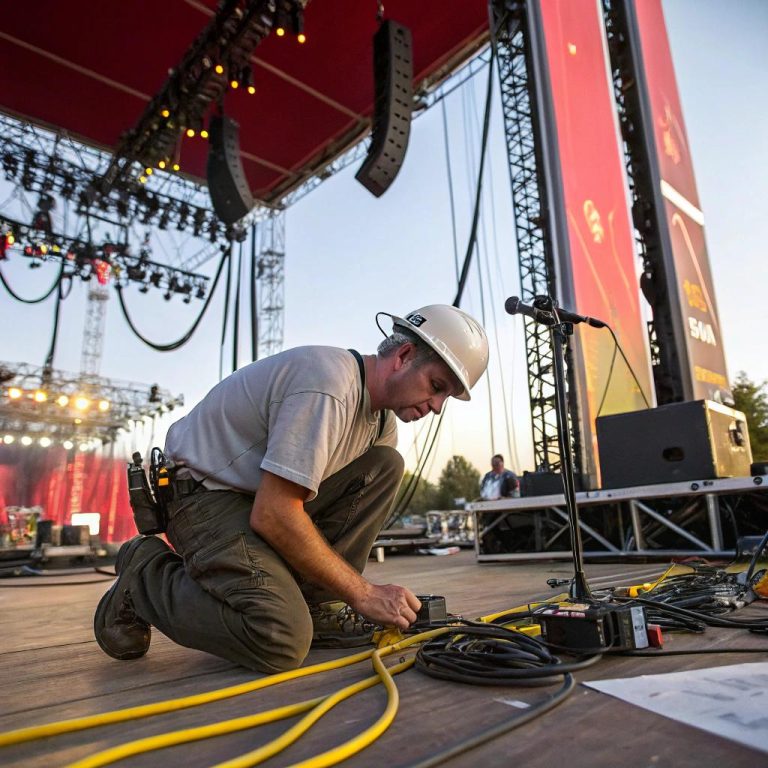
- Technical infrastructure: power, rigging, safety hardware
- Insurance, permits, legal, accounting
- Marketing & audience services
- Contingency: money set aside for surprises
Different projects shift weight between these. An immersive installation might push more into set, props, and front-of-house training. A text-heavy piece might throw more into rehearsal hours and actor pay. The point is not to copy someone else’s ratios. The point is to understand your own.
People: the invisible majority of your budget
If your budget were a stage picture, “people” would be the dominant object. They are the actors, designers, carpenters, scenic painters, sound engineers, assistant stage managers, ushers, cleaners, riggers, security, and often the friends who “just pop in to help for one night.”
Whenever you think, “We will fix it with people and time,” you are also saying, “We will spend money here.”
You have several ways to handle this:
– Flat fees: a fixed payment for a project or run.
– Hourly rates: for build, load-in, tech, show calls, and strike.
– Profit share or box office splits: common in small independent work, risky but sometimes the only path.
Ethically, underpaying creative and technical staff is not a badge of honor. If your show depends on free labor from skilled people, then the artistic idea is too large for your budget. That is hard to admit, but it will save both relationships and work quality.
Rehearsal and venue: the cost of time and space
Empty space costs money. Even if it is your own studio or borrowed warehouse, there are utilities, maintenance, and the opportunity cost of not renting it to someone else.
Venue budgets usually include:
| Item | What it covers |
|---|---|
| Base rental | Use of the main space for a fixed block of dates |
| Rehearsal rooms | Daily or hourly use, sometimes offsite from the performance space |
| Technical time | Load-in, fit-up, lighting focus, sound check, cueing, dress rehearsals |
| Venue technicians | In-house staff required by the contract |
| Front-of-house | Box office, ushers, cleaning, in some venues security |
| Utilities & fees | Power, heating or cooling, ticketing fees, cleaning fees |
Time in the venue is precious. Every extra tech day you add has a ripple effect: crew wages, extra rental, extra utilities. If your production concept demands complex scene changes and molten-light transitions that require hours of cueing, then your budget must carry that weight.
If you are working immersive, where the boundary between front-of-house and “stage” dissolves, your audience pathway planning directly affects staffing. A single, simple path might need two ushers. A branching experience across four floors might need ten to keep guests safe and oriented.
Design departments: how each one drinks from the budget
Here is where the heart of set design, immersive theater, and visual storytelling starts to interact with hard numbers. Every design choice has a budget signature.
Every object in your world is not just a prop or a piece of scenery. It is labor, storage, transport, and, eventually, waste.
Set design: structure, texture, and scale
Set is often the most visible offspring of the budget, and the one that gets blamed first when money feels tight. Experts in construction will tell you: the thing that ruins budgets is not material choice, it is changes made too late.
Set budgets typically include:
| Category | Examples |
|---|---|
| Drafting & models | Digital drawings, white card models, VR mockups |
| Materials | Timber, sheet goods, steel, plastics, fabrics, flooring |
| Hardware | Screws, bolts, brackets, casters, hinges, rigging hardware |
| Finish | Paint, scenic treatments, varnish, texture mediums |
| Labor | Carpenters, welders, scenic artists, automation programmers |
| Transport | Truck hire, fuel, load-in crew, packing materials |
| Storage & strike | Disassembly, disposal fees, storage rental |
In immersive work, set is not a background. It is an actor that never exits. The audience touches the walls, opens the drawers, leans on railings. This means higher build standards, stronger fixings, more attention to fire ratings and safety. All of that sits squarely in the budget.
If your budget is tight, consider:
– Limiting the number of distinct locations and investing deeply in fewer, richer spaces.
– Reusing structural elements (platforms, flats, door units) with different dressing.
– Designing for modularity: units that can be recomposed into new arrangements across scenes.
Scale is seductive, detail is persuasive. When money is thin, choose detail.
A single room built with convincing texture, robust detail, and wise lighting can feel more “expensive” than three sprawling but flimsy environments.
Props: the hands of the world
Props are where story meets touch. Cups, letters, weapons, newspapers, handheld lights, interactive objects. In immersive design, props can be the bridge between audiences and narrative.
Prop budgets cover:
– Purchase or rental of real-world objects.
– Builds and modifications.
– Repeats and backups for loss, breakage, and wear.
– Storage, maintenance, and repair.
A common trap: under-budgeting props because they seem minor, then discovering late in the process that half your text references objects that do not exist yet. Suddenly you are sourcing period-accurate documents and custom fabrications two days before first preview.
The best way to control this is not to squeeze the money endlessly, but to control the prop list itself. Cut references in the script that cost too much to realize convincingly. Condense repeated functions into fewer objects. Ask if a prop can be pure sound, or light, or gesture instead.
Costume: moving architecture on bodies
Costumes carry both character and choreography. Their budget profile is complex because it has to account for:
| Need | Cost implications |
|---|---|
| Number of looks per character | Multiple changes multiply makes, fittings, laundry |
| Period accuracy or fantasy detail | Custom builds, specialty fabrics, rental fees |
| Movement & durability | Reinforcement, stretch fabrics, duplicates |
| In-show wear (blood, dirt, water) | Extra sets, cleaning products, repair labor |
In immersive shows, performers often navigate non-standard routes: crouching through tunnels, squeezing behind set pieces, brushing against rough walls. Costumes take heavy punishment. The budget must allow for that, or you will be patching seams daily with no spare garments on hand.
Where to save without flattening the experience:
– Rig the world so that the silhouette and key color of each character matter most, not tiny bespoke details that only a front-row audience would see.
– Combine rehearsal and show shoes when safe and practical.
– Choose fabrics that age gracefully rather than those that look tired and cheap after two washes.
Lighting: sculpting with cost as well as photons
Lighting is often where low-budget work can look rich, if choices are clear. At the same time, it is an easy place to overspend on hardware you do not fully use.
Lighting budgets usually include:
– Fixture rental or purchase.
– Dimming, power distribution, and cabling.
– Control hardware and software.
– Consumables: gels, lamps (where relevant), gaffer tape, tie line.
– Rigging time, focus time, programming time.
– Extra technicians where rigging is complex or at height.
If you are building immersive experiences, you might also have:
– Practical lights inside the set (table lamps, wired lanterns).
– Battery-powered units for remote areas.
– Emergency egress lighting that must comply with regulation.
A single well-placed light with a considered angle and color can replace ten generic fixtures doing nothing in particular.
Fewer, more thoughtful cues are usually cheaper to create and maintain. They also often feel more intentional to the audience.
Sound: the emotional oxygen of the room
Sound spends money in quiet ways:
– Speakers, subs, and amplifiers.
– Consoles or playback systems.
– Microphones, radio packs, cables.
– Sound design and composition fees.
– Licensing for existing music.
– Acoustic treatment where the venue works against clarity.
Immersive theatre leans heavily on sound: localized effects in corners, hidden speakers behind walls, directional sound that guides audience flow. Each of those is another channel, another cable run, another potential point of failure that will need both hardware and human attention.
Music licensing is easy to underestimate. A familiar song can snap a scene into focus, but it can also eat a visible stripe out of your budget. Commissioning original music distributes cost differently: less on licenses, more on a composer and studio time.
Risk, safety, and all the quiet, unglamorous spending
The audience rarely sees these numbers, but they determine whether anyone sleeps at night.
Every “dangerous” effect you keep is not only an artistic choice, it is a financial one.
Safety-heavy areas:
– Rigging for flown elements and performers.
– Structural checks on platforms, stairs, and balconies.
– Fire treatments for scenic and costume materials.
– Fire extinguishers, emergency lighting, exit signage.
– Security for audience and staff in late-night or remote locations.
You need qualified people to sign off on these: structural engineers, certified riggers, fire officers. Their professional time is part of your budget. If you skip it, you are not saving money, you are gambling with human bodies.
Insurance is unavoidable. Public liability, employer liability, equipment insurance. If your show involves audience interaction, strobe, loud sound, or physical tasks for the public, your policy must reflect that. Underinsuring is a short path to very long problems.
Permits and licenses add another layer: building permits for temporary structures, permissions for outdoor sound, alcohol licenses for in-show bars, recording permissions if you are filming. Every “small” idea that touches the public sphere can trigger a permit process.
Planning the budget: from story to spreadsheet
Once you have a sense of categories, you have to turn ideas into numbers. This is where the romantic energy of the project can easily collide with the concrete world.
If your budget only exists in your head, it is not a budget. It is a wish.
Start with your income ceiling. Grants, sponsors, personal funds, investors, advance ticket sales projections. Use a conservative estimate, not a dream scenario.
Then work through these steps:
1. Protect the non-negotiables
Safety, insurance, venue hire, minimum legally and ethically fair pay. These go in first.
2. Ring-fence a contingency
Set aside a percentage of the total (often 5 to 10 percent) for surprises: broken gear, extra rehearsal day, emergency understudy, a prop that turned out to be three times the planned price.
3. Assign target figures to each main category
Set, costumes, sound, lighting, marketing, front-of-house. These are rough at first, then refined.
4. Break detailed lines with unit costs
For example, under set you might have: “Sheet plywood: 20 sheets @ X per sheet”, “Casters: 16 @ Y per unit”, “Load-in truck: 2 days @ Z per day.” This lets you see which assumptions are driving the big numbers.
5. Test artistic ideas against real costs
That rotating room you love? Plot it: extra bearings, reinforcement, rehearsal time to learn it, safety rails, more crew in tech. If the cost is huge and the emotional payoff is modest, cut or simplify.
6. Rebalance
If one department needs more (say, sound for a sound-led experience), something else has to give. Sacrifice where it hurts the least, not where people are simply quiet.
The spreadsheet is not an enemy. It is a drawing of your show in numbers instead of pencil. When something changes on stage, something almost always has to move in those cells.
Where productions silently bleed money
Every production has a different leak, but some patterns repeat so often they might as well be printed on the back of every call sheet.
Late design decisions
Changing a costume color on paper is cheap. Re-dyeing twelve garments during tech when the cast is already wearing them is not. Moving a door in a plan is cheap. Moving it after the flats are built and braced is not.
Each late change has three layers of cost:
– Materials wasted.
– Labor repeated.
– Time in the venue stretched or misused.
The cure is not stubbornness, it is clarity. Lock design milestones. Agree as a team that after a certain date, changes require a conversation about cost and schedule, not just aesthetics.
Wishful scheduling
Underestimating build and rehearsal time is a direct path to overtime pay, panic hires, and low-quality finish. If you promise a full two-floor immersive environment in three build days because “everyone will just work really hard,” you are writing a check the budget cannot cash.
There is a simple test: ask the people who do the work. Your carpenters, scenic painters, and stage managers know how long tasks really take. If your numbers conflict with their experience, trust them, not the pretty plan.
Free labor that is not actually free
Relying on volunteers or unpaid interns might feel like a solution, but it has hidden costs: training, supervision, errors, burnout, last-minute disappearances. Experienced staff can often do the same tasks faster, safer, and with less rework.
There is also the moral cost. A culture that normalizes unpaid skilled work corrodes the field. If your project cannot pay people at least modestly, then either shrink the scope or push the schedule until funding catches up.
Balancing art and numbers without losing the work’s character
This is the tension at the center of every design meeting. You want the world to feel deep, specific, lived-in. You also have a hard limit on funds. How do you compress without flattening?
The audience does not see your budget. They see your priorities.
Some guiding strategies:
Spend on what the audience touches and stares at
If you have to choose, invest in:
– Surfaces the audience can reach: tabletops, door handles, railing tops. These must feel solid and intentional.
– Lines of sight that hold attention: the main wall opposite the seating, the first moment of entry into an immersive space.
– Objects connected to key story beats: the letter, the mask, the strange artifact.
Background detail in deep shadow, unseen corners, and storage areas can be rougher. Raw timber in a backstage corridor will not ruin the experience. A wobbly handrail in full view might.
Use light and sound to extend physical design
If walls cannot be rebuilt, light can redraw them. Cool light can carve distance. Warm pools can shelter intimacy. Sound can “expand” a small set into a wider city, forest, or sea.
This is not an excuse to underfund set, but it is a method to let a modest physical build feel larger and more intricate.
Design for specific audience flow
In immersive theatre, an unplanned audience route is a budget trap. If people roam entirely freely, you need more staff, more safety coverage, more detailed design across the entire footprint.
Constrain the flow with intention:
– Choreograph who goes where, when.
– Use light, sound, and human guides to pull and hold attention.
– Focus high finish levels where traffic is dense and story-critical.
When you do this, you can avoid pouring money into areas that only three people will ever see.
Communicating money with creative people
Talking about budgets with artists and designers can feel delicate. No one likes hearing “no,” especially when the idea is beautiful. Yet saying “yes” when money cannot support it is less kind.
The most respectful thing you can say to a collaborator is: “Here are the real limits. Inside them, let us be bold.”
Some practical habits:
– Share headline figures early. If the set budget is small, tell the designer before they sketch a rotating house.
– Encourage cost-aware design: ask “What are the expensive parts of this idea?” not “Can you make it cheaper?”
– Use visuals and comparisons: show photos of previous productions with similar budgets so expectations are calibrated.
– Keep the budget document shared and live. Let department heads see how changes in one area affect another.
The goal is not to shut down imagination, but to bend it into shapes that can be built, paid for, and run safely.
Revenue: the other side of the equation
So far we have lived mostly on the cost side. Money must also come in. If you ignore this, the most elegant budget is still just a list of expenses without a way to support them.
Income streams can include:
– Ticket sales: shaped by seat count, ticket price, number of performances, and realistic occupancy.
– Grants or funding bodies: which may come with specific conditions or reporting needs.
– Sponsors or partners: who might want brand presence, private performances, or content.
– Merchandise: programs, prints, soundtracks, small objects from the world of the show.
– Workshops or ancillary events.
Be honest in your ticket projections. If you are in a small space with an experimental piece, planning for 95 percent occupancy across the run is fantasy. Work with a cautious average and see if the totals hold. If they do not, you need either more funding, lower costs, or both.
Price is part of the artistic conversation too. A high-cost immersive piece that only the wealthy can attend might contradict the work’s themes. An extremely low ticket price that cannot cover costs sets up future burnout.
Case study sketches: how different priorities shape budgets
Rather than one grand example, it helps to look at outlines for three kinds of productions. These are simplified, but the contrast is instructive.
| Type of production | Where money concentrates | Main risks |
|---|---|---|
| Black box play with minimal set | People and rehearsal time | Underestimating venue costs, ignoring marketing |
| Large-scale immersive warehouse piece | Set, props, front-of-house staff, safety | Audience flow misjudged, staffing thin, build overreach |
| Short-run site-specific installation | Site prep, permits, technical infrastructure | Weather, unclear permissions, transport and strike costs |
In the black box play, you might pour money into extra rehearsal weeks, strong lighting, and quality sound, while keeping set to a few key elements that are beautifully made. In the immersive warehouse show, you might trim cast size to free funds for materials and safety staff. In the outdoor installation, you might simplify technical gear to reduce weather exposure and focus on robust sculptural forms.
The crucial move in each case is honest focus.
The emotional side of budgeting
There is one more layer that slips between all these lines: feeling. Money in art is never neutral. It carries anxiety, scarcity, sometimes shame. Designers feel pressure to “make it work” no matter what. Producers feel squeezed between artistic ambition and hard limits.
You are not failing as an artist because you respect a budget. You are caring for the life of the project.
Some realities that can help:
– Saying “no” to one element can protect the integrity of ten others.
– A smaller, carefully funded project with a well-treated team has more future than a grand, unpaid epic that leaves collaborators exhausted.
– Audiences feel confidence. Work that knows its own scale and fills it clearly often reads as stronger than work that strains beyond its means.
In set design and immersive theatre, it is easy to fall in love with excess: another layer of texture, another hidden room. There is beauty in restraint too. In choosing one perfect detail instead of five half-finished ones. In leaving space for imagination to breathe where the budget cannot supply more physical matter.
When you trace every dollar back to a specific experience, moment, or safety need, the budget stops feeling like a cage. It starts feeling like a map.