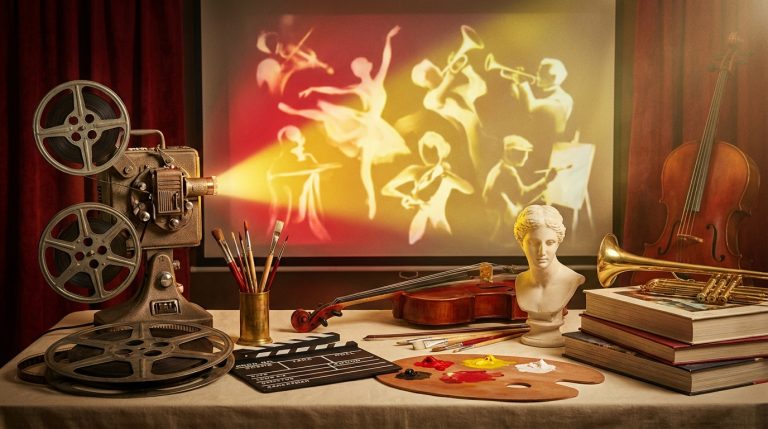
The house lights soften, just a shade, and the air changes. The murmur of voices settles into a low, shared hush. Fabric rustles. Someone shifts in a velvet seat, someone else folds a program like a small, private ritual. Onstage, nothing has moved yet, but you can feel the room leaning forward, ready. This is the fragile moment before the story begins, and every sound, every glowing screen, every late arrival lands like a stone dropped into still water.
The short answer: good theater etiquette is about respect for the work, for the room, and for the people around you. Turn your phone completely off, arrive on time, stay seated and quiet during the performance, react honestly but not loudly, and save conversations, photos, and exits for the intervals and the end. Bad etiquette is anything that pulls focus away from the stage and drags the audience out of the world that artists have spent months building.
The audience is not separate from the show. You are part of the design, part of the atmosphere, and your behavior either protects the illusion or tears it open.
The silent contract between stage and seats
Theater is a shared hallucination. Light, sound, color, language, and bodies in space come together to trick the eye and stir the nervous system. But that illusion does not float in isolation. It hangs on the attention of the audience like paper lanterns across a dark street.
The etiquette we talk about so often is not just a list of rules. It is a set of agreements that keeps the illusion intact. Directors sculpt a scene down to the angle of a chair, the hue of a shadow, the timing of a single breath. One phone screen in row G can slice through that work like a scalpel.
Good audience behavior is quiet, yes, but more than that, it is tuned. It listens, it notices, it participates in ways that enrich the performance rather than compete with it. It is not about being stiff or fearful. It is about being attentive.
Think of yourself as part of the set: present, visible in the corner of the actor’s eye, but never pulling focus from the story.
What etiquette really protects
At its core, theater etiquette protects three things:
| What | Why it matters |
|---|---|
| The story | The narrative thread is fragile. A ringtone, a loud whisper, or the bright blue glow of a phone can snap it instantly. |
| The craft | Designers, stage managers, and crew shape light, sound, and movement with care. Distractions flatten that work. |
| The shared experience | Everyone in the room has paid with time, money, and attention. Etiquette respects that shared investment. |
This is why I do not treat etiquette as an optional layer of “niceness.” It is part of the architecture. Ignore it, and the structure wobbles.
Before the curtain: how to arrive well
The show does not start with the first line. It starts with how you enter the building, how you prepare, how you step into the atmosphere that the artists and front-of-house staff have prepared.
Timing, tickets, and the ritual of arrival
Aim to be early. Not frantic, not racing through the foyer, but comfortably early. Fifteen to thirty minutes before curtain lets you do what theater rewards: transition.
You move from street noise to lobby sound, from daylight to sconce light, from outside concerns to inside focus. This gradual shift matters. You read your program, learn the names of the designers, see the artwork, maybe catch the director’s note. You use the restroom, find your seat, adjust your coat, silence your phone.
Arriving late fractures that ritual. It disturbs ushers, disturbs other audience members, disturbs actors who can see silhouettes moving down the aisles.
Walking in late is like slamming a door in a quiet gallery. Everyone feels it, whether they look or not.
If late seating is possible, theater staff will guide you, often at a suitable pause. Accept their timing. Do not argue that you “just need to get to the middle” while a scene is in motion. The scene wins. It should win.
Phones, gadgets, and the false comfort of “silent mode”
Turn your phone completely off. Not on silent. Not on airplane mode with the screen still waking up each time a notification lands. Off.
From a design perspective, the problem is not only sound. The problem is that vivid, icy-blue rectangle lighting your face. Stage light is carefully balanced. A single phone screen in a dark auditorium is like a stray LED inside a painting; the eye snaps to it, even if you do not intend to look.
And actors do see you. Their awareness of the audience is part of their craft. A glowing phone is like an unexpected prop dropped onto the stage.
Smartwatches deserve the same treatment. That tiny pulse of moving light on a wrist in row B can be just as distracting, especially in smaller or more intimate spaces. Switch it off or to a mode that will not wake the screen.
If you are expecting an urgent call for a genuine emergency, speak with front-of-house staff before the show. They often have procedures for that. Do not try to juggle an emergency and a performance alone.
During the performance: the do’s and don’ts
Here is the core behavior, stripped back to its bones:
- Do be quiet, still, and attentive.
- Do react naturally with laughter or applause, without shouting or commentary.
- Do stay in your seat except for intervals or genuine emergencies.
- Do follow the house rules about photos, food, and drink.
- Do respect performers and other audience members as if they were sitting right beside you.
Good etiquette is not about being invisible. It is about being the kind of presence that supports the work rather than competing with it.
Talking, whispering, and the illusion of “quiet conversation”
Whispered conversations are not private in a theater. They are small saws cutting into the fabric of sound design. The human ear is drawn to irregular noise. A murmur two rows away can be more disruptive than a strong line delivered on stage, because it does not belong.
If you are confused about the plot, the design, or a line you missed, hold the question. Let the moment pass. Theater is full of ambiguity by design. The need to explain or clarify everything in real time comes from a different medium, one with pause buttons and rewind. The stage does not have those.
If someone with you continues to talk, a quiet, direct “I want to hear this, can we talk later?” is kinder to the room than joining their commentary.
Food, drink, and the sound of wrappers
Some venues allow drinks in plastic cups inside the auditorium, sometimes even snacks. Others do not. The etiquette does not begin or end with a policy sign. It lives in the question: will this pull attention away from the stage?
Crisp packets, plastic wrappers, and crunchy foods are villains here. The sound of a single wrapper being opened slowly can draw more glares than a thunder effect in a storm scene. If you must eat, do it before or during the interval. If you carry something noisy into the space, open it before the show starts, not at a quiet emotional beat.
Chewing gum is tricky as well; the sound can carry, and the habit of popping bubbles or chewing with an open mouth translates badly in a silent scene.
Applause, laughter, and vocal reactions
Applause is part of the design of theater. Directors time blackouts, lighting cues, and musical buttons to invite it. Laughter is part of the rhythm. Sobs and quiet gasps can arise in heavier work. These responses feed performers, confirm that the connection is alive.
The trouble comes with reactions that try to top the moment: shouting out, talking back to characters who are not inviting that kind of interaction, or prolonged solo reactions that pull the focus off the scene and onto one audience member.
There are exceptions: some forms of comedy, some drag shows, some interactive events, ask for loud, verbal participation. In those spaces, silence can feel like a kind of rudeness. Read the cues. Listen to what the performers are asking for in tone and direct instruction.
If in doubt, let your body respond, not your commentary. A gasp, a laugh, or a sharp inhale is part of the atmosphere. A running commentary is an alternate show no one asked to attend.
Leaving your seat mid-scene
Leaving during a performance cuts through more than your own experience. Movement in the aisles draws eyes. Light from open doors pours into carefully tuned darkness. Actors see the shift and must carry on as if they do not.
Plan ahead: use the restroom before the show and during the interval. If you are someone who may need to leave often for health reasons, request an aisle seat when booking, and mention your situation to staff. There is no shame in needing to leave. There is only the question of how to do it with the least disruption.
If you must step out during the show, choose a transition moment if you can: a blackout, a scene change, a musical swell. Move quickly, quietly, and avoid blocking sightlines. When returning, wait for an usher’s guidance rather than slipping in mid-monologue.
Photography, recording, and the right to the dark
Most traditional theater spaces do not allow photography or recording during the performance. This is not about secrecy or arrogance. It is about legal rights, safety, and focus.
Flash photography can disorient actors, strain eyes that have adjusted to theatrical light, and even trigger health issues for some. The act of lifting a phone, framing, tapping, and then checking the result is movement and glow in an area that is supposed to be still and dark.
Recording without permission is not only rude. It erodes the specialness of “you had to be there.”
From a design perspective, theater is meant to live once, then change, then live again in another performance. Each night is different. Recording tries to fix it, flatten it into a small screen, and drag it into a context where it was never meant to be.
If the theater invites photography at curtain call, or in the lobby with set pieces or backdrops, follow that invitation gladly. Take as many pictures as you like during those windows. Respect the boundary between invitation and intrusion.
Immersive and interactive shows can be more relaxed about photos, but they still have rules: no flash, no blocking performers, no posting spoilers of secret moments. Listen to the pre-show briefing. It is part of the design, not empty formality.
Immersive and interactive theater: a different contract
Not all shows want you quiet in a seat. Some ask you to move, speak, choose, or even step into the story yourself. Etiquette shifts here, but it does not vanish. It becomes more complex.
When you are on the floor, not in the seats
In immersive spaces, the line between performer and audience softens. You might wander through rooms, stand inches from an actor, or hold an object that belongs to the world of the show. Here, etiquette is about consent and awareness.
You do not touch performers unless they clearly invite it as part of the piece. You do not block pathways, emergency exits, or other audience members who are trying to see. You do not treat the environment as a playground where rules are suspended. You are inside a designed installation that has to be safe, timed, and repeatable.
If a performer gives you an instruction, treat it as both story and safety guidance. “Stand here,” “Wait,” or “Follow me” are cues that keep the scene and the room working.
Participation vs. performance
Interactive shows sometimes invite you to speak, improvise, or choose actions. The trap here is turning that invitation into an opportunity to show off at the expense of the piece.
Good participation listens first. You respond to the tone and style of the work. If the scene is dark and subtle, loud jokes feel like graffiti on a charcoal drawing. If the scene is broad comedy, whispered answers vanish and leave performers scrambling.
Do not hijack the narrative. If you improvise, your job is to support the moment, not steal it. Ask yourself silently: “If everyone behaved like this, would the show still function?” If the answer is no, you are overreaching.
Children at the theater: guiding young audiences
Bringing children to a live performance can be one of the strongest gifts you offer them. Stage light on a young face can flip a switch that never goes off. But that potential does not erase the practical side.
Choosing the right show and preparing them
Not every production suits every age. Pay attention to age guidance, run time, and themes. A three-hour tragedy with no interval is hard on even the most patient adult. For a child, it can be a slow slide into restlessness.
Before the show, explain what will happen in plain language: the room will go dark, people will be quiet, actors will be real people playing pretend, and we will save questions for the break. Turn this into a small shared ceremony. Look at the program together, point to the set, name the instruments in the orchestra pit if there is one.
Children can learn etiquette quickly if they understand the “why,” not just the “do not.” Tell them: “We are being quiet so everyone can hear,” or “We keep screens off so the actors are not distracted.”
What to do if a child struggles
If a child cries, speaks loudly, or cannot stay in their seat, do not freeze and hope no one notices. Gently step out with them at the next possible moment. The shame of lingering disruption is far worse for both you and the room than a brief, decisive exit.
Some theaters offer relaxed performances where etiquette rules soften to welcome neurodivergent audiences, families with young children, or anyone who finds strict silence a barrier. In those shows, lighting changes, sound levels, and entry/exit rules adapt. Behavior that would be inappropriate in a standard performance may be fully accepted there. Seek these out if you need them. They exist to widen the circle.
Accessibility, comfort, and quiet care
Not every breach of etiquette comes from carelessness. Health, disability, and neurodivergence shape how someone can exist in a dark, quiet room.
Necessary devices and support
Hearing aids, oxygen tanks, mobility aids, and medical devices take precedence over atmosphere. The etiquette here is about coordination, not removal. Tell the venue in advance if you use devices that make noise or light. They can offer seating that minimizes disruption while keeping you safe and included.
Service animals belong in the theater. They are working, not attending for entertainment. Give them space, refrain from petting or calling to them, and trust that the venue has planned for their presence.
If you need to stretch, shift, or adjust frequently, an aisle or back-row seat can lessen the visual impact on others without forcing you into discomfort. The worst choice is to pretend you do not need accommodations and then struggle through, distracting yourself and everyone around you.
Dress, scent, and the physical presence of the audience
The theater is not a fashion show, but it is still a shared physical environment. What you bring into that space on your body matters.
Clothing: from tuxedos to trainers
Dress codes have relaxed. Most venues welcome a wide range of clothing, from casual to very formal. The true etiquette concerns are comfort and courtesy.
Wear something you can sit in for two hours without constant adjustment. Avoid large hats that block sightlines, or bulky coats that spill over into another person’s already narrow personal space. Avoid clothing with bright, moving LEDs or loud accessories that jingle with every small movement.
There is pleasure in dressing slightly up, even if the venue does not require it. It marks the outing as special, different from a routine day. Think of it as part of the ritual, not an obligation.
Perfume, cologne, and the shared air
Strong scent in a confined space can turn from pleasant to assaulting quickly. Many people have fragrance sensitivities or allergies that can trigger headaches, asthma, or nausea. A dense cloud of perfume in row C can be as oppressive as a loud ringtone.
Light application, or none at all, is the kindest choice. If you want to bring sensorial richness into your evening, consider texture instead: a soft scarf, a smooth jacket lining, something that improves your own tactile experience without overwhelming others.
Respecting ushers, front-of-house staff, and house rules
The people who scan tickets, show you to your seat, and remind you about phones are not incidental. They are part of the choreography of the night.
When an usher gives guidance, they are not policing taste. They are protecting the conditions that let the art breathe.
If a staff member asks you to change seats, lower your voice, conceal your screen, or finish your drink outside the auditorium, accept it without argument. Their perspective is wider than yours. They see the full room, not just the view from your seat.
House rules differ from venue to venue. Some allow drinks inside, some do not. Some have strict late seating windows, others are more permissive. None of these rules exist to burden you. They exist because over years of trial and error, certain patterns have proved to support the work better than others.
What good etiquette feels like from the stage
From the actor’s side, a well-behaved audience is not a silent, cold wall. It feels alive. Attentive. Soft when needed, sharp when needed. Breath rises and falls as one. Laughter comes in waves. A slow, collective inhale at a turning point can feel like the entire room leaning in to catch you.
Bad etiquette, by contrast, arrives as static. A flashlight beam, a ringtone, a loud snack, faces lit by phones. Attention fractures. Timing wobbles. The actor’s focus must stretch to cover two tasks: staying in the scene and not getting pulled into the distraction.
From a designer’s side, etiquette is the difference between a carefully painted lighting cue landing on quiet eyes and that same cue competing with an Instagram feed. It is the difference between a subtle sound effect registering as a shiver and being entirely masked by program rustling.
If you care about performance, if you enjoy being transported, you should care about etiquette. Not for the sake of rules, but for the sake of how it feels when a room gives itself fully to the work.
When others break etiquette: what you can do
There will always be the latecomer who stumbles through, the person who forgets to silence a phone, the audience member who narrates in a stage whisper. You cannot control them, but you have choices.
Sometimes a gentle, direct word works: “Could you turn that off? It is distracting.” Say it during an interval or a moment of applause rather than mid-line. Avoid shushing as a performance of its own; a loud, theatrical “shhh” can be as disruptive as the original offense.
If someone is truly disruptive and does not respond to polite cues, involve staff. Ushers are trained for this and carry the authority of the house. You do not have to fight that battle alone, and you should not escalate an argument inside the auditorium.
Above all, resist the urge to turn someone else’s bad behavior into your main story of the night. Notice it, act if appropriate, then return your attention to the stage. The greatest compliment you can pay performers and designers is to give them as much of your focus as the space allows.
Making theater etiquette part of the artistry
Good etiquette is not the enemy of passion. It is the container that lets passion burn without setting the room itself on fire.
You can still arrive buzzing with anticipation, still laugh loudly when a line lands, still cry when a scene hits home. You can still lean forward, grip the armrest, feel the hair on your arms lift when the music swells. You simply agree, quietly, with everyone else in the room, that you will not tear the fabric of the experience for the sake of a notification, a comment, or a photo.
The show is the stage, the light, the sound, the bodies. But it is also you, sitting there in the dark, choosing to protect the illusion.
The more often audiences honor that choice, the more daring designers can be with silence, with stillness, with darkness. The more risk writers and directors can take on subtle scenes, slow burns, and fragile moments that need a focused room to land.
The etiquette is not an afterthought. It is part of the design. When you walk into a theater, you are not just buying a ticket. You are entering a shared agreement: to listen, to watch, and to hold the space so the story can live.