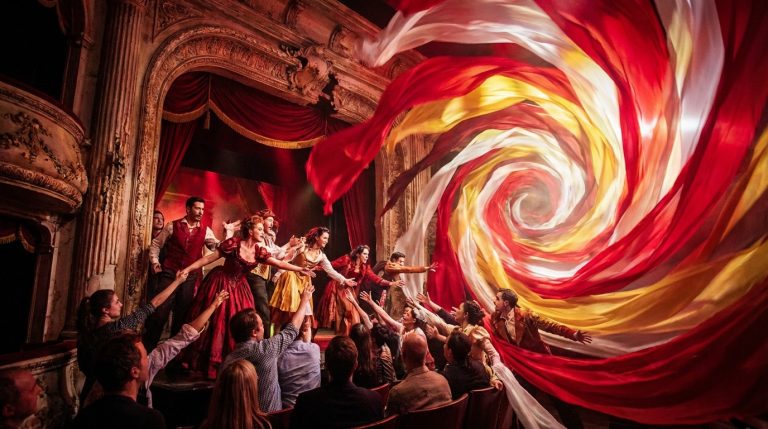
The brush drags through thick blue paint, leaving a quiet scar across the canvas. The room smells faintly of acrylic and tea. Somewhere a kettle clicks off. A radio murmurs in the background, just low enough that you can ignore it. The person holding the brush is not thinking about “getting better.” They are thinking only about where the next line of color should go.
That small moment is the role of arts in mental health recovery: it gives the mind something tangible to hold, when everything else feels slippery.
The short version: art gives people in recovery a place to feel without explaining, to rebuild a sense of self, to regulate emotions without numbing, and to connect with others without having to be “fine.” Whether it is painting, movement, sound, or storytelling, creative work can lower stress, interrupt spirals of anxiety or depression, and offer a way to express pain, joy, fear, and hope in forms that words alone cannot carry. It does not magically cure mental illness, and it should never replace proper medical care, but when used with therapy and medication, it can make the process of recovery more humane, more bearable, and often, more honest.
Art in mental health recovery is less about producing masterpieces and more about giving shape, color, and rhythm to experiences that feel formless inside.
Why art matters when the mind is tired
Recovery is rarely a clean arc upwards. It is a loop. Two good days, then three bad ones. A small victory, then heavy relapse. Many people in that loop describe feeling like an object, not a person: observed, assessed, medicated, charted.
Art tilts the spotlight back into their own hands.
Art activities do a few very human things at once:
- They create a safe container for overwhelming feelings.
- They slow the body down and give the nervous system a break.
- They allow stories to emerge that a person cannot yet say out loud.
Think of a drawing session as a kind of soft architecture for the mind. Time is bounded (“we draw for 40 minutes”). Materials are concrete (paper, charcoal, clay). The rules are simple and usually gentle. Within that structure, chaos has somewhere to go.
In recovery, art is not a hobby tacked on at the end; it is often the only space where a person feels like more than a diagnosis.
The difference between “art as hobby” and “art as recovery tool”
Many people paint or write as a pastime. That is valuable, but in a recovery context, the intention shifts.
Here is a simple way to see the difference:
| Art as hobby | Art in mental health recovery |
|---|---|
| Focus on skill, progress, and finished work. | Focus on process, feeling, and self-discovery. |
| Often judged by quality or style. | Not judged. Every mark is valid data from the inner world. |
| Used to relax, pass time, or create something “good.” | Used to explore, release, and understand difficult experiences. |
| Feedback is about aesthetics. | Reflection is about emotional meaning and personal insight. |
This is why trained art therapists exist. They know how to hold what surfaces. A sketch of a small house at the edge of the page is not just “cute”; in context, it may be holding grief, fear, or a wish for safety.
How the arts support the brain and body in recovery
The impact of art on mental health is not just poetic. It is physical.
Regulating the nervous system
Anxiety, trauma, and depression live in the body. Tight shoulders, shallow breath, clenched jaw. Chaos in thought is mirrored by chaos in muscle and breath.
Repetitive, rhythmic activities are soothing by nature: knitting, shading, kneading clay, slow movement. They give the body a pattern to follow. The brain reads that pattern as “we are safe enough to focus.”
Gentle repetition in art can act like a metronome for an overactive nervous system, inviting it back into a slower tempo.
What happens in those moments:
– Heart rate can settle.
– Breathing often deepens without conscious effort.
– Cortisol, the stress hormone, may reduce over time with regular practice.
– Muscles soften because attention moves from “threat” to “making.”
Even people who say “I am not creative” can feel the shift after coloring geometric shapes for twenty minutes. The body does not care if the circles are pretty. It cares that the mind is not rehearsing disaster.
Creating distance from intrusive thoughts
Many mental health conditions come with thoughts that feel sticky. Repetitive, sharp, unwanted. Thought spirals are intimate and exhausting.
Art draws some of that energy outward.
Writing a poem about a panic attack does not erase the panic, but it puts a frame around it. Painting what depression feels like as a heavy gray block in the center of a bright page turns “I am depression” into “this is my experience of depression.” That small shift from “I am” to “this is” can be powerful.
On paper, feelings become objects that can be placed, moved, and even argued with.
This externalization is not vague. It changes how a person relates to their own thoughts. A thought drawn as a creature in the corner of the page can be spoken to, questioned, shrunk, or painted over next week. That is a kind of rehearsal for cognitive reframing in therapy.
Memory, trauma, and nonverbal story
Traumatic experiences often live in the brain in fragments: images, sounds, body sensations. People might not have full sentences for what happened, or they might not be able to speak about it without dissociating.
Visual, musical, and movement-based arts provide parallel pathways for those fragments to surface.
A survivor might:
– Smear red and black paint across paper without naming why those colors feel right.
– Choreograph a short piece where they curl tightly, then slowly stand.
– Create a mask that hides the face but exaggerates the eyes.
These expressions can feel safer than direct verbal retelling. A therapist can ask, “What is it like inside this painting?” instead of “Tell me what happened that day.” The story begins to gently unfold around images instead of blunt facts.
Building identity after illness
Mental illness often steals roles. Worker, parent, friend, student. People describe feeling hollow, like a character whose script has been erased.
Art offers another role: maker.
From patient to creator
The title “patient” is necessary in medical settings, but it can flatten a person. In a studio or group workshop, that same person becomes “the one who works with ink,” or “the one who writes vivid dialogue,” or simply “the one who always paints birds.”
These tiny creative identities matter. They are not about ego; they are about agency.
In recovery, creating something that did not exist yesterday can quietly say, “I am more than what has happened to me.”
Even very modest projects help:
– A zine made with photocopied drawings and handwritten notes.
– A small clay bowl that holds medication each morning.
– A simple collage of images that represent “future me.”
The object is proof of choice. Decisions were made about color, texture, line, sequence. Those decisions belong to the person, not to their diagnosis or treatment plan.
Reclaiming narrative
Story is central to identity. “Who am I?” is always partly “what has happened to me, and how do I tell that story?”
Psychiatric labels can feel like someone else has written the headline: “Person with bipolar disorder.” “Former addict.” “Borderline.” Those titles are thin and often unkind.
Through writing, performance, or visual series, people in recovery can reshape their own headlines:
– A graphic memoir about hospital stays that focuses on moments of friendship rather than only crisis.
– A set of photographs that shows daily life in recovery: meds, support groups, but also plants on the windowsill and late afternoon light.
– A devised theater piece where several people share intersecting stories of stigma, joy, relapse, and resilience.
Art does not erase hard facts, but it weaves them into a richer fabric. It repositions the illness as one thread in a larger pattern, not the entire cloth.
Types of art in mental health recovery
Different art forms reach different parts of the psyche. No single medium suits everyone, and the “right” form often changes over time.
Visual arts: seeing feelings
Drawing, painting, collage, sculpture, printmaking, photography: these act like mirrors that do not judge.
Visual mediums are especially kind to people who feel verbally blocked. A person can choose one color and one shape and repeat it across the page. That alone might say more than a paragraph.
Useful ways visual arts support recovery:
– Abstract work allows emotion to appear without the pressure of realism.
– Collage lets people borrow and rearrange existing images, which can feel less intimidating than starting from total blankness.
– Photography can help reconnect with the outside world, encouraging slow, mindful seeing.
In more structured art therapy settings, themes are often introduced: “Draw a safe place,” “Sketch your anxiety as a creature,” “Create an image of hope using only torn paper.” The outcome often surprises both the maker and the therapist.
Writing: shaping the inner voice
Words can wound, but they can also hold and sort.
Journals, poetry, short stories, letters that are never sent: all are tools for recovery. Writing slows thought down just enough to examine it. It can reveal patterns that were invisible when feelings were swirling.
Some examples of writing work in recovery:
– Free-writing for ten minutes without stopping, then circling phrases that stand out. Those phrases become prompts in therapy.
– Letter-writing to the illness itself: “Dear Depression, you arrived early this year…”
– Rewriting a memory from a different perspective, such as the view of a nearby object in the scene.
On the page, the inner critic can be given a name, a shape, and even a counter-voice that stands up to it.
In group settings, shared reading (with consent) creates connection. Hearing your words in someone else’s mouth can be strangely healing. It separates “me” from “what happened to me” just enough to breathe.
Music and sound: grounding through vibration
Sound moves through the body. Rhythm affects heartbeat, breath, posture.
People in recovery work with music in many ways:
– Listening: carefully chosen playlists to match or gently shift mood.
– Playing: simple drumming circles, piano improvisation, singing.
– Composing: building loops with digital tools, writing songs.
For some, it is easier to hum a feeling than to label it. A minor chord progression can say “lonely” without the risk of breaking into tears. A driving beat can move anger through the body without harming anyone.
Music therapy often uses call-and-response patterns. One person plays a phrase; another answers. This becomes a nonverbal conversation, shaped by timing, tone, and volume.
Movement and performance: inhabiting the body again
Mental distress often comes with a difficult relationship to the body. Some people feel numb or disconnected. Others feel trapped or hyper-aware.
Movement-based arts invite people to come back into their physical selves with curiosity rather than judgment.
This can look like:
– Gentle guided movement in a circle, matching breath to motion.
– Improvised theater games that focus on gestures and posture rather than dialogue.
– Choreographed pieces built from personal stories, where each movement symbolizes a part of the narrative.
Even very small actions matter: learning to notice where tension sits, then crafting one simple motion that expresses release. Over time, body and story begin to speak to one another.
From private studio to shared space: community and connection
Mental illness isolates. Shame, fatigue, and stigma can shrink a person’s world to their bed, their phone, and maybe one trusted person.
Group art spaces can widen that world without requiring forced small talk.
Why group art can feel safer than group conversation
For many, sitting in a circle and “sharing feelings” on command is terrifying. Art groups often soften that expectation. People work side by side, sometimes in near silence, focused on their own page or object.
The room still fills with quiet signals:
– The sound of pencils on paper.
– Occasional questions: “Do you want the blue after me?” “Where is the glue?”
– Small comments about materials: “This clay is so cold at first.”
These small interactions can be less draining than direct emotional discussion, but they still create connection. Over time, participants might naturally begin to talk about their work, and then about their lives.
Shared making builds a kind of horizontal support: no one is the “helper” and no one is the “case”; everyone is a creator in progress.
In immersive or theatrical contexts, that shared making can expand into:
– Collaborative set-building for a community performance about mental health.
– Group murals in hospital corridors developed with patients and staff.
– Interactive installations where visitors add their own written or drawn experiences of recovery.
The product matters less than the sense of “we did this together.”
Stigma and public-facing art
When people in recovery choose to share their art publicly, it can shift how others see mental illness.
A gallery of works created in a psychiatric unit, displayed with artist statements, invites viewers to see nuance: humor, rage, boredom, beauty. A theater piece about living with schizophrenia that uses projection, sound, and physical theater can move an audience more deeply than statistics.
Still, there are risks. Public sharing can feel exposing. There is a fine line between honest visibility and turning pain into spectacle.
Ethical practice asks:
– Who controls how the work is shown and described?
– Are artists paid or credited fairly?
– Is there support available if public response triggers distress?
When handled with care, public-facing art becomes part of social recovery. It opens space to say: “People with mental illness are not just subjects of care. We are also cultural contributors.”
Immersive arts and therapeutic environments
For a site rooted in set design and immersive experiences, the environment itself is part of the therapy.
Designing spaces that hold emotion
A mental health ward with buzzing fluorescent tubes, plastic chairs, and white walls sends a clear signal: “You are in a functional container for risk management.”
Now imagine a studio in the same building:
– The light is softer, perhaps from shaded lamps rather than ceiling strips.
– Walls hold past artworks, not generic prints.
– Materials are visible, sorted by color and texture.
– A single table is covered with butcher paper that has been drawn on a hundred times.
The same person can feel radically different in these two spaces.
Set design principles can apply directly here:
| Design element | Impact on recovery |
|---|---|
| Lighting | Warm, adjustable light reduces stress and supports focus; harsh light increases tension and fatigue. |
| Color palette | Soft, varied tones create calm curiosity; overly sterile or overly saturated schemes can feel hostile or overwhelming. |
| Spatial layout | Clear pathways and flexible seating support both solitude and connection. |
| Acoustics | Gentle sound absorption reduces sensory overload and supports quiet concentration. |
An immersive designer might ask: “How does this room feel at ankle level? At the back of the neck? Around the eyes?” That kind of sensory layering respects the delicacy of a nervous system in recovery.
Immersive experiences as narrative journeys
Immersive theater and installation art can serve as guided metaphors for recovery.
Consider an installation structured as a walk through “the inner house”:
– Visitors begin in a dim, cramped entry space with narrow paths, projections of scribbled text on the wall, and urgent sound.
– They move into a room of shifting shadows and soft seating, where voices share short, looped stories about anxiety or depression.
– Finally they step into a brighter, more open area with plants, quiet ambient music, and stations where they can create small objects or write messages.
For people in recovery, moving through such an environment side by side can make their own internal process feel less isolated. The spatial journey mirrors the psychological one: from constriction to awareness to tentative expansion.
Immersive environments can hold what words cannot: the thickness of fear, the blur of medication, the slow return of color to daily life.
These experiences must be crafted carefully. Triggers, sensory overload, and accessibility are real concerns. Gentle choice is key: multiple pathways, clear exits, and places to rest or opt out.
The limits and responsibilities of using art in recovery
A sober point is necessary: art is not a cure.
What art cannot do
Art cannot:
– Replace medication where it is clinically needed.
– Substitute for trauma-informed therapy with qualified clinicians.
– Fix structural causes of distress such as poverty, discrimination, or abuse.
– Guarantee recovery, or prevent relapse.
Art can also be misused. Forcing people to create when they are not ready, dissecting work for hidden meaning without consent, or sharing their output without clear agreement can all cause harm.
Mental health professionals and artists need to be aware of this boundary. Respect for choice, privacy, and pacing is not optional.
When art helps, and when it might overwhelm
For some, certain art forms may intensify distress rather than soothe it. For example:
– Very open-ended improvisation might feel terrifying to someone who needs structure.
– Intense sensory installations might overwhelm people with sensory sensitivity.
– Deeply autobiographical work might re-trigger trauma before sufficient support is in place.
A careful approach often starts with:
– Simple, low-stakes tasks (coloring, repetitive patterns, basic collage).
– Clear time limits and containment (“We will work for 20 minutes, then close the sketchbook together”).
– Gentle reflection instead of deep analysis.
From there, people can choose to move into more expressive and vulnerable work if and when they feel ready.
Practical ways to bring art into mental health recovery
For individuals, carers, designers, and practitioners, the question tends to be: “Where do we begin?”
For individuals in recovery
You do not need to call yourself an artist. You do not need expensive tools.
Starting points:
– Choose one small, repeatable creative act per day: one doodle, one sentence, one photo.
– Keep materials visible but not demanding: a small sketchbook on the bedside table, a simple instrument within reach.
– Set tiny thresholds: “I will draw for five minutes,” not “I will finish a piece.”
– Let the work be for you only at first. No sharing, no posting, no performing.
You can bring what you create into therapy sessions if that feels right. A single rough sketch can open more fruitful conversation than an hour of forced talk.
For therapists and mental health services
If you are not trained in art therapy, you can still invite art carefully into your work, while respecting professional boundaries.
Practical choices:
- Provide basic materials in waiting rooms: paper, pencils, coloring sheets that are not infantilizing.
- Offer optional creative prompts on handouts: spaces to draw feelings, not just checklist boxes.
- Collaborate with trained art, drama, or music therapists when possible for group work.
Reflection is key. Ask open questions: “What was it like to make this?” rather than “What does this symbolize?” Let your client lead in assigning meaning.
For designers, set creators, and artists
If your field is creative space-making, you have a particular role.
Questions to guide your practice:
– How can lighting, sound, and material choices reduce anxiety?
– Where can you build gentle, nonverbal invitations to create? Writable walls, communal tables, small private nooks?
– Are there ways to collaborate directly with people in recovery, so the space reflects their needs and not only your aesthetic?
You might work with hospitals, community centers, or nonprofits to design:
– Pop-up creative rooms that travel between wards.
– Calm “decompression” corners in busy clinics, outfitted with simple creative materials.
– Public installations that collect anonymous stories of recovery through art, while offering quiet areas for reflection.
Your design choices become part of the therapeutic fabric. A room can either say, “You are a problem to manage,” or, “You are a human being who creates, feels, and changes.” The difference lives in texture, light, sound, and the presence of tools for making.
When the built environment honors creativity, it quietly tells people in recovery: your inner world is not a flaw; it is material.
The role of arts in mental health recovery is not decoration. It is not an extra. It is a way of working with the mind and body that respects complexity, honors feeling, and allows people to be more than their symptoms while they heal.